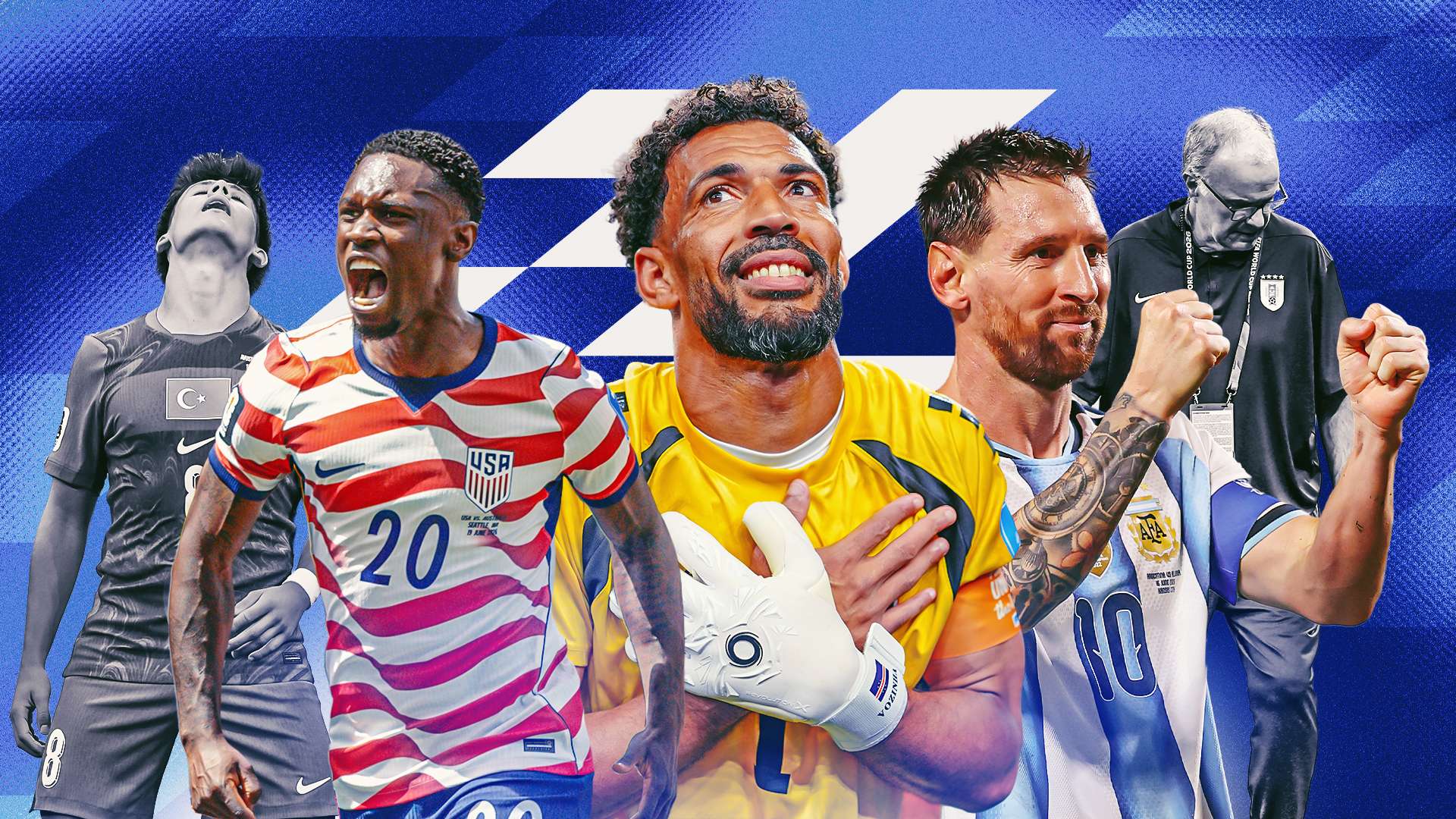
The group stage of the 2026 FIFA World Cup concluded in dramatic fashion on Saturday evening, as Austria struck a 96th-minute equaliser against Algeria to reach the knockout rounds while simultaneously knocking Iran out of contention. Lionel Messi, meanwhile, came off the bench to help Argentina preserve their perfect record with a 3-1 win over Jordan — extending his all-time World Cup goals tally to 19.
However, Messi’s long-time rival Cristiano Ronaldo couldn’t inspire Portugal to top Group K, as the Seleccao were held to a goalless draw by Colombia in Miami. In another part of the competition, DR Congo came from behind to defeat Uzbekistan and secure a spot in the round of 32, while Croatia left it late to beat Ghana with an 83rd-minute winner to confirm their advancement.
So, who stood out in the biggest group stage in World Cup history — and who fell short? Here’s a detailed breakdown.
WINNER: The Co-Hosts
The three co-host nations — the United States, Mexico, and Canada — are all through to the knockout stage, each with a game to spare. While they were placed in relatively modest groups, all three delivered when it mattered most.
Both the USMNT and Mexico topped their groups after consecutive wins, ensuring Mexico’s next match will be at home in the Azteca. That advantage could prove crucial as they eye their first quarter-final appearance since hosting the tournament in 1986.
Canada, though, missed the chance to play another match in Vancouver following a 2-1 defeat to Switzerland. Still, their progress is historic — this is their first time winning a World Cup match, highlighted by a 6-0 thrashing of Qatar that thrilled a nation better known for hockey. As coach Jesse Marsch noted, “forty million people will claim they were there.”
Canada now faces South Africa in Inglewood, a winnable fixture that could see all three hosts advance to the last 16. The United States are also strongly favoured to overcome Bosnia & Herzegovina in Santa Clara.
LOSER: Tunisia
Sabri Lamouchi’s Tunisia faced a tough draw alongside Sweden, Japan, and the Netherlands. Despite his optimism, Tunisia’s campaign ended disastrously — a 5-1 loss to Sweden saw Lamouchi dismissed after just one match, making him the first coach in World Cup history to be sacked after a single game.
Herve Renard’s subsequent struggles underscored deeper structural issues within the Tunisian Football Federation. Lamouchi had only taken over five months earlier after Sami Trabelsi was dismissed despite leading an unbeaten qualifying campaign without conceding a goal.
WINNER: Sebastian Beccacece
Ecuador’s 2-1 victory over Germany was one of the standout moments of the group stage. Coach Sebastian Beccacece called it a triumph “for the people,” praising his players for delivering qualification to the round of 32. The Argentine coach celebrated emotionally with his family after the final whistle — aware that defeat might have cost him his job.
Beccacece’s pragmatic style had been criticised, especially after four straight goalless draws. Ecuador hadn’t scored in their first two World Cup games, but they found their rhythm against Germany, overturning an early deficit to end the European giants’ 11-match winning run. “It’s the biggest win for Ecuador in a World Cup,” he declared. “We came here with the dream of making Ecuador’s best cup ever — and now we have.”
WINNER: Iran
Iran exited the World Cup in heartbreaking fashion, but their story resonated far beyond results. Coach Amir Ghalenoei described his side as “the most oppressed team in World Cup history,” citing political restrictions that disrupted their travel and preparation. Captain Mehdi Taremi called the situation “a disaster” after their opening 2-2 draw with New Zealand.
They were agonisingly close to advancing — Shoja Khalilzadeh’s injury-time goal against Egypt was disallowed for a marginal offside. Ghalenoei later urged FIFA to “not let this happen again,” criticising the governing body’s inaction. Despite their elimination, Iran’s players left a message promoting “peace, respect, and friendship among all nations,” earning admiration for their spirit under immense pressure.
LOSER: Turkey
Touted as dark horses alongside Norway and Japan, Turkey endured a nightmare campaign. Despite a win over the USA, they finished bottom of their group after losing 2-0 to Australia and 1-0 to 10-man Paraguay. “Everybody’s sad, everybody’s crying,” admitted Arda Guler. “We tried very hard but it didn’t work.”
Vincenzo Montella’s men set an unwanted record — the most shots on target across two games without scoring. “Somehow the ball didn’t go in,” Montella lamented, calling the early exit “really tough.” For a youthful team that reached the Euro quarter-finals two years earlier, it was a crushing blow.
WINNER: Africa
Four years after Morocco’s historic semi-final run in Qatar, African football is enjoying another milestone. Of the ten CAF nations competing in North America, only Tunisia failed to progress. That’s a record-breaking achievement, surpassing the previous best of two African teams reaching the knockout rounds.
“Now every African team can dream big,” said DR Congo’s Yoane Wissa after their 3-1 win over Uzbekistan. “We can see that young players are coming through earlier than before — and that means our federations can dream big too.”
LOSER: Marcelo Bielsa
Uruguay’s campaign under Marcelo Bielsa was a disaster. The Celeste failed to win any of their group matches and bowed out after a 1-0 loss to Spain. Draws with Saudi Arabia and Cape Verde had already left them on the brink. “I’m toxic,” Bielsa had confessed months earlier — a comment that now feels prophetic. “If you associate with me, you become worse off.”
Known for his intensity and demanding methods, Bielsa struggled to inspire his players. “I leave nothing to Uruguayan football,” he admitted after their elimination — a brutally honest assessment from a legendary but polarising coach.
WINNER: Cape Verde
Cape Verde’s fairytale run has captured global attention. The smallest nation ever to qualify for a World Cup reached the round of 32 unbeaten, finishing second in their group ahead of more established sides. “Honestly, it’s mad,” said midfielder Deroy Duarte after their 0-0 draw with Saudi Arabia sealed qualification. “I feel like I’m in a dream.”
Their next challenge is monumental — a clash with Argentina. For Dublin-born defender Roberto Lopes, who was discovered by the national team via LinkedIn, it’s a dream matchup. “For me, he’s the greatest of all time,” Lopes said of Messi. “What an opportunity to test yourself.” Coach Bubista summed up the team’s mindset perfectly: “For us, nothing is impossible.”
WINNER: The Superstars
Several big names entered the tournament under scrutiny but responded in style. Lionel Messi, who had been managing a hamstring issue, scored five goals in his first two appearances, surpassing Miroslav Klose to become the World Cup’s all-time top scorer. Lamine Yamal, recovering from a late-season injury, opened Spain’s account in their win over Saudi Arabia. Kylian Mbappe silenced critics with four goals in his first two matches, while Vinicius Junior emulated Brazilian legends by scoring in all three group games.
Cristiano Ronaldo became the first player ever to score in six World Cups, finding the net against Uzbekistan after going goalless in his opener. Mohamed Salah guided Egypt to their first-ever knockout berth, Harry Kane continued his Golden Boot pursuit, Erling Haaland starred before being rested strategically, and Ousmane Dembele hit a hat-trick against Norway. Together, these performances ensured the group stage sparkled with star power.
LOSER: Gianni Infantino
FIFA president Gianni Infantino’s handling of the 2026 World Cup has drawn fierce criticism. The expanded 48-team format and the confusing third-place ranking system have been widely condemned as chaotic and unfair. Hydration breaks — justified as player protection — were derided as TV revenue ploys that disrupted matches.
Fans across the globe booed the stoppages, and many were priced out of attending games due to exorbitant ticket and travel costs. Moreover, several supporters and even officials reportedly faced discriminatory entry restrictions. Infantino’s promise of the “most inclusive” World Cup has instead become the most exclusive, and his leadership is under fire. As the tournament continues, many are questioning whether he deserves another term at FIFA’s helm.
-
Food Safety Raids At 3 Hyderabad Restaurants Find Dead Cockroaches, Open Drains, And More

-
Medha Shankr looked very beautiful wearing a lehenga worth ₹ 72,500, you will not be able to take your eyes off the look, know where to get the same outfit

-
The Candid Talk: Delhi metro to get smarter with AI, driverless trains, says DMRC MD Dr Vikas Kumar

-
Ireland created history, won the T20I series against Team India for the first time; How was the World Champion’s pride broken?
-
India became victim of Ireland’s upset, lost the T20 series after losing the second match by 1 run.