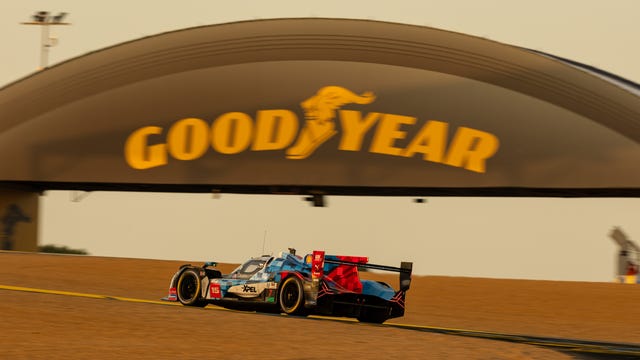
Since 2023, sports car racing has entered what many call a “Platinum Age,” marked by unprecedented manufacturer participation under the unified top-class regulations of the 24 Hours of Le Mans. However, by 2030, these regulations will give way to a single, converged category. While it might seem risky to alter a system that has attracted record manufacturer involvement for four consecutive years, the change is essential to sustain the series’ growth and prepare for the next generation of racing machines.
At present, manufacturers competing in endurance racing can design cars under either the LMDh or LMH regulations. The LMDh framework lets teams develop a bespoke car using a few standardized components, such as a common hybrid transaxle that delivers electric power to the rear wheels, along with one of four base chassis options supplied by different manufacturers. In contrast, the LMH regulations are more flexible, allowing configurations ranging from hybrids that drive the front wheels for all-wheel-drive capability to naturally aspirated V-12 powertrains with no hybrid system at all.
Both approaches have found popularity, but the four manufacturers that have embraced the LMH concept are outnumbered by the nine that opted for LMDh-style builds. The disparity in how these cars generate performance has been a recurring issue, even though balance-of-performance adjustments are regularly implemented to ensure parity in lap times. Despite these efforts, LMH-based cars have claimed victory at the 24 Hours of Le Mans in each of the four years since the introduction of the combined Hypercar category.
The upcoming regulation overhaul aims to resolve these inconsistencies by merging the distinctions between LMDh and LMH cars. Teams will still have the choice to use standardized components or create their own chassis and hybrid systems, but the governing bodies will no longer categorize those approaches under entirely separate rule sets. Manufacturers will also gain flexibility, allowing, for example, a team using a supplied chassis to develop its own hybrid unit, although self-designed chassis cannot incorporate the spec hybrid system.
One of the most significant updates is the removal of all-wheel-drive hybrid systems, eliminating a major performance advantage previously available to LMH cars. Under the new rules, all vehicles must include some form of hybridization, ending exceptions such as the one that allowed the Aston Martin Valkyrie to compete without hybrid assistance. Standardized diffusers will help narrow aerodynamic differences, but teams will be granted greater freedom in other aerodynamic areas to compensate.
Power and weight limits are both being increased, yet the overall lap times are expected to remain comparable to current Hypercar entries. Cars will be homologated for five years, and with fewer development exemptions than before, manufacturers will have to retain their designs for the full cycle rather than making annual upgrades.
The revised rulebook has been jointly approved—but not yet finalized—by IMSA in the United States and the ACO, the organization behind the 24 Hours of Le Mans and rulemaker for the FIA World Endurance Championship (WEC). This ensures the continued sharing of a top class between IMSA and WEC, a collaboration first established in 2023 under the LMDh-LMH convergence. Though cross-series entries have been limited, manufacturers such as BMW, Cadillac, and Aston Martin have fielded full factory teams in both championships.
This regulatory shift follows a year of notable strategic changes among leading manufacturers during the Platinum Age. Porsche, for instance, ended its championship-winning World Endurance Championship program while continuing its presence in IMSA. Acura and Alpine are winding down their factory efforts, and Lamborghini has paused its own operations at the end of the last season. While the return of these brands is uncertain, Porsche’s motorsport head, Thomas Laudenbach, has hinted that the new 2030 regulations “will play a role” in the brand’s possible return to Europe’s premier endurance class.
The primary aim of the new rule set is to maintain broad manufacturer engagement. The framework appears meticulously crafted to satisfy diverse engineering philosophies, even including a dedicated provision for hydrogen-powered prototypes—an area aligning perfectly with Toyota’s long-standing ambitions to develop alternative-fuel race cars. It may not deliver the same technical bravado as the open-ended LMP1 era of the 2010s, but this unified regulatory vision promises to secure another robust half-decade of competitive factory-backed racing in both IMSA and WEC.
-
Yasin Malik Named Main Accused In 1990 Murder Of Kashmiri Pandit Nurse Sarla Bhat

-
What's Inside The Viral Mango Cake Trisha Gifted Vijay For His Intimate Birthday Celebration? Dessert Details Leave Fans Drooling

-
British American Tobacco To Cut 9,000 Jobs Globally As Shift To Smoke-Free Alternatives Takes Pace
-
Volkswagen CEO Plans to Shut Down Four Plants and Cut 100,000 Jobs: Report

-
Texas-based REO Industries Plans to Launch Affordable Compact Truck Range Starting at $21,500