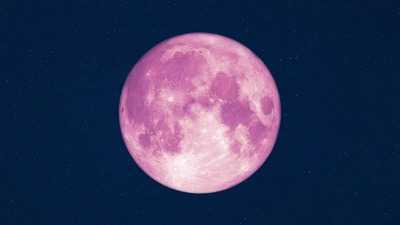
Strawberry Moon shines tonight: When and how to see it
29 Jun 2026
The night sky will witness one of the most awaited celestial events of the year, the Strawberry Moon 2026, on June 29.
The full moon will be at its brightest in India during the early hours of June 30. However, skywatchers can catch a glimpse of this nearly full moon throughout Monday night.
The name 'Strawberry Moon' has historical significance as it marks the time of year when wild strawberries are harvested by Native American tribes.
Best time to see it is soon after moonrise
Viewing guide
The Strawberry Moon will reach its peak at 7:57pm EDT (11:57 UTC) on June 29. The best time to see it is soon after moonrise on the evening of June 29.
In the Northern Hemisphere, this full moon follows a low path across the southern sky, staying close to the horizon for most of the night.
This year, it will be particularly low due to its timing just after the summer solstice in the Northern Hemisphere.
Moon usually appears white or light yellow
Color change
The Moon usually appears white or light yellow, but can take on an orange or gold hue when near the horizon.
This is due to shorter wavelengths scattering in Earth's atmosphere, making warmer colors more prominent.
The 'moon illusion' effect also makes it appear larger than usual when close to buildings and trees.
To get the best view of this celestial event, find dark spot with an unobstructed view of the southeastern horizon and check weather forecasts ahead of time.
Full moon marks first of summer in Northern Hemisphere
Seasonal significance
This year's June full moon is also the first of summer in the Northern Hemisphere, adding to its seasonal importance.
It will be particularly low in the sky as it comes just after the summer solstice.
This unique positioning will enhance the moon illusion effect and give it a warm golden or orange hue due to atmospheric scattering of shorter blue wavelengths.
-
Porsche Introduces the 911 GT4 R for Global GT4 Racing

-
Ferrari Could Reveal a Manual Transmission Supercar in July: CEO’s Hints and Patent Filings Add to Speculation
-
Exciting Update for GTA Fans: 'Grand Theft Auto VI' Pre-Bookings to Start from June 25

-
Hyderabad’s Khajaguda gets a slice of Nepal: Momos to Thukpa

-
Two killed in three-car pile-up on Hyderabad-Vijayawada highway