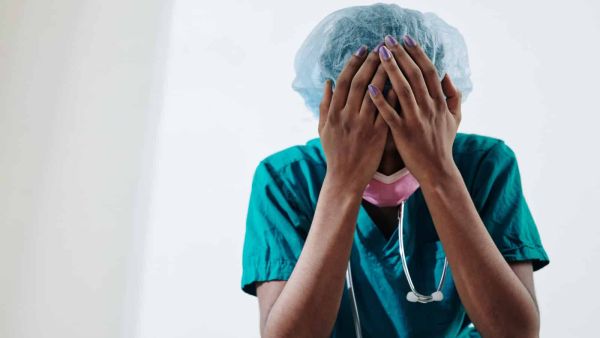
Hyderabad: Nearly one in six resident doctors in India has experienced thoughts of self-harm linked to work stress, according to a nationwide survey that paints a grim picture of the conditions in which the country’s postgraduate medical trainees are working.
The survey, conducted by the Federation of All India Medical Association (FAIMA) and covering 1,260 resident doctors across 28 states and Union Territories, found that 87.5 per cent reported symptoms of burnout and 87.8 per cent said they were sleep-deprived because of duty hours and workload.
More than 61 per cent said they had worked continuously for over 36 hours at a stretch, while 63.7 per cent said they rarely or never received mandatory post-duty rest.

The findings, released on Monday, June 29, under the federation’s Review Medical System 2.0 (RMS 2.0) initiative, build on an earlier FAIMA assessment that had flagged concerns around infrastructure, stipend irregularities and duty patterns.
A system stretched thin
Nearly half the respondents – 46.7 per cent – said they worked more than 80 hours a week, and one in five crossed 100 hours. Over 54 per cent said they had considered quitting residency altogether because of stress and workload.
Two-thirds described their workload as high or extremely high. The survey also flagged staffing shortages, inadequate mental health support, bond-related stress and stipend dissatisfaction as compounding factors.
FAIMA has called for a national regulation of resident doctor duty hours, mandatory rest after prolonged shifts and confidential mental health services in all teaching hospitals. It has also sought transparent grievance mechanisms, rationalisation of bond policies and uniform, timely stipend structures, along with periodic monitoring of resident welfare by regulatory authorities.
The federation said the findings pointed to an urgent need for systemic reform, warning that the conditions affecting resident doctors had direct implications not just for their own well-being, but for patient safety and the long-term health of India’s medical education system.
-
Jr NTR, Trivikram Srinivas Team Up Again After Eight Years; Is The Film Based On Lord Muruga?
-
Can Vitamin B12 Help Fight Brain Cancer? Scientists Explore A New Way To Target Glioblastoma
-
Noida Revises School Timings For Classes 1-8 Amid Heatwave; New Schedule Announced
-
Petrol, Diesel Sale Curbs Lifted: What Changes From July 1?
-
Ranveer Singh Starrer Dhurandhar's Action Team Roped In For Salman Khan & Nayanthara's Film: Report