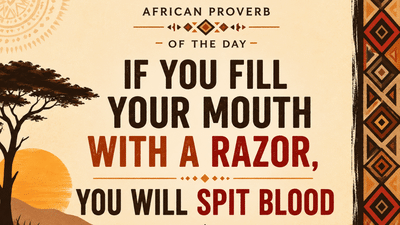
Every action has consequences, whether we realise it immediately or only after time has passed. Some decisions may seem harmless at the moment, but they can leave lasting effects if made without thought or restraint. The African proverb , "If you fill your mouth with a razor, you will spit blood," uses a striking image to deliver this timeless lesson. It reminds us that when we knowingly embrace dangerous actions, harmful words or poor decisions, we should not be surprised by the consequences that follow. The proverb is a powerful call for wisdom, self-control and personal responsibility .
African proverb of the day
"If you fill your mouth with a razor, you will spit blood"
What does this proverb mean
The proverb teaches that harmful actions naturally lead to harmful outcomes. Just as placing a razor in your mouth would inevitably cause injury, making reckless decisions, speaking carelessly or engaging in destructive behaviour often results in pain for ourselves or others. It encourages us to think before we act and to recognise that every choice carries consequences.
Small decisions can have lasting consequences
Many of life's biggest problems begin with seemingly minor choices. A careless remark can damage a friendship, a dishonest act can destroy trust, and a moment of impatience can lead to regret. While the consequences may not always appear immediately, they often accumulate over time. This proverb reminds us that wisdom lies in recognising the long-term impact of our actions before we make them.
The words we choose matter
The proverb can also be understood as a warning about speech. Harsh words spoken in anger, rumours spread without evidence or insults delivered without thought can wound relationships far more deeply than we intend. Once spoken, words cannot be taken back.
Choosing kindness, honesty and restraint often prevents conflicts that might otherwise leave lasting emotional scars. In this sense, the proverb reminds us that our tongue can either heal or harm.
Responsibility begins with recognising our own choices
It is often easier to blame circumstances or other people when things go wrong. However, this African saying encourages us to look inward before looking elsewhere. While not every hardship is self-inflicted, many challenges arise from decisions we willingly make.
Accepting responsibility for our actions allows us to learn from mistakes, make wiser choices and avoid repeating the same patterns. Growth begins when we recognise that our decisions shape our future.
Why this proverb still matters today
In today's fast-paced world, where impulsive decisions and instant reactions are common, this proverb feels more relevant than ever.
Whether posting on social media, making financial choices or responding in moments of anger, people often act before considering the consequences. The saying reminds us that wisdom is not simply about knowing what to do, it is about thinking ahead and understanding that every action has a result. By choosing carefully, we can avoid unnecessary pain and build healthier relationships, better habits and a more thoughtful life.
-
Former Australian Cricketer Faces Prison After Pleading Guilty To Child Sexual Abuse

-
Trump Claims Iran Has Agreed To 'Just About Everything' US Needs In Talks

-
Who Has More Ex-AIADMK Leaders? DMK, TVK Spar Over 'Washing Machine' Remark

-
An SBI manager questioned in Ayodhya 'theft' case was a tenant of Ram temple trustee

-
Jamal Musiala Reflects on Germany's Shocking World Cup Exit