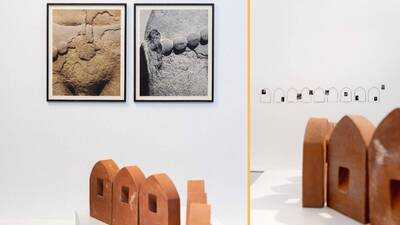
For years, artist Kirti Virmani has been collecting women's journals—not for what they reveal about the writers, but for what they reveal about all of us. Her latest exhibition, weight of me , transforms these intimate writings into an immersive meditation on memory, inheritance and the invisible architecture of womanhood.
There are no grand declarations in the journals Kirti collects. Instead, there are everyday confessions. A fear scribbled before bed. A dream that never found its voice. A moment of defiance. A quiet desire. Words that may never have been meant for anyone else.
Yet, for the London-based Indian artist, these fragments have become sacred texts. "I think of these journals as a kind of holy book," she says. "They guide, challenge and inform my practice," she says.
That belief sits at the heart of the
weight of me, her latest site-specific installation housed inside the now-decommissioned Lambeth County Court in London. Rather than treating walls as barriers, Virmani imagines them as vessels that absorb voices, memories and histories. Visitors don't simply walk through an exhibition; they move through a living archive of women's lives.
The title itself hints at multiple burdens—the weight of memory, of identity, of expectations handed down across generations. At the centre are voices extracted from journals collected over several years, some discovered by chance, others shared in trust. Together they create an intimate chorus of women speaking across time.
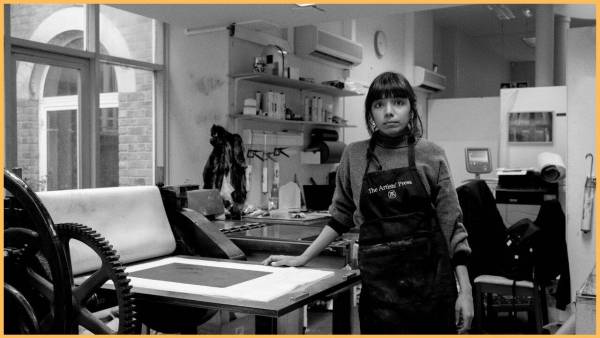
Growing up in India and now living between London and India has sharpened Virmani's understanding of what identity means. Distance, she says, has not weakened her connection to home but made her question it more deeply.
"Living between cultural contexts has made me increasingly aware of identity as something fluid. I think it is something we continuously build upon, layer by layer and sometimes something we shed. Being Indian in London has created a distance from home that, ironically, allows me to look more closely at the histories, symbols, rituals and stories I grew up with," she says.
Turning memory into material
Her work, however, resists being boxed into conversations around nationality alone. Instead, it circles larger ideas—belonging, inheritance, gender and memory.
Those questions emerge through material as much as narrative. Photography, printmaking, porcelain, ceramics, metal, sound and sculptural interventions coexist in her practice, each chosen not for aesthetic effect but because the idea demands it. There is no hierarchy between mediums. A photograph may become a sculpture; an observation may evolve into an installation.
"My work begins with questions," Virmani says. "There is often an innate anger that fuels these inquiries—an anger towards the limitations, expectations and inherited roles that continue to define how women move through the world." Art, for her, becomes a way of dismantling those inherited structures before rebuilding them differently.
That impulse is visible throughout
weight of me. The installation asks what it means to inhabit a space and, more importantly, who gets to decide how that space is built. It draws parallels between physical architecture and emotional architecture—between the houses women live in and the invisible walls they inherit.
Virmani often returns to Virginia Woolf's idea of "a room of one's own", but extends it further. A journal, she believes, can become that room. It is where fears can be named, futures imagined and identities rewritten without interruption. Writing itself becomes an act of freedom.
Interestingly, the artist describes herself first as an observer. A photograph, an overheard moment or an unsettling thought often marks the beginning of a body of work. She doesn't force meaning onto materials. Instead, she lets the work reveal itself.
"Often, I don't think too much," she says with a laugh. "I've learned to translate thoughts into making. Otherwise, we can spend too much time overthinking."
As her practice grows, Virmani wants to work on larger architectural interventions while continuing to build archives of women's stories. She also hopes to collaborate with organisations in India that support women and emerging creatives, extending her practice beyond galleries into communities. " Today, I am interested in gathering women's stories, building an archive of journals and personal writings that I continue to collect. I think of these texts as a kind of holy book—writings that guide, challenge, and inform my contemporary visual art practice. Through my work, I hope to create spaces for reflection and dialogue," she says.
-
France vs Sweden: Prediction and Preview for 2026 World Cup Round of 32 Clash in New Jersey

-
55 dead in five months: India’s manual scavenging crisis persists
-
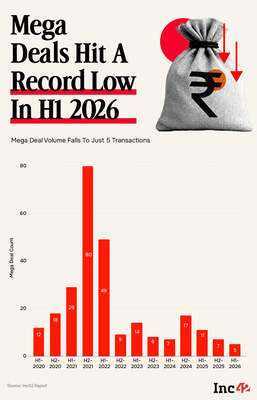
Indian Startup Funding Slips 9% To $5.2 Bn In H1 2026
-
Arunachal flood toll rises to 4 with over 90,000 affected
-
Post Office Small Savings Schemes: Government Announces Fresh Decision on PPF, SCSS and SSY Interest Rates