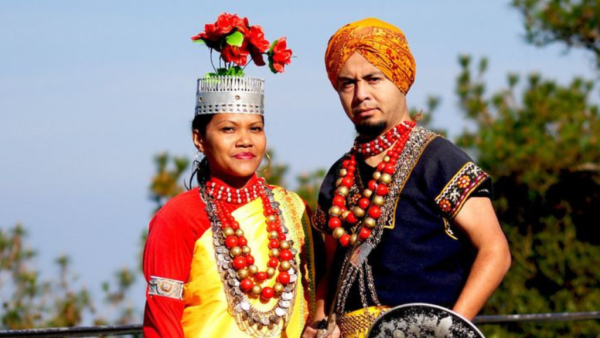
In most states of India, after marriage, a girl leaves her home and goes to her husband’s house, i.e. her in-laws. The lineage continues in the name of the child and property rights also pass to the children. However, in the state of Meghalaya in North East India, an opposite and surprising family system can be found. The major tribal tribes of Meghalaya, the ‘Khasi’ and the ‘Garo’, have a centuries-old ‘matriarchy’ tradition. This unique lifestyle and its various aspects are as follows:
After marriage, son-in-law lives as in-laws
The biggest feature of this unique tradition is that after marriage, the bride does not leave her house, but the groom (Navardev) leaves his own house and comes to live in the girl’s house. That is, here after marriage the girl does not become the in-laws, but the son comes to live as the in-laws forever as a son-in-law. As a result, women do not have to face the mental stress of adjusting to a new environment or leaving their homes after marriage.
A bucket of water on the head and baskets of Rukhvata! Do you know the unique tradition of ‘Badam Nachavani’ in rural Maharashtra?
The lineage goes by the mother’s name
In a patriarchal system, children take their father’s surname. However, children born in the Khasi and Garo communities are given their mother’s surname. The lineage of the family continues in the mother’s name. If a couple only had a son, their lineage was considered to end there, as the son’s surname could not be passed on to his children. Therefore, the birth of a girl child is considered very sacred and auspicious in this society.
The youngest daughter owns the property
There is also a special rule regarding the distribution of ancestral property. The ancestral wealth of the family is passed on to the daughters only, without any son inheriting it. Even in that, the youngest daughter of the family gets the main share of the property. In turn, she has the full responsibility of taking care of the elderly parents and taking care of the unmarried siblings of the family.
Shillong Diaries: Such a regret of nature! This lake in the country is called ‘Water of Tears’; Behind this ‘Ashi’ is a very emotional folk tale
Position of Women and Modern Changes
This matriarchal system has given Meghalaya women immense respect, freedom and security in society. From running shops in the market to making family decisions, women are actively involved in everything.
Although property and lineage are in women’s hands, men’s place in political and social decision-making is still important. Although this system is changing to some extent in today’s modern times due to education and employment, the culture of Meghalaya is still seen as a great example of women empowerment worldwide.
-
Real Madrid step up talks with Inter Milan for €60 million-rated defender Alessandro Bastoni, Mourinho’s top defensive target

-
Julian Nagelsmann vows to stay on as Germany manager despite ‘bitter’ World Cup exit to defensive Paraguay

-
France’s Hidden Edge That Could Propel Them to a Third World Cup Title

-
Glasgow Hospital Tests Patient for Suspected Ebola Amid Ongoing Outbreaks

-
Major Overhaul of Federal Student Loan Repayment Begins July 1