
For a long time, the mega villa was one of the clearest symbols of success in the UAE property market. Bigger plots, larger built-up areas, sweeping reception rooms and multiple entertainment spaces were seen as the language of luxury. A home’s scale often spoke before its design did. But as the market matures, that definition is becoming less straightforward.
The affluent buyer has not stopped wanting comfort, privacy or exclusivity. What is changing is the way these qualities are being measured. A growing number of high-net-worth buyers are questioning whether more space always means better living. Instead of asking how large a home is, they are asking how intelligently it works, how easy it is to maintain, how much energy it consumes, and whether every room has a purpose.
This does not mean the mega villa is disappearing. In Dubai, Abu Dhabi and other prime UAE markets, there will always be demand for large homes, particularly from big families and ultra-high-net-worth individuals who want land, privacy and personalised estates. But the idea that size alone defines luxury is weakening.
“The meaning of luxury is becoming more refined as the market is clearly shifting away from the idea that size alone defines value,” says Elie Naaman, CEO and Co-founder of Ellington Properties. “However, there will always be demand for large villas in Dubai, especially among families and ultra-high-net-worth individuals who value privacy, land, and exclusivity.”
The key shift is not anti-villa. It is anti-waste. Buyers are becoming more selective about space that adds value to daily life, and more sceptical of rooms that exist only to inflate square footage.
Elie Naaman, CEO and Co-founder of Ellington Properties.
Smaller, but sharper
A smaller luxury home is not a compromise. In the new market language, it is often a more deliberate product. The emphasis is on proportion, natural light, privacy, flow, materials and the emotional quality of the space.
Naaman says buyers are placing greater emphasis on how a home functions and the experience it offers every day. “At Ellington, we are seeing stronger interest in homes that feel intentional in both design and lifestyle,” he says.
“Natural light, stronger flow between spaces, wellness integration, privacy, and a sense of connection to the surrounding community are becoming increasingly important in defining modern luxury.”
This reflects a wider change in buyer psychology. A 12,000-square-foot villa with underused formal rooms may be less attractive than a 5,000-square-foot home where every area is planned well. A compact residence with indoor-outdoor flow, high ceilings, flexible rooms and framed views can feel more luxurious than a larger home that is poorly organised.
The same applies to premium apartments. Younger wealthy buyers are increasingly comfortable with high-end apartment living when it delivers privacy, amenities, design quality and convenience in prime locations. In some cases, they would rather have a highly serviced, beautifully designed apartment close to lifestyle districts than a large villa that requires more staff, maintenance and commuting.
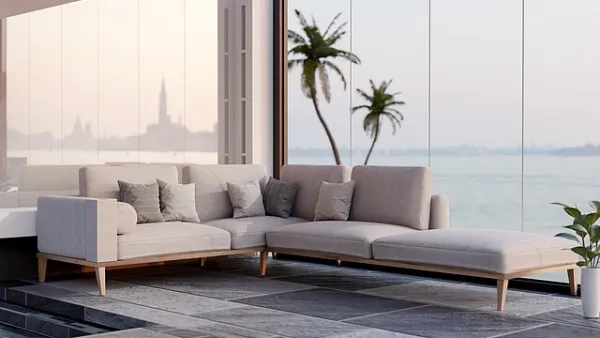
The interior design of a luxurious contemporary living room features a comfortable couch by the large window with a sea view.
Naaman says younger high-net-worth buyers are “far more lifestyle-led”, describing them as global-minded, tech-savvy, design-conscious and clear about what they want from a home. They are placing greater value on flexibility, design quality and long-term liveability rather than scale alone.
That shift is already visible in Dubai’s upper end. According to Ellington’s commentary, in second quarter of 2025 apartments outpaced villas in the $10 million-plus segment, recording 80 apartment sales compared with 63 villas.
The cost of excess
One of the biggest reasons behind this change is practical: large homes are expensive to run. Cooling, landscaping, cleaning, repairs, security, staffing and general upkeep can become a heavy long-term commitment, even for wealthy buyers. The question is no longer whether a buyer can afford the cost. It is whether the cost feels justified.
Naaman says rising maintenance costs and sustainability concerns are becoming increasingly influential, particularly as buyers place more emphasis on the long-term ownership experience. “Larger homes naturally require higher levels of cooling, maintenance, landscaping, and ongoing upkeep, prompting more discerning consideration of whether additional space genuinely enhances day-to-day living,” he says.
This is where the old logic of luxury begins to look inefficient. A rarely used majlis, oversized corridors, duplicated lounges or guest wings that sit empty most of the year may look impressive on paper, but they still need to be cooled, cleaned and maintained. For younger buyers, unused space can feel less like prestige and more like poor design.

Mohamed Fiaz Khazi, Entrepreneur and Managing Director of Euro Systems
Sustainability also plays a role. The UAE’s climate makes energy performance more than an environmental talking point. It has a direct effect on comfort and running costs. A home that reduces heat gain, maximises daylight without overheating, and uses durable materials can be more valuable over time than a larger property that performs poorly.
Mohamed Fiaz Khazi, Entrepreneur and Managing Director of Euro Systems, says sustainability and long-term performance have become important considerations among luxury homeowners. He points to increased demand for high-performance glazing systems that reduce solar heat gain while maximising daylight, along with shading solutions that improve thermal comfort and reduce cooling requirements.
“Rather than viewing sustainability as a compromise, today's premium buyers see it as an enhancement to luxury,” Khazi says. “A well-designed home should deliver exceptional aesthetics while operating efficiently throughout its lifespan.”
Smart space replaces empty space
The next generation of luxury homes is being shaped by smarter planning. Buyers want spaces that can adapt to different uses: a home office that can become a guest room, a family room that opens to a terrace, a dining area that works for daily meals and entertaining, and storage that is built into the design rather than added later.
This is not about making homes small for the sake of it. It is about making them more efficient without making them feel restricted. Good design creates openness without waste. It uses light, ceiling height, views, circulation and materials to make a home feel generous, even when the footprint is controlled.
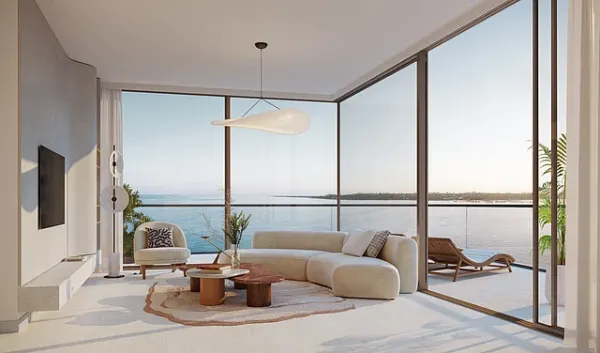
Khazi says modern luxury is increasingly defined by simplicity, precision and seamless integration. Homeowners are moving toward architectural features that improve both aesthetics and daily living, rather than relying only on decorative gestures. “Large expanses of glazing, slim-profile aluminium systems, floor-to-ceiling openings, concealed frames, and uninterrupted views have become highly desirable features in premium residences,” he says.
These features matter because they expand the experience of space without expanding the built-up area. A room with floor-to-ceiling glazing and a relationship to a garden, terrace or skyline can feel larger and more valuable than a closed room with more square metres but less atmosphere.
Indoor-outdoor living is especially important in the UAE, where cooler months allow terraces, courtyards, gardens and pool decks to become extensions of the home. When designed well, these areas reduce the need for oversized interiors. They also create a more flexible lifestyle, where entertaining and family time can move between inside and outside.
Technology without clutter
Smart home technology is another part of this redefinition, but buyers are becoming more sophisticated about it. Technology for its own sake is not luxury. Complicated systems that are hard to use or visually intrusive can become a burden. The new expectation is quiet integration.
Naaman says smart systems are now expected to enhance comfort and convenience without becoming visually overwhelming. The best technology is often invisible: lighting that responds naturally to mood and time of day, climate systems that improve comfort efficiently, shading that adjusts to heat and glare, and security that works without disrupting the feeling of home.
A generational reset
Younger wealthy buyers are playing a major role in this reset. Many have lived, studied or travelled internationally. They understand hotel-style service, branded residences, wellness-led communities and design-led apartments. They are less attached to old symbols of status and more interested in convenience, personalisation and experience.
They also think differently about ownership. Some want homes that support hybrid work. Others want lock-up-and-leave residences that fit travel-heavy lifestyles. Many place a premium on communities with strong amenities, curated interiors, security, privacy and proximity to restaurants, retail, beaches, schools or business districts.
This does not eliminate demand for villas. It changes what buyers expect from them. A villa now has to justify its size through better planning, energy performance, privacy, landscape design and flexibility. Empty scale is no longer enough.
The new luxury equation
The end of the mega villa is probably too dramatic a phrase. The UAE will continue to sell large villas, trophy mansions and private estates. That market is not going away. But the automatic assumption that bigger is better is losing ground.
The stronger story is the rise of efficient luxury: homes that are better planned, easier to operate, more sustainable and more connected to the way people actually live.
The future luxury home in the UAE may still be spacious, but it will need to be purposeful, efficient, connected to outdoor space, and personal rather than merely large.
As Khazi sums it up: “Today's luxury is measured less by square metres and more by how intelligently a home performs, feels, and reflects the owner's personality and lifestyle aspirations.”
Dubai luxury villa rentals surge as wealthy tenants drive record rents Dubai's villa communities grow as residents choose bigger homes, privacy Dubai luxury villa rentals surge as wealthy tenants drive record rents-
Marcus Rashford and Manchester United share the same objective

-
'Brain, Heart, Lungs, Intestines Missing': Indian Sailor's Body Returned From Venezuela Without Major Organs, Family Seeks Justice

-
Toyota Set to Launch Updated Fortuner SUV in India

-
Japanese PM Sanae Takaichi Visits India for Strategic Talks

-
Kejriwal Criticizes BJP Over Allegations of Ram Temple Donation Misuse