Is a baby King Cobra (cobra hatchling) venomous? Here's what to do if one turns up in your home and garden
ETimes | July 2, 2026 5:40 PM CST
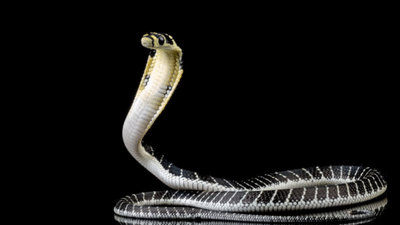
Ever wondered if a baby king cobra or a hatchling is actually venomous? What to do if you encounter one in your garden?
Yes, a baby king cobra is venomous, fully, dangerously venomous, right from the moment it hatches. There's no juvenile grace period where there is no venom or the bite is "less serious." Wildlife institutions that actually breed and handle these snakes, like the Wildlife Conservation Society's Bronx Zoo, put it plainly: baby king cobras are venomous from birth, even though they're delicate and need careful handling in captivity.
Herpetology sources note the venom of hatchlings is just as potent as that of adults, the toxin itself is the same neurotoxic cocktail from day one. What changes with age is really just volume and reach. An adult can deliver more venom and strike from farther away. A hatchling can't do that yet, but it can still hood up and strike.
As per a titled "Myth defanged: baby rattlesnake bites aren’t more dangerous than bites from adult rattlesnakes" published by researchers from Loma Linda University has found that bites by the baby rattlesnakes still constitute a serious emergency requiring immediate medical attention. The researchers debunked a deep rooted myth that baby rattlesnakes can’t control the release of their venom and therefore release it all when biting. The researchers however, said snake bite even if it is from a hatchling is still a medical emergency and juvenile snakes do possess venom, though it is far less than that carried by adult snakes.
So the size of the snake tells you nothing about how seriously you should take it. If anything, that's the part people get wrong, assuming small means harmless, when with king cobras, it really doesn't.
Why is it important to know this?
With the arrival of monsoon, snakes have become a menace in India. Usually late summer is an ideal time for snakes to breed. Hence, it is important to know what to do when you encounter them.
Yes, a baby king cobra is venomous, fully, dangerously venomous, right from the moment it hatches. There's no juvenile grace period where there is no venom or the bite is "less serious." Wildlife institutions that actually breed and handle these snakes, like the Wildlife Conservation Society's Bronx Zoo, put it plainly: baby king cobras are venomous from birth, even though they're delicate and need careful handling in captivity.
Herpetology sources note the venom of hatchlings is just as potent as that of adults, the toxin itself is the same neurotoxic cocktail from day one. What changes with age is really just volume and reach. An adult can deliver more venom and strike from farther away. A hatchling can't do that yet, but it can still hood up and strike.
As per a titled "Myth defanged: baby rattlesnake bites aren’t more dangerous than bites from adult rattlesnakes" published by researchers from Loma Linda University has found that bites by the baby rattlesnakes still constitute a serious emergency requiring immediate medical attention. The researchers debunked a deep rooted myth that baby rattlesnakes can’t control the release of their venom and therefore release it all when biting. The researchers however, said snake bite even if it is from a hatchling is still a medical emergency and juvenile snakes do possess venom, though it is far less than that carried by adult snakes.
So the size of the snake tells you nothing about how seriously you should take it. If anything, that's the part people get wrong, assuming small means harmless, when with king cobras, it really doesn't.
Why is it important to know this?
With the arrival of monsoon, snakes have become a menace in India. Usually late summer is an ideal time for snakes to breed. Hence, it is important to know what to do when you encounter them.
- Do back away slowly and keep the snake in your line of sight, sudden movement or turning your back is what triggers defensive strikes.
- Do keep children, pets, and other people out of the area immediately and shut doors between you and the room if it's indoors.
- Do call a professional snake rescuer or your local wildlife/forest department helpline — most Indian cities have dedicated snake rescue volunteers who'll relocate the animal free of charge.
- Do note where the snake was last seen — hatchlings often signal a nearby nest, and rescuers will want to check for siblings or eggs.
- Don't attempt to kill, trap, or move the snake yourself, even a small one — most bites happen during exactly this kind of amateur intervention.
- Don't assume a baby snake is harmless because of its size — this is the single most dangerous misconception people carry into these encounters.
- Don't use sticks, brooms, or your hands to herd it outside — this reads as a threat and invites a strike.
- Don't pour phenyl, kerosene, or other chemicals into burrows or crevices to flush it out — this is a common but ineffective and often counterproductive folk remedy that just as often drives the snake toward you rather than away.
READ NEXT
-
Azzedine Ounahi and Soufiane Rahimi halt Jesse Marsch’s World Cup dream as Morocco oust Canada: Key winners and losers

-
Banana Cutlet Recipe: Crispy on the outside, soft on the inside, easy recipe for banana cutlets, try it with tea.

-
New feature to update Aadhaar card: Add email

-
Big action on controversial books in government schools in Jammu and Kashmir, LG Manoj Sinha suspended 8 officers

-
Farah Khan recalls hilarious Main Hoon Na stunt mishap