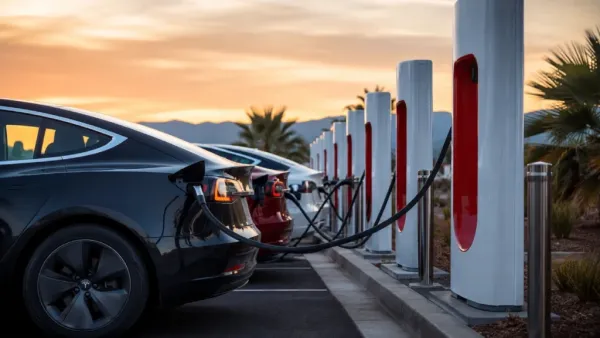
Tesla Supercharger: The global Supercharger network is changing in a way, as it is not just for Tesla cars anymore. Tesla’s Charging team revealed on July 1, 2026, that the global Supercharger network is being used a lot more.
On average, each Supercharger is being used about 9 times per day. Tesla’s Charging team released fresh utilization data via TeslaNewswire on July 1, 2026, revealing that global average throughput has climbed to 9 sessions per stall per day. Yet, even as energy delivery spiked 30% year-over-year to 2.0 terawatt-hours in Q2 2026, the network’s global wait rate fell to a near-record low of 0.4–0.5%.
This forces a complete re-evaluation of public charging infrastructure efficiency under heavy, multi-brand demand.
Inside the Data: How Tesla Superchargers Handle 60 Million Sessions With Zero Wait Times
To handle a lot of traffic without causing traffic jams, it is allowing 9 sessions per stall, so users’ equipment is being used well for around 4.5 to 6.75 hours every day.
| Metric Tracker | Company Performance Data | Real-World Network Impact |
| Energy Delivered | 2.0 TWh in Q2 2026 (+30% YoY) | This puts a lot of strain on the power grids but enhances the network performance. |
| Total Sessions | 60 million (+32% YoY) | This increases the wear and tear on the parts. |
| Hardware Expansion | ~2,700 new stalls added in Q2 | Focusing a lot on upgrading to high-density V4 cabinets |
| Wait Rate | ~0.4–0.5% globally | People do not have to wait in line |
The Billion-Dollar Pivot: Why Opening Superchargers to Non-Tesla EVs is a Financial Necessity
Spreading columns of capital across thousands of aging stalls isn’t cheap; retrofitting legacy infrastructure demands serious cash.
By opening the gates to over 27,500 non-Tesla vehicles, the company unlocked fresh revenue streams and federal subsidies to buffer the financial burn of this rapid expansion.
But public money breeds operational headaches.
The platform now has to accommodate a sea of third-party cars with wildly different charge-port locations. To survive financially, the network can no longer behave like an elite, closed ecosystem; it has to run with the ruthless efficiency of a high-volume gas station.
Grid Overload vs. Hyper-Charging: The Hidden Environmental Toll of 500 kW V4 Stalls
Plugging in ultra-fast V4 cabinets capable of throwing 500 kW at cars and a staggering 1.2 MW at commercial semi-trucks hammers local distribution grids. Sucking megawatts out of the grid instantaneously forces a massive reliance on on-site battery storage systems just to keep local substations from melting under peak-demand surges.
Aggressive, high-throughput charging bakes vehicle batteries and thrashes the dispensing hardware. Liquid-cooled cables handle the intense current beautifully, but they take a brutal beating under constant daily use.
The big issue with electronics is that they are piling up with broken parts, and this might hurt the network’s plans to be kind to the environment.
The V4 Rollout Blueprint: Next-Gen Specs, Upgrade Costs, and 800V Architecture Explained.
- Release Status: The V4 hardware is being deployed around the world in 2026, and it is targeting the areas where a lot of people use it.
- Estimated Hardware Costs: If you want to upgrade an 8-stall station with new cabinets, it will cost a lot more than $150,000, which is roughly ₹1,25,80,000, and this does not include the fees for connecting to the grid.
- Technical Specifications: The V4 hardware supports 800V architectures it can deliver up to 500 kW, for passenger models it has cables so it can work with cars that are not Teslas and it has contactless payment terminals so it meets the rules of different regions.
- Software Interventions: Expansion of automatic digital queuing systems to manage heavy holiday travel without physical lines.
The Final Verdict: Can Tesla Maintain the Gold Standard in a Multi-Brand EV Future?
The network is working really well now. It is handling a lot of use without any issues. It’s getting harder to keep it this way as more third-party users join.
Drivers have to decide if they want to use a growing network that might not be as reliable or share spaces with other companies.
The future of the infrastructure depends on whether we can get V4 hardware out to more places faster than new types of electric vehicles are being made.
-
'A costly error' – Belgium coach Rudi Garcia reveals how his side exploited Senegal’s main flaw as Romelu Lukaku and team stage late World Cup comeback victory

-
'Unfair Call' – Why the USMNT Cannot Challenge Folarin Balogun’s Red Card in World Cup Win Over Bosnia and Herzegovina as Christian Pulisic Sends Message of Support

-
Youri Tielemans downplays on-field clash with Leandro Trossard as Belgium overcome Senegal in World Cup last-32 clash

-
Hyderabad Wonderla visitors face Islamophobic slur, slam management

-
UK Minister Lisa Nandy Quits X, Says Platform 'Favours Abuse And Misinformation'