
The conversation on The United Stand largely focused on Manchester United’s current transfer strategy, with Aurélien Tchouaméni highlighted as the prime example of the club’s perceived issues. The debate was straightforward, questioning what United are truly willing—or unwilling—to pay for players considered immediate upgrades.
Mark Goldbridge summed up his argument clearly: “Tchouaméni, right? If United are worried about his wage and his fee, I’m telling you now, mate, if Real Madrid decide to sell him, they’ll do it at market value. His salary will be market value, and he’s playing for Real Madrid and France.” He went on to point out, “He could even end up a World Cup winner in a couple of weeks.”
The essence of the discussion was that Tchouaméni commands a transfer fee and wage that accurately reflect his standing in world football. There was no suggestion of an inflated price tag—rather, that any cost associated with him would match the calibre of the player United would be signing.
Goldbridge made his stance clear: “If we’re worried about the wage and the fee for Tchouaméni, then basically we’re worried about paying a fair price for a player who’s worth it.” That, he argued, is the real issue—not the player himself, but whether United are prepared to meet the going rate for elite talent.
He also drew a distinction between young prospects and fully developed players. “I understand that Matteas Fernandez is one for the future. I get that Anderson is one for the future. But with players like Tchouaméni and Tonali, you’re talking about footballers who are already valued correctly, whose wages are appropriate, and who are top-quality, ready-to-perform professionals.”
Goldbridge then posed the central question: “So if we’re scared or unwilling to pay, say £75 million for Tchouaméni and offer him £250,000 a week, we’re in trouble, aren’t we?”
The broader concern raised was that United might have strict internal limits on both transfer fees and wages. Goldbridge remarked, “And I think my message is that we’re simply not prepared to pay proper fees.” He elaborated, “It’s not a question of thinking players are overpriced. It’s clear we have an issue with going above £200,000 a week in wages and beyond £70 million in transfer fees, and that really worries me.”
That anxiety was again tied back to Tchouaméni. Goldbridge said, “Because our next move should be for Tchouaméni—he’s available—but we’re not even ready to pay for quality players, if you know what I mean. That’s definitely something to be concerned about.”
He also compared Tchouaméni’s situation to Sandro Tonali to reinforce his perspective. “Tonali at £250,000 a week and £92 million? That’s not overpaying. That’s actually fair business. That’s a good deal.”
To contextualise his argument, Goldbridge referenced United’s past spending. “We paid £89 million for Pogba ten years ago and probably gave him £250,000 a week. I can’t recall his exact starting wage—maybe someone else does,” he said. “But if you adjust that, £89 million and £250,000 a week from Juventus a decade ago would probably be the equivalent of £400,000 a week and £125 million today, maybe even more.”
Returning to the current landscape, he concluded, “So, Tonali at £92 million and £250,000 a week is fair value. Tchouaméni at £75 million and £250,000 a week is fair value too—but we’re not willing to pay that.”
The discussion also touched upon Tottenham Hotspur’s transfer moves, with a live update adding unexpected intrigue. Goldbridge read out, “Um, I’ve just received something here—official: Matteas Fernandez joins Tottenham on an £80—or is it £44 million—deal? That can’t be right. Must be a typo. Either that, or someone’s having a laugh, because that figure can’t be correct.”
Fan reactions read during the show added to the frustration. One supporter wrote, “We’re heading for a league finish like Newcastle’s last season, thanks to our directors.” Another commented, “Many fans are trying to justify our transfer behaviour, but those same fans will later demand we compete with the clubs spending more and already ahead of us. The contradiction is ridiculous.”
Goldbridge also shared his forecast for the upcoming season. “My prediction is that we’ll start the season well because we’ve got an easier run of fixtures,” he said, before adding, “And whatever happens, Spurs will probably start poorly because their opening fixtures are tough on paper.”
He expanded on this with a longer-term view: “But as we all know, from January to May is when you really push for points. Spurs won’t be in Europe during that period, and they’ll have settled by then. So I don’t think their start matters—it’s how they finish the season that poses the real threat.”
Ultimately, the entire discussion circled back to Tchouaméni. The overarching message was consistent: if a player of his calibre is available at fair market value and Manchester United still hesitate over the cost, the problem runs far deeper than one single transfer target.
-
Neil El Aynaoui: The World Cup standout who could be Manchester United’s next midfield solution

-
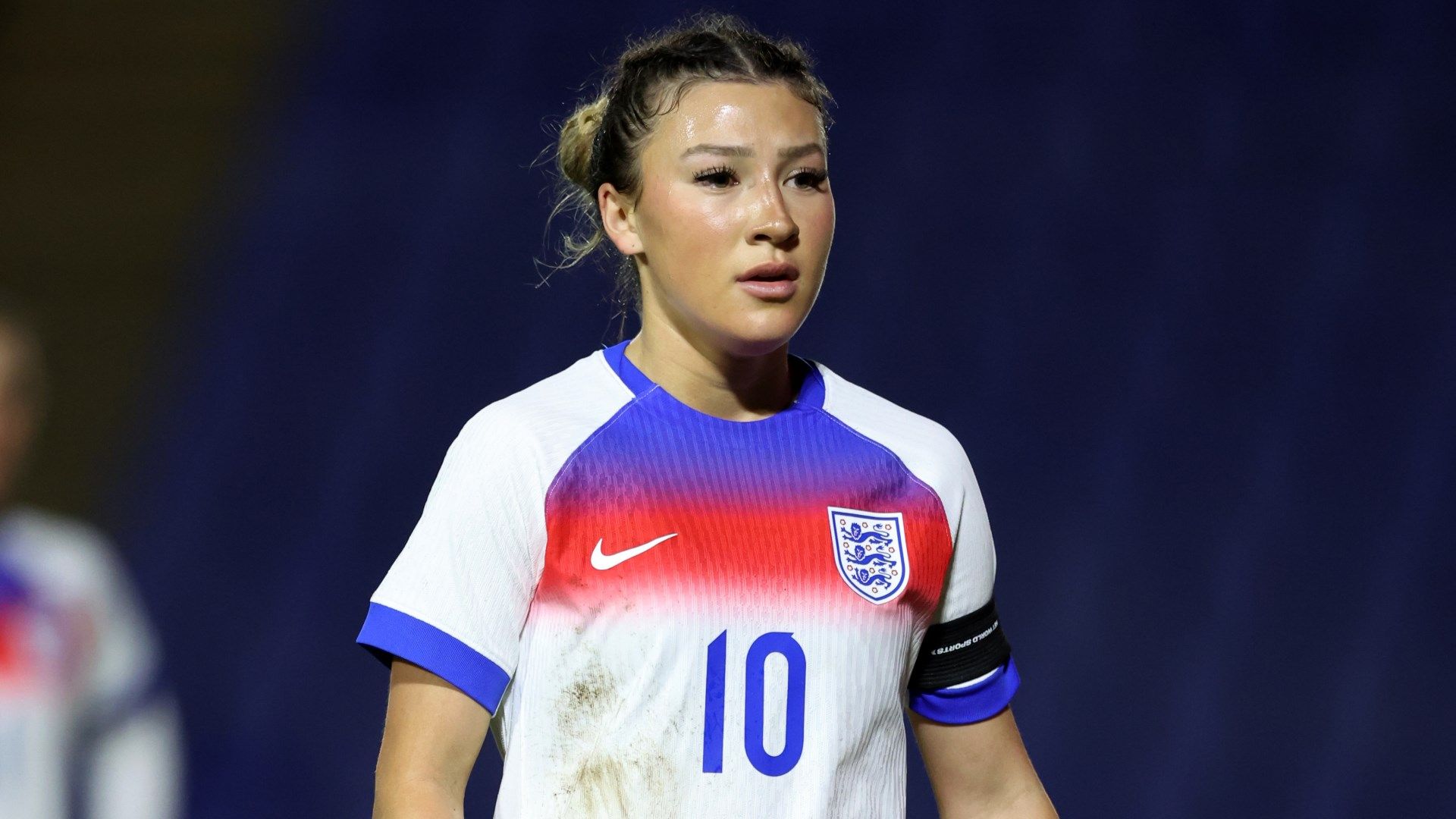
Rising England star Erica Parkinson joins two-time NWSL champions North Carolina Courage as her breakthrough year continues after first senior Lionesses call-up
-
Kids Safety Tips: If your children also go to play in the neighborhood, then first teach them these 5 safety rules.

-
Delicious Jamun Smoothie and Ice Cream Recipe

-
Is grey hair reversible? Scientists are putting color back into strands