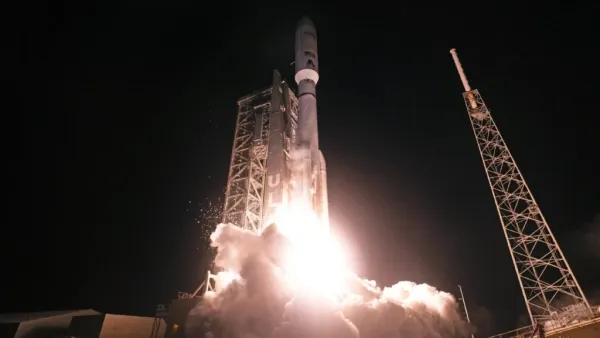
In the dead of night on July 2, a United Launch Alliance Atlas V rocket lit up the Florida coast one last time. At around 12:30 a.m. Eastern Time, it lifted off from Space Launch Complex 41 at Cape Canaveral and was carrying 29 broadband satellites for Amazon Leo (previously named Project Kuiper, for those in need of keeping up). Within 70 minutes, ULA confirmed every satellite had been released cleanly into orbit.
This launch, LA-08 (meaning they have previously done this 8 times!), was not a typical routine launch, being the final site for Amazon’s satellite constellation. From here, the Leo missions move to utilize the newer and more powerful Vulcan rocket from ULA on the Vulcan Program. This launch marks a changing of the guard.
What Is Project Kuiper? Amazon’s Satellite Internet Network
If this is the first time you are hearing about Amazon Leo, which was formerly known as Project Kuiper, it is Amazon’s satellite internet venture built to compete directly with Starlink by SpaceX. The idea is to place a large network of satellites in Low Earth Orbit, hence the name Leo, to beam broadband Internet down to anyone who would need it, but with no cable to reach them. This project was started back in 2019, and after years of development, testing, regulating, approving, and executing, the first product satellite went up in 2025. This ties into Amazon’s broader ecosystem of cloud and logistics services that have been planned and are along the way.
Atlas V Final Launch Deploys 29 Project Kuiper Satellites
For this mission, the LA-08, the beefiest version of the Atlas V lineup, the Atlas V 551 was used. It is built with 5 solid rocket boosters, bolted around its core with a 5-meter payload-sharing, and the Center Upper Stage that does the fine work of positioning the satellites once they are in space. The Amazon Leo satellites qualify on both counts of needing a rocket that can carry a heavy payload and needs precision, and the Atlas V 551, for a mission carrying 18 tons of payload, was fitting to say the least.
About 21 minutes after lift-off, the rocket began releasing its 29 satellites in stages, a process that took roughly 70 minutes to complete. The satellites were dropped off at an altitude of around 289 miles (465 km), and they will now use their own propulsion to climb to their working altitude of 392 miles (630 km). This is where Amazon’s mission control team in Redmond, Washington, will finish checking them out and bringing the Satellites online.
Amazon thus completes their 396 Leo satellite constellation across 14 total missions, with this final launch. This Atlas five rocket alone is responsible for 224 of them spread across 8 flights, all of them being successful.
With this mission complete, Amazon now shifts from the Atlas V to the more capable Vulcan rocket, which can carry heavier payloads more efficiently, allowing Amazon to deploy a larger array of satellites in the future and thus accelerate the expansion of the Amazon Leo network.
Project Kuiper vs Starlink: Amazon’s Long-Term Goal
Amazon Leo aims for roughly 3200 satellites in its final constellation. Right now, it has only 396, which means well over 80 launchers are still needed before the network is anywhere close to being complete. For comparison, Starlink already has close to 11000 satellites in orbit and keeps adding more regularly. Even though Amazon does not have to aim for such a massive array, as they lean more on ground relay infrastructure, it is still an enormous buildout, even after 14 completed missions.
Atlas V has been flying in some form since 2012 as one of the most dependable rockets in the business, as the ULA winds the Atlas 5 program down.
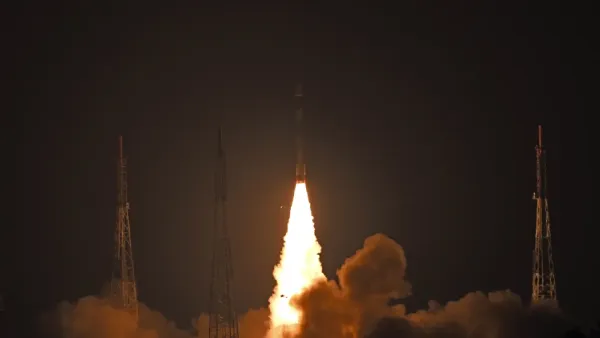
Why Project Kuiper Matters for Global Internet Access
Satellite broadband is no longer just an aerospace initiative. It is rapidly becoming the foundation of all future digital infrastructure. Companies are racing to establish orbital networks capable of serving remote communities, glamorous enterprises, governments, and institutions. And this kind of emerging technology unfolding right before us may ultimately shape the next era of global connectivity. According to the Amazon Leo Director of Launch Systems, Mellisa Wuerl: ULA is committed to close collaborations with their partners to assure unmatched flight capabilities tailored to these evolving needs. Atlas V did the early development phase and did it with a perfect track record, and now it’s Vulcan’s turn to help scale things up.
As the launch frequency increases with Vulcan and other providers, the base of satellite deployment is expected to now accelerate significantly.
-
Ayyoub Bouaddi: Manchester United Muscle Their Way to the Front in Midfield Pursuit

-
Ticket Prices for Mexico vs England World Cup Clash Soar to ₹27 Lakh

-
I Tried 4 Hacks To Remove Bitterness From Cucumber And This One Gave The Best Results

-
Dia Mirza stole hearts again, she looked amazing in a chiffon saree worth Rs 29 thousand, recreate this look like this

-
Moon Race Heats Up: South Korea’s plan could change global space competition