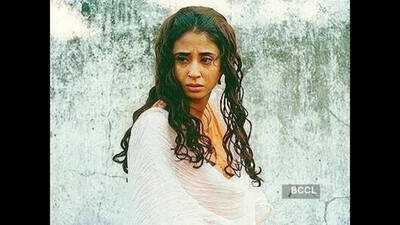
Bollywood has always had a contradictory relationship with its actresses. It has worshipped them while objectifying them, made them superstars while treating them as accessories to male heroes, celebrated their beauty while questioning their ambition, and repeatedly projected them as symbols of a changing India even as it struggled to keep pace with the women it put on screen. Every generation of Bollywood heroines has reflected the contradictions of the country itself – an India that is at once traditional and modern, deeply patriarchal and startlingly progressive, where 19th century ideas about gender conformity coexist with 21st century breaking-every-barrier aspirations. The story of the Bollywood heroine, therefore, is not merely a history of cinema. It is the story of India negotiating womanhood in public.
That contradiction surfaced once again in a recent interview when veteran actor Zeenat Aman , remembered as the ultimate sex symbol of the 1970s and 1980s, reflected on the image that made her famous. “Nobody was interested in me being cerebral. They were only interested in
gayegi, nachegi, do dialogue bolegi, bheegegi, barish mein,” she said. Stereotyping Indian women to suit the male gaze isn't new. Cut to 2026, when
Peddi, starring Janhvi Kapoor, became the centre of a national controversy for introducing the actress through lingering shots of her waist, navel and cleavage before the camera even reached her face. There was one crucial difference this time though. The actress voiced her discomfort. The scenes were edited. The director apologised. Her co-star and crew backed her publicly.
Though it would be foolish to suggest that the male gaze is no longer a defining force in Bollywood. It does remain deeply embedded in the industry's visual language. But women today possess something many of their predecessors did not: the confidence, influence and agency to push back. This change hasn’t come in a day. It has evolved over the decades – from demure women trapped within rigid ideas of virtue to glamorous sex symbols. From heroines who danced around trees as decorative props to women who became the biggest reason audiences bought a ticket. From the aspirational “cool girl” of liberalised India to actors who today negotiate fair pay, humane work schedules and the right to return to work after motherhood on their own terms.
This journey hasn’t been a straight road. It has lurched forward, doubled back, contradicted itself and reinvented itself, mirroring the country that created it. India has never been one country moving in one direction. It is a nation where metropolitan ambitions coexist with 19th century social attitudes, where women become fighter pilots and CEOs while child marriage and honour killings continue to make headlines, where feminism and patriarchy often occupy the same household.
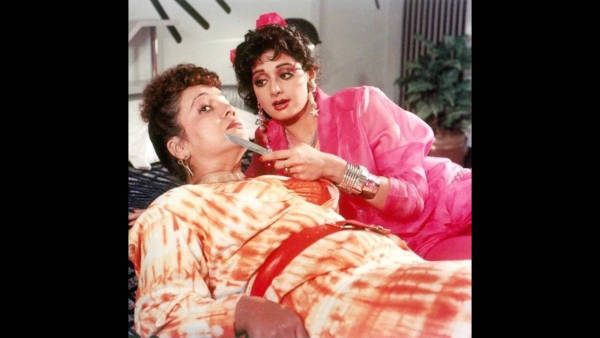
Hindi cinema has reflected those contradictions with remarkable honesty. To trace the relationship of Bollywood with its heroine is to trace India's own uneasy conversation with modernity and womanhood.
From the very beginning, Hindi cinema became a socio-cultural laboratory, where the nation rehearsed its anxieties about women. The heroine was never just a character. She represented the ideal Indian daughter, wife, lover or mother of her generation. In the years after Independence, morality itself was stitched into her costume. The sari signified virtue while Western clothes suggested moral danger.
Then Sharmila Tagore arrived in a bikini in
An Evening in Paris, unsettling a country that believed sexuality and respectability could not belong to the same woman. It was so unsettling in 1960s India that the matter reached the Parliament! What made that moment revolutionary was not the swimsuit or the politics surrounding a woman in a two-piece swimsuit. It was what followed. Tagore refused to become imprisoned by the image, moving effortlessly into acclaimed performances that culminated in a National Award for
Mausam. She quietly proved that glamour and gravitas could coexist. She refused to bow down to any linear definition of womanhood. She owned it with a saree. She owned it with a bikini.
Bollywood, however, has always had an uncanny ability to replace one stereotype with another. As the heroine-versus-vamp divide of the 50s and 60s slowly faded, the industry embraced the era of the sex symbol. Zeenat Aman and Parveen Babi represented an India opening itself to global fashion, urban lifestyles and female independence, while Hema Malini and Rekha embodied another idea of femininity rooted in classical grace and family-friendly storytelling. The contradiction was revealing because one set of women was admired for modernity while another was rewarded with more “respectable” roles. The industry had not escaped categorising women completely. It was still reinventing newer categories – not yet ready to leave all stereotypes behind. But something parallel was going on in the 70s and 80s Bollywood. Parbeen Babi could sing
Jawane Jaani Man,
haseene dilruba in
Namak Halal with equal ease, as she could slip into the role of the other woman, played with immense depth, in
Yeh Nazdikiyan. Smita Patil could dance with Amitabh Bachchan in Namak Halal’s
Aaj rapat jaaye to Shakti’s
Jaane kaise kab kahan and then throw “mirch” as Naseeruddin Shah’s villainous character’s face in the unforgettable movie Mirch Masala.
In these decades, actresses really started playing with their range. But Bollywood being Bollywood while accepting of it, and simultaneously finding it difficult to categorize its heroines – did something bizarre. It started categorizing its own movies. So we had a parallel cinema movement led by Shyam Benegal, Govind Nihalani, Mani Kaul, Saeed Akhtar Mirza. And then mainstream masala films from Manmohan Desai, Subhash Ghai, Prakash Mehra, Yash Chopra and Ramesh Sippy.
But heroines in Bollywood by this time, had tasted commercial success along with accolades that came associated with “serious cinema”. The door of experiments had opened. The actresses from here on, would be as proficient with the power of their artform as they would make dancing on Alps in a saree seem like the easiest job in the world. Yet Bollywood was still in the habit of empowering women commercially before it empowered them culturally. Long before conversations around feminism entered mainstream discourse, Sridevi proved that a heroine could sell a film entirely on her own. The 1980s Bollywood film tickets sold the most for Amitabh Bachchan. But then there was Sridevi.
The industry that had once reserved box-office muscle for men discovered that audiences were buying tickets because Sridevi was on the poster. Into the 1990s, Madhuri Dixit expanded that possibility further, becoming the rare star whose dance numbers, comic timing and screen presence made her every bit as important as the hero. By the time Karisma Kapoor, Raveena Tandon and Urmila Matondkar arrived from mid to late 90’s, the heroine was no longer merely decorating the frame. She had become a commercial proposition, a brand and, increasingly, the emotional centre of the film. Urmila perhaps represented the industry's growing complexity better than anyone else, moving from the sensual exuberance of
Rangeela to the psychological darkness of
Kaun? and
Ek Hasina Thi, refusing to remain imprisoned by the “sex symbol” tag.
Though India opened its economy in 1991, Bollywood took about a decade to catch up to the Western influence. Economic reforms did not simply introduce shopping malls, multinational brands and foreign holidays; they changed the aspirations of an entire generation of urban women, and cinema responded albeit a bit slowly. In the Aughties, Preity Zinta played an unmarried mother in
Kya Kehna and later a financially independent woman navigating a live-in relationship in
Salaam Namaste without moral punishment.
Kareena Kapoor's Geet in
Jab We Met, confidently declaring "Main apni khud ki favourite hoon," became much more than a memorable dialogue. It captured the self-belief of a generation of millennial women who had begun placing themselves, their careers and their happiness at the centre of their own stories. At almost the same time, Vidya Balan overturned another Bollywood convention. Whether as the earthy, sexually confident Krishna in
Ishqiya or later in
The Dirty Picture and
Kahaani, she demonstrated that female desire, intelligence and small-town identity could exist without apology. She challenged not only urban stereotypes but also the industry's patronising portrayal of rural women as innocent ingénues waiting to be rescued. Change had come to Bollywood, and the women were leading it. They are the ones who paved the path for the script to be women-oriented in Bollywood.
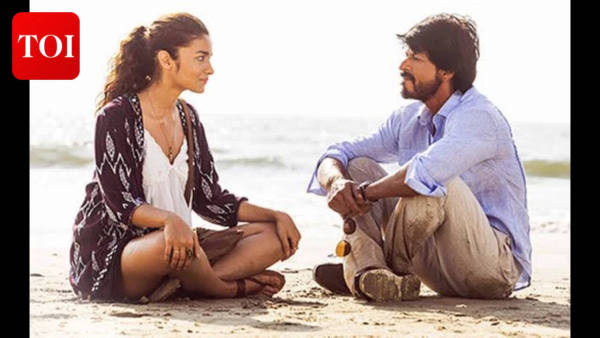
So, the modern heroine—from 2010 onwards—became even more layered. Deepika Padukone not only portrayed complex women on screen but transformed public conversations off it by speaking openly about depression, making mental health part of mainstream discourse in a country where silence had long been the norm. Alia Bhatt came to represent another shift altogether. Comfortable laughing at herself, embracing vulnerability and balancing commercial blockbusters with emotionally demanding performances, she reflects a generation that is less interested in appearing perfect than in appearing authentic. Off screen, she has gently challenged the assumption that childcare is solely a mother's responsibility, reminding interviewers to speak of "working parents" rather than only working mothers.
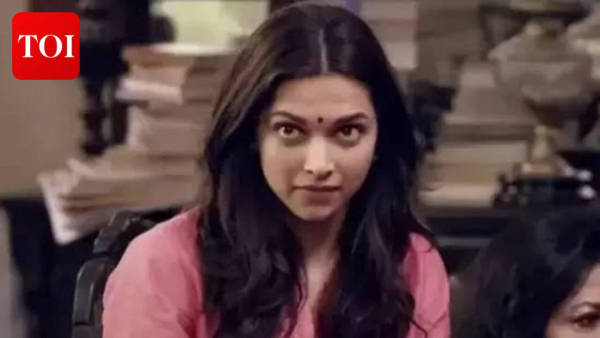
That perhaps is Bollywood's greatest transformation. Earlier heroines fought to change the characters they played. Today's heroines are attempting to change the industry. They are questioning camera angles, negotiating contracts, producing films, speaking about consent, demanding shorter workdays after childbirth and refusing to disappear after marriage. The male gaze has not vanished. India still remains suspended between tradition and modernity, between villages and megacities, between inherited patriarchy and emerging equality. Bollywood continues to embody those contradictions because it has always been India's most vivid mirror. Its heroines have been worshipped, objectified, celebrated, criticised, liberated and trolled, sometimes all within the same decade. Their evolution is neither neat nor complete. It is messy, contradictory and unfinished, much like the country's own.
-
How to Save on EV Charging at Home Amid Rising Energy Prices

-
How Silverstone Left 2025 F1 Title Hopefuls Norris, Verstappen, and Piastri Searching for Answers
-
Kimi Antonelli Overtakes Hamilton at Silverstone to Secure Maiden F1 Sprint Win
-
Robin Shute’s Custom-Built SendyCar Sets Rear-Wheel Drive Record at Pikes Peak Hill Climb

-
Honda CR-V Emerges as America’s Top-Selling Car of 2026 (So Far)