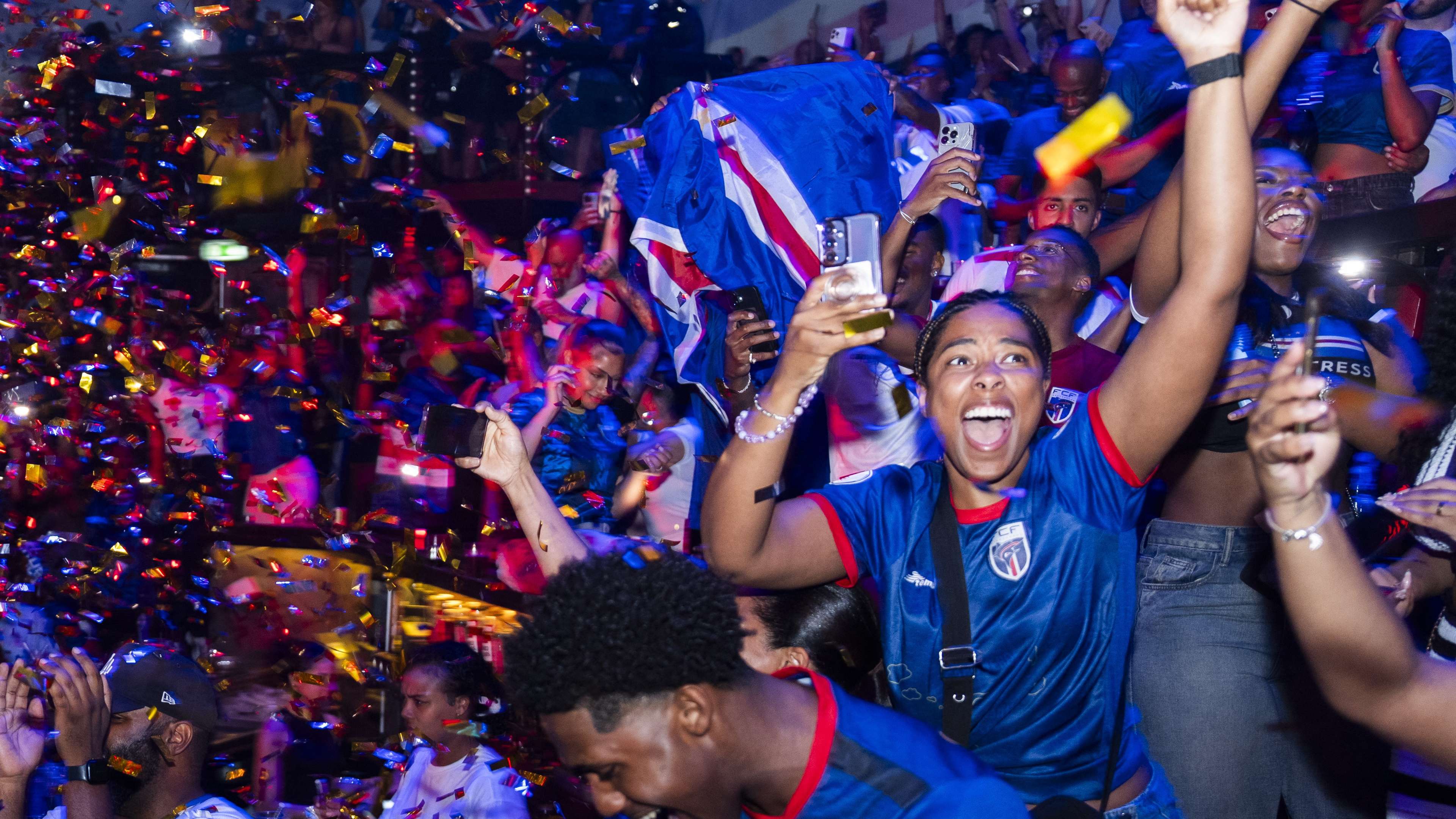
The second-smallest country ever to qualify for the World Cup has already defied staggering odds. Cape Verde, written off with just a one percent chance of escaping the group stage, are now inspiring dreams across their island nation and among their global diaspora.
For singer-songwriter Josslyn, the journey feels surreal. She remembers sitting as a child, glued to the television every four years, watching the World Cup and asking herself one simple question: “Why isn’t Cape Verde there?”
Even as one of the most patriotic Cape Verdeans, she admits that the idea once seemed laughable. “I grew up thinking it was so difficult,” she told GOAL, before pausing and adding, “But it’s not impossible.”
Now, the impossible has become real. Cape Verde, a team that few outside Africa expected to make it this far, have reached the knockout stage of the World Cup. They are set to face Argentina in the Round of 32, and a nation that once only dreamed of such a moment now dares to believe in miracles. “I strongly believe in everything. After everything those guys did, I believe victory is possible,” Josslyn said from her recording studio.
Independence came for Cape Verde in 1975, and qualifying for the World Cup just months after the 50th anniversary of that milestone feels poetic. “Many people said we were a country that wouldn’t survive. We’ve only had 50 years of independence. We’ve worked hard, and now we have a strong economy,” said Augusto Gugas, the former Minister of Culture and Creative Industries, speaking from his home in Praia.
Football has been a key part of Cape Verde’s national growth. The island nation of 10 volcanic islands, located around 400 miles off Senegal’s western coast, has built an economy driven by tourism. The government has long recognised that culture — through sport, music, and art — helps preserve national identity and unity. “We’ve shown Africa and the world that you can be resilient even without natural resources. Our people have succeeded economically, in sport, and beyond,” Gugas said.
In 2025, Cape Verde welcomed 1.25 million tourists, a number expected to surge thanks to their World Cup participation. “We believe the World Cup will bring many more visitors and far greater global interest,” Gugas added.
Sporting success has not been limited to football. The national basketball team regularly qualifies for the FIBA World Cup, and the women’s football team will make their debut at the Women’s Africa Cup of Nations this July. “Our government has invested heavily in the national team — from preparation and rest to arranging direct flights from African nations for recovery,” Gugas noted.
For many, though, the men’s World Cup carries unmatched emotion. Marvin Resende, a first-generation Cape Verdean American from Brockton, Massachusetts, travels to the islands several times a year. He belongs to a diaspora of over 100,000 Cape Verdeans in the U.S. “We’ve always believed that one day we’d be recognised globally,” he said. “We just didn’t know when or how.”
That recognition didn’t come easily. Years of development under FIFA Forward and government investment have paid off. The Blue Sharks tapped into their diaspora, recruiting players with Cape Verdean roots from the Netherlands, Portugal, Switzerland, France, and the USA. “Things changed when our players joined bigger clubs and we began integrating our diaspora,” Gugas explained.
Qualification was sealed on October 13, 2025, sparking celebrations worldwide. “When we qualified, it was a big, big party. It’s been a dream since then,” Gugas said.
Resende initially hesitated about attending the Spain match in Atlanta, even after hearing that a large Cape Verdean contingent would travel for it. “I told my dad I’d rather go to the Uruguay or Saudi Arabia game,” he recalled with a laugh. His father persisted, saying, “You never know, it’s football.”
In the end, Resende stayed in New York for work, while his brother and relatives went. Before the game, Josslyn texted goalkeeper Vozinha, wishing him luck. He replied moments before kickoff — a message that surprised her. “I was like, ‘You should be at the game!’ and he just said, ‘Yeah, thank you,’” she laughed.
What followed was one of the most remarkable draws in World Cup history. Spain dominated with 74% possession and 27 shots, but 40-year-old Vozinha, who plays for Chaves in Portugal’s second division, produced a string of stunning saves to secure a goalless draw. “I was in a meeting and jumped up from my chair when it ended,” Resende said. “I almost cried right there.”
Overnight, Vozinha became a national icon, his social media following soaring to nearly 20 million. “It showed us that anything is possible,” Josslyn said. “We should never stop believing in our dreams.”
Resende made sure not to miss the next game — against Uruguay in Miami — taking his father along for Father’s Day. Cape Verde needed two points from their final two matches to reach the Round of 32. “Florida has a massive Cape Verdean community. I knew the atmosphere would be electric,” Resende said.
He was right. Fans chanted nonstop throughout the match. Cape Verde took the lead, fell behind, and then equalised in the 61st minute to secure a vital draw. “By halftime, we were low. But after we equalised, it was pure joy. I just wanted to relive that feeling again,” Resende said.
For the Cape Verdean community, recognition has been one of the sweetest rewards. “There are maps that don’t even show Cape Verde,” he said. “Now, people finally know who we are.”
In New York, September Cafe in Bushwick has become a gathering spot for Cape Verdeans. Owner Sara Lopes hosts watch parties that have grown with every match. “When we advanced from the group stage, everyone jumped, cried, and danced. It reminded me how resilient we are,” she said.
Next, Cape Verde face their toughest test yet — Lionel Messi’s Argentina, the reigning world champions. The match in Miami is expected to feel like a home game for Argentina. “We’ll have to play the best match of our lives, make no mistakes, and hope Messi isn’t at his best,” Gugas admitted.
Despite that, optimism remains strong. “We wouldn’t want it any other way,” Resende said. “Who better to bring the world’s attention than Lionel Messi himself?”
September Cafe will surely be packed again, as Cape Verdeans across the globe unite to witness their team chase what would be the greatest upset in World Cup history. “We’re winning,” Lopes said with a smile. “We’ve already won.”
-
Rescheduling of Last 16 Kick-off Will Not Affect England, Says Marcus Rashford
-
How Harry Kane Rose Beyond England to Become the World's Finest Footballer

-
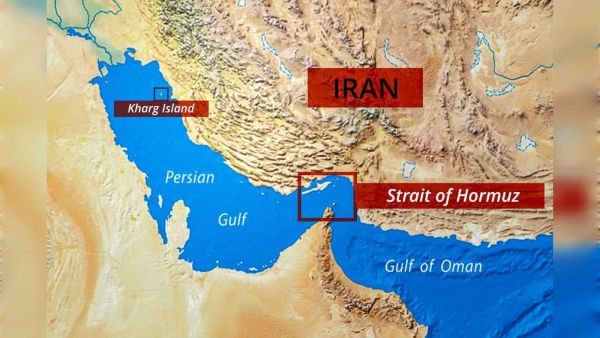
Iran warns against foreign military presence in Strait of Hormuz
-
Agra: Wife kills husband, buries body under bathroom tiles, held
-
CJP protest day 15: Why Pradhan not sacked yet, Dipke asks