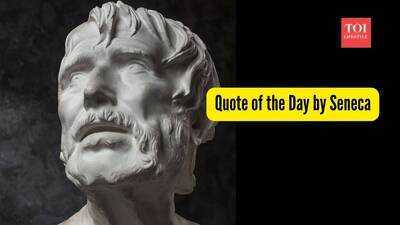
More than 2,000 years after his death, Lucius Annaeus Seneca , commonly known as Seneca, remains one of history's most influential philosophers. His writings continue to inspire leaders, entrepreneurs, psychologists, and ordinary readers searching for clarity in an increasingly chaotic world. Unlike many philosophers who wrote from the comfort of academic institutions, Seneca lived amid political intrigue, immense wealth, personal tragedy, exile, and ultimately a forced death. His philosophy was not merely theoretical, it was tested by life itself.
Who Was Seneca?
Born around 4 BCE in Corduba (modern-day Córdoba, Spain), Seneca grew up during the height of the Roman Empire. His father, known as Seneca the Elder, was a respected rhetorician, ensuring that his son received an exceptional education in philosophy, literature, and public speaking. As a young man, Seneca moved to Rome, where he studied under prominent Stoic thinkers. Stoicism, founded centuries earlier in Greece, taught that happiness depends not on wealth, power, or external success but on cultivating wisdom, virtue, self-control, and resilience. Despite suffering from chronic ill health, believed by many historians to have been severe asthma or another respiratory illness—Seneca built a successful career as a lawyer, writer, and statesman.
One of the defining moments of Seneca's life came in 41 CE, when Emperor Claudius accused him of involvement in an affair with Julia Livilla, the emperor's niece. Whether the allegations were true remains uncertain, but Seneca was banished to the island of Corsica. For nearly eight years, he lived in exile, separated from Rome's political life.
Rather than allowing bitterness to consume him, Seneca immersed himself in philosophical writing. Many of his essays on grief, resilience, and the nature of happiness emerged from this difficult period. His experience reinforced a lesson that would become central to his philosophy: circumstances do not determine peace of mind; character does. Eventually, the influential Agrippina, Claudius' wife, arranged for Seneca's return to Rome so that he could tutor her young son—who would later become Emperor Nero.
Advisor to Emperor Nero
When Nero became emperor in 54 CE, Seneca became one of the most powerful advisers in the Roman Empire. Alongside the prefect Burrus, he helped guide the young ruler during the early years of Nero's reign, a period often considered relatively stable. However, Nero gradually became increasingly autocratic and violent. As his rule descended into paranoia and cruelty, Seneca attempted to withdraw from public life. His immense wealth during this period has often attracted criticism. Some questioned whether a philosopher who preached simplicity should possess such riches. Seneca acknowledged this tension in his writings, arguing that wealth itself was neither good nor bad—it was one's relationship with it that mattered.
In 65 CE, Seneca was accused of participating in the Pisonian conspiracy, an alleged plot to assassinate Nero. Although historians continue to debate his involvement, Nero ordered him to take his own life—a common sentence for members of Rome's elite. According to the Roman historian Tacitus, Seneca faced death with remarkable composure. He reportedly comforted his friends, discussed philosophy until his final moments, and accepted his fate without panic. Whether every detail of the account is historically precise or partly literary, the story has come to symbolize Stoic courage: meeting adversity with dignity rather than fear.
Seneca's lasting impact
Few philosophers have enjoyed such enduring influence across so many centuries. His essays and letters became foundational texts of Stoicism, influencing generations of thinkers throughout Europe. During the Renaissance, scholars rediscovered his works, while Enlightenment philosophers admired his emphasis on reason and virtue.
In modern times, Seneca's ideas have found new audiences. His writings resonate with psychologists studying emotional resilience, business leaders seeking calm under pressure, athletes developing mental toughness, and readers navigating stress and uncertainty. Many principles associated with contemporary cognitive behavioural therapy-such as questioning destructive thoughts and focusing on what can be controlled—echo Stoic ideas that Seneca helped popularize. Unlike abstract philosophical treatises, Seneca's works often read like personal conversations. He addressed universal concerns: anxiety, grief, ambition, friendship, time, anger, and mortality. These are challenges that remain as relevant today as they were in ancient Rome.
Quote of the Day
Whatever the stoic philosopher said was pure wisdom, but one of his most iconic lines remain,
" “If you really want to escape the things that harass you, what you’re needing is not to be in a different place but to be a different person.”
This quotation speaks directly to one of humanity's oldest habits: believing that external change will automatically solve internal discomfort. People often imagine that happiness lies elsewhere—in another city, another job, another relationship, another house, or another stage of life. Modern culture reinforces this belief by constantly presenting the next destination, promotion, purchase, or lifestyle as the answer to dissatisfaction.
Seneca challenges this assumption. He suggests that while changing external circumstances can sometimes be necessary, it cannot by itself remove the fears, anxieties, insecurities, or emotional patterns we carry within us. If we remain the same internally, we often recreate the same struggles wherever we go. His insight is not an argument against moving, changing careers, or seeking new opportunities. Rather, it is a reminder that lasting peace depends on cultivating qualities such as patience, self-awareness, emotional discipline, and wisdom. Without those inner changes, even the most desirable circumstances can fail to bring contentment.
The quote also highlights personal responsibility. Instead of waiting for life to become easier, Seneca encourages us to become stronger. Instead of expecting the world to adapt to our preferences, he asks us to develop the character needed to meet life's inevitable uncertainties. This perspective remains especially relevant in an era of constant distraction and comparison. Social media often creates the illusion that everyone else has found the perfect life somewhere else. Seneca reminds us that peace is less about geography than about perspective. A troubled mind can be carried anywhere, while a disciplined and resilient mind can find stability even amid hardship.
Ultimately, the transformation he speaks of is not about becoming someone entirely different. It is about becoming more thoughtful, more resilient, and more capable of responding wisely to life's challenges. That inner work cannot be outsourced, purchased, or achieved through a change of scenery alone.
Seneca's life was filled with contradictions. He experienced privilege and exile, political influence and helplessness, wealth and suffering. Yet these very contradictions make his philosophy compelling. He did not write from an ideal world; he wrote while navigating an imperfect one. His enduring message is that while we cannot always choose what happens to us, we can choose how we respond. That idea lies at the heart of Stoicism and explains why his words continue to resonate after two millennia. In a world where people often seek escape through travel, possessions, career changes, or constant reinvention, Seneca offers a quieter but more demanding path: transform your character before trying to transform your circumstances. The greatest journey, he suggests, is not from one place to another, but from a restless mind to a wiser one.
-
Mumbai, Tokyo & More! Bandra's New Fine Dining Spot 'Sorena' Brings 5 Cities In One Plate With Island Bar

-
Capricorn Daily Horoscope Today (Dec 22 - Jan 19), July 5, 2026: Stay Enthusiastic and Move Towards Your Goals

-
Leo Tarot Horoscope Today, July 5, 2026: Stay confident and attentive to your well-being

-
Libra Tarot Horoscope Today, July 5, 2026: Focus on Self-Care and Positive Energy
-
Virgo Tarot Horoscope Today, July 5, 2026: Keep working steadily and stay financially alert