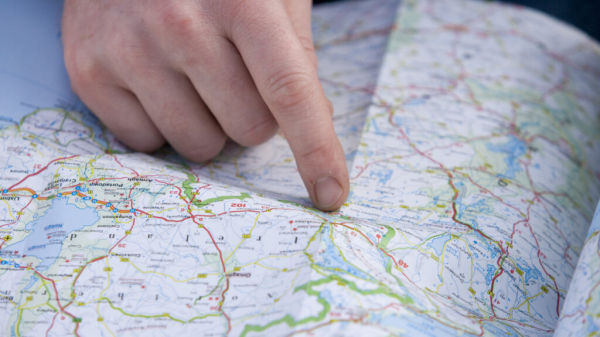
Modern technology didn’t just spring up overnight; it often has roots reaching far into the past. The history of GPS navigation actually began during the cold war, marking several milestones in the subsequent decades. In terms of automobiles, GPS didn’t break out of its niche status until the 2000s.
In a significant moment for consumer GPS, Google Maps debuted in 2005 in the U.S., though there are now several Google Maps alternatives on Android. The navigation process couldn’t be simpler, you search for a business name or enter an address, and a route is calculated with step-by-step instructions. However, you might be surprised to learn that not only are paper maps and atlases still around, but they’ve actually experienced a bit of a renaissance in the last decade.
Vice president of Rand McNally, Kendra Ensor told USAToday that by 2015, the map making company began to see increases in the sale of Road Atlases. In the U.K., map maker Ordnance Survey saw a 144% uptick in custom paper map sales in 2020, then another 28% rise in 2021. Both AAA and Rand McNally continue to offer updated physical maps, with the former still making TripTik route books, which include custom printed directions. Lost signals and a more active navigation experience are just a few of the reasons why would anyone opt for this old-school approach.
A paper map can’t lose signal
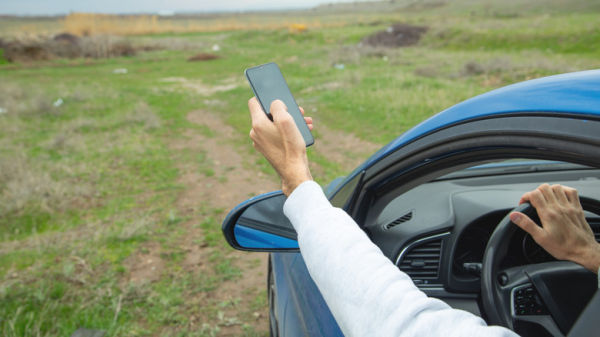
Travelers have relied on physical maps for thousands of years, but GPS has become the dominant option in the 21st century. According to a UTires.com survey, certain parts of the country, such as Bakersfield, CA, have more than 55% of respondents declaring they’re extremely reliant on the technology. The problem is, while convenient, GPS requires you have a signal, whether it be through a mobile carrier or satellite. You can utilize offline GPS apps, however that’s dependent on you downloading the information beforehand, when internet is available. It’s also noteworthy that most navigation software, like Google Maps, downloads an entire route when you first start navigating, so if you lose signal along the way, you can keep going. But if you need to start navigating without internet, that’s when you run into trouble.
In early 2026, those residing in Moscow and St. Petersburg, Russia faced intermittent and even failing mobile internet across major swaths of the cities for days. Suddenly, smartphones couldn’t access or run applications properly, with navigation being one of them. As a result, demand tripled for atlases and paper maps of these areas.
In another more anecdotal instance, a couple traveling from Canada to North Carolina found themselves amidst the chaos of Hurricane Helene which knocked out several services including internet. Fortunately, they were able to navigate and guide several travelers out of the affected area using physical paper maps.
GPS navigates for you, and can limit perspective
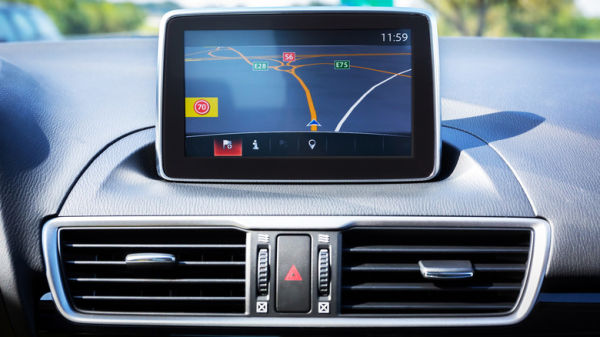
One of the issues with a navigation app, is that it largely does the thinking for you. After selecting a destination, your role in the navigation process is simply following on-screen prompts. Conversely, a physical map keeps you more active in the navigation process and aware of your surroundings.
In addition, research has shown that the sensory experience of using a paper map helps the brain create a mental picture of the surrounding environment. Old school maps also provide a much greater overall perspective, reaching well beyond your selected route.
This “big picture” view can often be lost when using GPS in the car, which typically displays only the immediate area around your vehicle. If you must adjust your route using GPS, it can be more challenging on the go, as you may not understand where you’re located in relation to other landmarks or your destination. Miller Edwards, a retired detective, explained to CBS News with regard to printed maps, “They give me a general idea of a larger area that I need to go to see. They have different cities and different points of view.”