
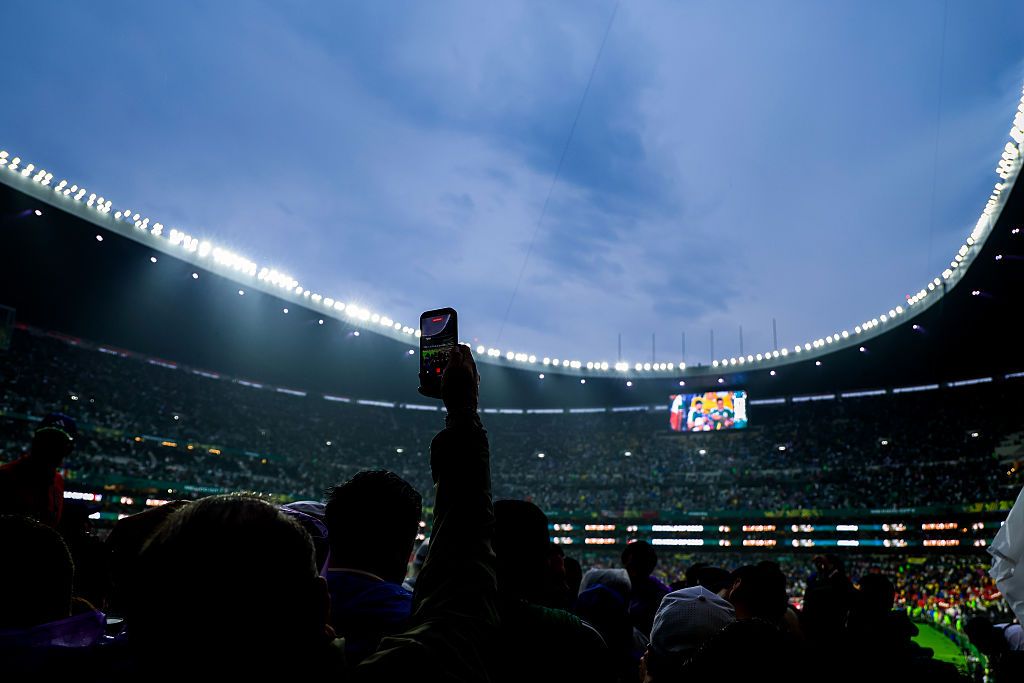
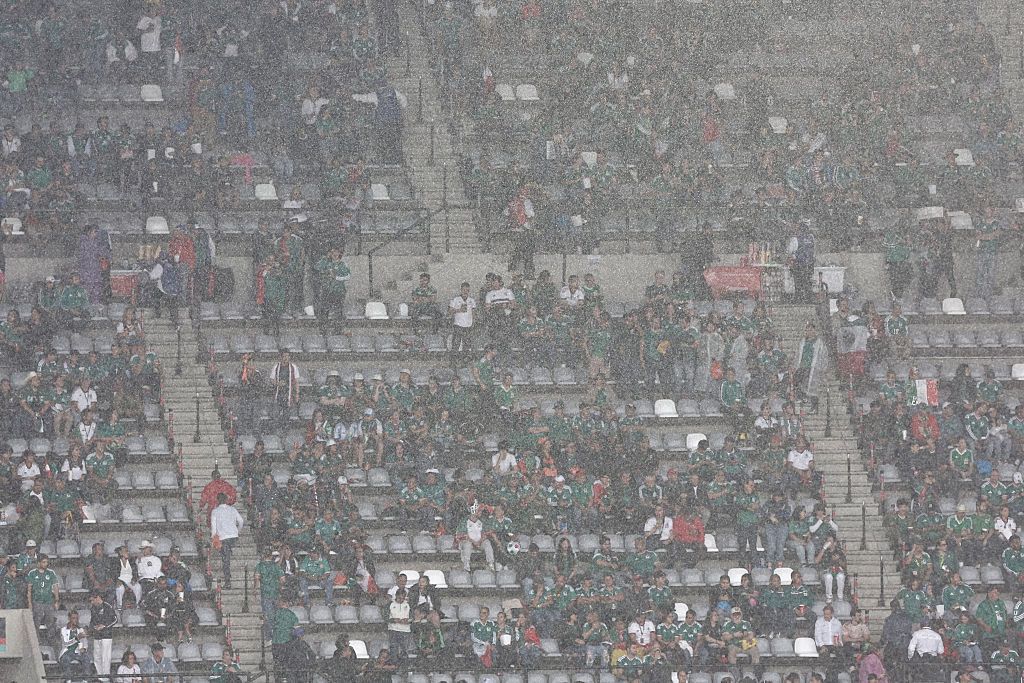
The highly anticipated Round of 16 clash between England and Mexico at the Estadio Azteca could be at risk, with forecasts predicting thunderstorms, lightning, and heavy rainfall.
As England prepare to take on Mexico in the 2026 World Cup last-16 encounter tonight, weather conditions in Mexico City have become a major talking point once again.
Concerns have been raised about potential delays to the start of the match or even temporary halts during play due to severe weather at the Estadio Azteca. The city has recently experienced intense storms, and similar conditions could again disrupt proceedings.
So far in this tournament, two matches have already been affected by adverse weather. France’s Group I game against Iraq in Philadelphia had to be suspended for more than two hours at half-time because of storms. Similarly, Mexico’s last-32 victory over Ecuador at the Azteca was postponed by an hour at kick-off due to lightning in the area.
Weather interruptions have also troubled pre-tournament friendlies, including England’s warm-up tie against Costa Rica in Orlando and Saudi Arabia’s match with Puerto Rico in Austin.
Fans who tuned into last summer’s Club World Cup in the United States will recall that weather disruptions were a recurring issue there as well. Several fixtures were impacted, including Chelsea’s round-of-16 meeting with Benfica, which had to be paused four minutes before full time after lightning was detected in Charlotte, North Carolina. That match eventually concluded four-and-a-half hours after it began.
FIFA does not have a unique severe-weather policy but instead abides by regulations enforced by local authorities. In North America, those regulations are particularly strict when it comes to lightning.
According to current protocol, any World Cup match will be halted if lightning is detected within eight miles of the stadium. Once that happens, play is suspended for a minimum of 30 minutes.
During such suspensions, all players, coaches, and officials are required to leave the pitch, while spectators must vacate the stands and move to safe shelter.
Matches cannot resume until 30 consecutive minutes have passed without lightning recorded within that eight-mile radius. If lightning is detected again, the 30-minute clock restarts.
FIFA has no fixed rule specifying when a match should be postponed entirely. Decisions to abandon or reschedule a game are primarily based on the safety of players and fans, as well as the condition of the pitch.
Should a fixture be postponed due to weather, it would, for logistical reasons, most likely resume the following day from the exact minute it was halted. For example, if play stopped after 65 minutes, the teams would return to complete the remaining 25 minutes the next day.
-
Brazil haunted by penalty woes after missed chance against Norway 👻

-
England vs Mexico World Cup clash delayed due to storm at Estadio Azteca
-
Weather Update: England vs Mexico World Cup Clash Faces Delay Due to Storms in Mexico City
-
Haaland knocks Brazil out of World Cup as Norway reach quarters

-
Diljit Dosanjh's prediction about 'Satluj' take down goes viral: 'Hun tension nai, sab ne kar layi download' - WATCH