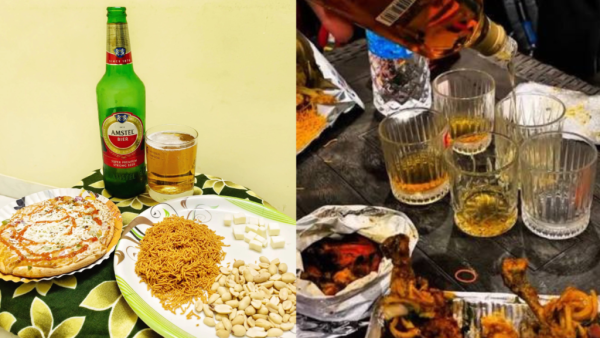
When the topic of alcohol comes up in the concert of friends, the word ‘chakna’ is very appropriate for the companion. Be it Shave, Chivda, Peanuts, Wafers or even Chicken-Mutton, the snacks eaten with alcohol are commonly called ‘Chakna’. But the history of how these foods got their name and when this practice started is very interesting.
‘Chakna‘ How did this name originate??
The word ‘chakna’ is derived from the Hindi verb ‘chakhana’ – to taste. This is directly to taste. The taste of alcohol is usually bitter and harsh. After drinking it, the taste of the tongue changes. Foods that are ‘tasted’ to reduce this harshness and change the taste in the mouth, came to be called ‘Chakana’ over time.
Mexican culture also has a word called ‘chacana’, which means ‘to chew something’. However, the word ‘chakna’ in India is entirely derived from the concept of ‘tasting’.
Heavy rain outside, glass of alcohol inside! Which Maharashtrian chakna will be number one with which liquor during monsoons?
‘Chakna with alcohol‘ When did the method start??
Ancient times: In ancient India, when the kings and maharajas used to drink ‘madira’, dry fruits, roasted meat and fruits were kept with them. It was called ‘syphilis’.
Mughal Period: Sura and Saki concerts were famous in the Mughal Empire. During this period, the practice of eating ‘kebabs’ and ‘fried foods’ to reduce the bitterness of alcohol became very popular.
Modern Times: Later came the ‘bar culture’ during the British period. The British used to eat ‘finger foods’ with alcohol. This English method was Indianized and in common man’s language it was called ‘Chakna’.
Hangover Tips: Have a hangover after drinking alcohol at night, take a simple remedy
What is the scientific reason??
The reason behind having chakna with alcohol is not only to change the taste, but there is also a scientific reason behind it. Drinking alcohol on an empty stomach is directly and rapidly absorbed into the bloodstream, leading to rapid intoxication and acidity. Eating chakna creates a layer of food in the stomach, which slows down the absorption of alcohol into the body. In short, this method of ‘tasting’, which started as a change in the taste of the tongue, has become an integral and popular part of every party today.
-
Info Edge To Acquire Remaining 45% Stake In Coding Ninjas For ₹40 Cr

-
FIFA World Cup Showdown: Spain vs Portugal Team Updates

-
Ashwin reacts to Sanju Samson's exclusion from Zimbabwe T20Is

-
Lock Upp 2: Sunita Ahuja gets irked with Shilpa Shinde's comment on her married life with Govinda; says 'Mera pati 50 se affair kare, tere baap ka kya jaa raha hai'

-
Instagram Update- Is your Instagram reach gradually decreasing, know its mistakes