
Michael Jackson is everywhere in 2026. The biopic 'Michael', directed by Antoine Fuqua and starring his real-life nephew Jaafar Jackson in a debut performance, has become one of the biggest cultural conversations of the year. The film traces Jackson's journey from his early days with The Jackson 5 through his rise as a global music icon and has drawn an overwhelmingly passionate response from audiences across the world, reflecting the enduring and unshakeable connection that millions of people feel with his music and his story. Amid all of it, a 2001 audio interview has been resurfacing, in which the man himself offered the advice that, in many ways, is the purest distillation of everything his life stood for.
The quote of the day reads,
"Please go for your dreams. Whatever your ideals are, you can become whatever you want to become."
 Meaning of the quote of the day by Michael JacksonMichael Jackson said this during a promotional audio interview for Get Music in 2001, which was part of a larger recorded conversation sharing advice directly with his fans. The year 2001 was itself a significant one for Jackson, marking the release of 'Invincible,' his final studio album, and a pair of landmark concerts at Madison Square Garden celebrating thirty years of his solo career. And in the middle of all that, he sat down and spoke not about the music or the spectacle, but about the thing he most wanted the people listening to him to understand.
The simplicity of the quote is its power. "Please go for your dreams." The word please is not accidental. It is a request. An urgent one, not a command, not an instruction, but a genuine plea from someone who understood, from his own extraordinary and often painful life, how rare it is for people to actually permit themselves to pursue what they most want. Most people do not fail to achieve their dreams because they lack talent or do not work hard enough. Most people do not fail to achieve their dreams because they are not talented enough or do not work hard enough. They fail because somewhere along the way, they stopped believing that the dream was truly available to them. That it was meant for someone else. The gap between where they are and where they want to be is too wide to cross.
The second sentence, "Whatever your ideals are, you can become whatever you want to become," extends the invitation beyond music, beyond performance, beyond anything specific. It is a completely open door. Your ideals, not anyone else's version of what you should want. Whatever they are. The belief he is asking people to have is not in a particular outcome but in their own capacity to arrive at the thing they most care about, whatever that thing turns out to be.
From Gary, Indiana, to the world: Michael Jackson's extraordinary journeyMichael Joseph Jackson was born on August 29, 1958, in Gary, Indiana, the eighth of ten children, and began performing with his brothers as part of The Jackson 5 at the age of five, according to Rolling Stone. His mother, Katherine, and father Joe ran a household that was, by his own later account, both a launchpad and a source of deep pain. Joe Jackson's disciplinarian approach to training his children has been widely documented and was addressed in the biopic, with Colman Domingo's portrayal of Joe earning significant critical attention, as per Variety.
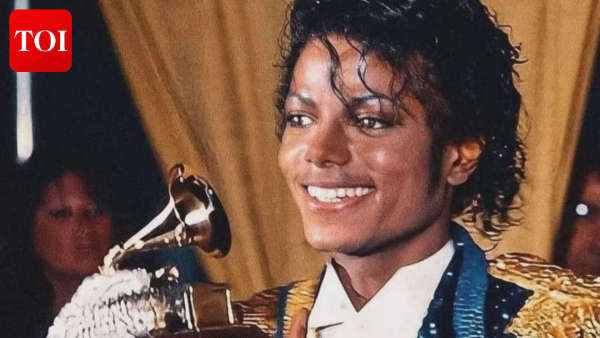 His solo career launched formally with the album 'Off the Wall' in 1979, produced with Quincy Jones. What followed was 'Thriller' in 1982, which remains the bestselling album of all time, with estimated sales of over 70 million copies worldwide, according to the BBC. 'Bad' in 1987, 'Dangerous' in 1991, 'HIStory' in 1995, 'Blood on the Dance Floor' in 1997, and 'Invincible' in 2001 all followed, each one a global event. His music videos, including 'Thriller,' 'Billie Jean,' and 'Beat It,' changed the form permanently. His live performances set a standard for stagecraft that has never been surpassed. He passed away on June 25, 2009, at the age of 50.
The biopic has reignited the conversation about his legacy in the most powerful way possible. A new generation is discovering his music through the film for the first time, while those who grew up with him are finding their way back to it. And in the middle of all that rediscovery, the words he spoke in that 2001 interview feel as urgent and as alive as they did the day he said them. Because the man speaking was not performing. He was just asking, simply and directly, for people to believe in themselves the way he always believed in the thing he was reaching for, even before the world had any idea what it was going to become.
-
Portugal Coach Roberto Martínez Resigns Following World Cup Exit

-
Libra Daily Horoscope Today (Sept 23 - Oct 22), July 7, 2026: Librans Display Financial Wisdom, Prefer to Stay Reserved in Meetings

-
Croatia file FIFA protest over 'misuse of technology' following disputed World Cup loss to Portugal

-
Sagittarius Daily Horoscope Today (Nov 22 - Dec 21), July 7, 2026: Continued Managerial Growth, Steer Clear of Disputes

-
Scorpio Daily Horoscope Today (Oct 23 - Nov 21), July 7, 2026: Steady progress and fruitful collaborations ahead