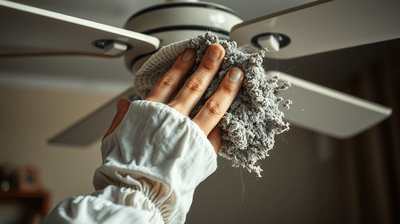
In summer, when the weather gets warm, ceiling fans work harder in most homes. These devices improve air circulation, make a room feel cooler, and can reduce the need for air conditioning. However, there is one thing that most people do not pay attention to until it becomes a big issue - dust. Dust on the blades is not just unsightly; it can blow back into the room while the fan is running and may trigger allergies. It is important to understand that cleaning of ceiling fans does not necessarily require dismantling blades and creating an absolute mess.
One of the simplest methods recommended by cleaning experts is the " pillowcase trick ", a quick cleaning hack that traps dust before it falls onto the floor.
Importance of cleaning your ceiling fan
Your ceiling fan is likely to be forgotten since you do not see it often, but it accumulates dirt really fast. As noted by, dirty fan blades can become less efficient since the accumulation of dirt makes the blade heavy, whereas dust and pollen on the blades will be flung up into the air again as the fan spins. It may pose a problem for allergic individuals.
Professional cleaners advise dusting the ceiling fan at least once per cooling season, and homes that have pets, dust, or allergies need to clean their ceiling fans often.
Dust containment through the pillowcase trick
Rather than having to wipe each blade with a rag and have dust fall on all your furniture, many cleaning professionals recommend the use of an old pillowcase. It is a simple process. First, make sure the fan is switched off. Next, stand on a sturdy step ladder and slip an old pillowcase over the blade so it is fully covered. Press the pillowcase firmly around the blade and wipe it so the dust stays inside the case.
This should be done for every single blade. Once you're done, head outside and turn the pillowcase inside out to empty the dust into the trash can. This technique is also recommended by, which notes that a pillowcase helps capture dust while reducing the mess usually created during cleaning.
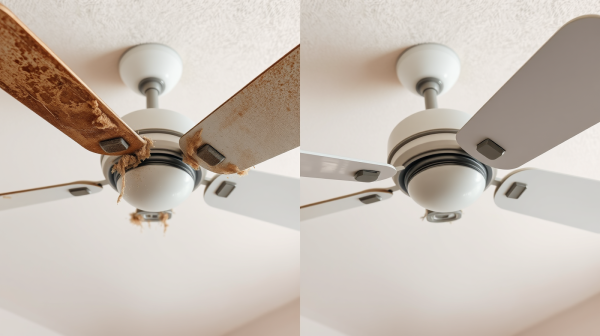
Get rid of tough grime following dusting
Dust is not the only substance that can accumulate on the fan blades. Kitchen fans get a layer of grease and become sticky.
According to Consumer Reports, after removing dust, the fan blades should be wiped with a slightly damp cloth moistened with universal cleaner. It is important not to spray the cleaner directly on the fan, as liquid may get to the electric parts. It is also recommended to let the blades dry completely before turning the fan back on because wet surfaces attract dust faster.
suggests lightly dampening the inside of the pillowcase or using a gentle cleaning solution if the blades have built-up grease. It is important to use light pressure while cleaning to keep blades balanced.
What not to do in order not to harm your fan
Cleaning a ceiling fan is easy, but there are some popular mistakes that might reduce the lifetime of the fan.
First of all, specialists advise you to turn the fan off and wait until the blades stop working completely before cleaning. Don’t use too much water when cleaning since it might harm the electrical parts of the fan. Do not press too hard when cleaning the blades. Hunter Fan claims that pushing too hard might cause bending and imbalance of the blades.
How often should you clean it?
There is no set standard for every house, but according to Lowe’s, it is advisable to clean your ceiling fans once a month or whenever you start seeing dust accumulation. Houses with pets, open windows, or construction activities may need to be cleaned more often. Dusting the fan blades occasionally will keep the dust from accumulating in large amounts, making the whole process quicker.
Cleaning does not work
If the ceiling fan still wobbles, makes unusual noises, or blows less air after cleaning, dust may not be the cause. Loosely screwed blades, damaged bearings, or the motor itself could cause the problem. In such cases, manufacturers recommend checking the mounting hardware and calling an expert if you find mechanical problems.
For most households, periodic dusting is enough to keep ceiling fans clean and working efficiently. If you have an old pillowcase in the cupboard, it can be a useful cleaning tool.
-
Before leaving on a trip, keep these important items in your bag, otherwise problems may increase

-
Summer Salads That Start With Fresh Fruit

-
Cool Down with This Easy Watermelon Mezcalita Recipe

-
ENG vs IND, 4th T20I Highlights: England beats India to secure the series

-
India, England and a Test at Lord’s