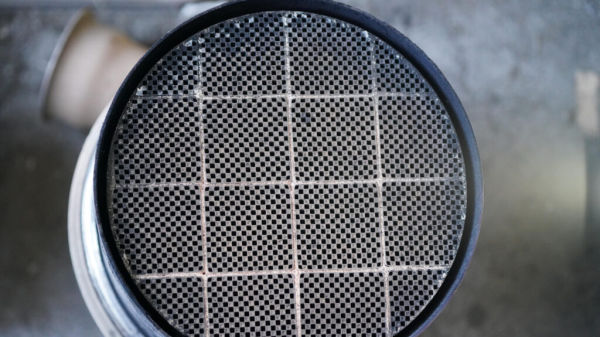
As anyone riding behind a poorly-tuned diesel will likely know first-hand, these engines produce a lot of pollution in the form of soot. That’s what your diesel particulate filter, or DPF, is for. As the name implies, your DPF filters out all these noxious pollutants by trapping it, like running a big fishing net through a bunch of garbage in the water. Of course, that net isn’t infinitely large or strong — at some point, all that garbage will pile up and choke it out. The same thing happens to your DPF if it’s not maintained properly; that maintenance is called regeneration, or regen for short.
So what exactly is DPF regen? Going back to the fishing net analogy, regen is just periodically cleaning out all the garbage so the net can catch more. If the DPF fails because it gets too clogged up with all that soot from the engine, it won’t be able to do its job. The soot never gets burned off, and you end up with degraded performance and exhaust pollutants. That leads us to the next question — how does it normally get rid of these particulates?
There are three main ways a DPF works: Passive regen, active regen, and parked regen. These range from routine processes that occur during normal operation, to more involved procedures which raise the exhaust temperature using a combination of ECU tuning and higher idle, among other things. Of course, none of this fixes a truly clogged filter. If it is truly clogged, you’ll likely need to clean the DPF or replace it entirely. Let’s discuss how this all works in detail.
How different types of regen work
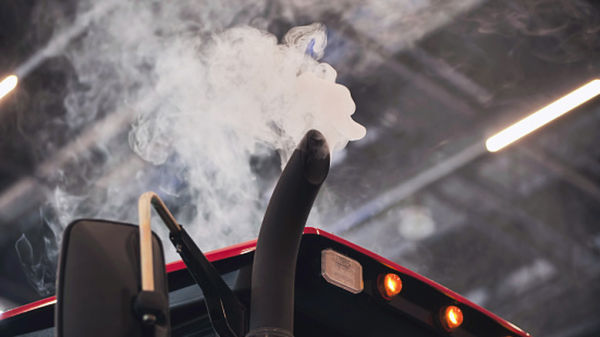
Let’s start with the simplest: Passive regen. Passive regen involves just driving around normally, and is what you should do if the DPF light comes on. Provided your exhaust is at its normal operating temperature, your DPF will slowly burn off all those particulates on its own. Exhaust gases are already scorching-hot, so they do the job for you. Like cooking, you need the pan to be hot to actually impart that heat properly. Likewise, if you just run your vehicle for a little bit and it never gets up to temperature, it’ll never be able to burn off that soot properly.
That’s where active regen comes in. It happens if the engine is running particularly light and can’t produce enough heat on its own — like a truck running with no cargo, for instance. In those cases, it’ll inject some fuel into the exhaust downstream to bump up the temperature in an effort to clean out the DPF.
If neither of these work, we’ll need parked regen. This involves your vehicle running an especially hot exhaust temperature to try and burn off as much particulates as it can in a relatively short timeframe. This means the vehicle’s ECU enters into a specific mode where it tries to get plenty of heat, running at high revs, injecting more fuel into the engine to produce hotter gases, and so on. You need to be parked for this mode, hence the name. It can take anywhere up to an hour depending on various factors, and always remember not to point the exhaust at anything flammable during this procedure.
The inner workings of diesel regen

Diesel particulate filters take your vehicle’s exhaust and pass it through a series of internal baffles — porous walls, similar in principle to a catalytic converter. These walls are coated with metals like platinum that attracts and captures soot. The whole device heats up from the residual heat of the exhaust, and that heat burns off the soot. What’s left behind is ash, composed of all the non-combustible particles left behind, such as oil and fuel additives and metal particles. A DPF is basically a portable garbage incinerator connected to your exhaust pipe.
The main problem is, despite having plenty of surface area, DPFs will eventually clog up and need to be replaced if you don’t drive your vehicle correctly or adequately service the parts. That’s where regen comes in — it’s the critical step that keeps these filters operating normally. But how does regen work, exactly?
Regen is what happens when that incinerator gets turned on. It’s how your car or truck cleans out that soot and lowers all the noxious gases it contains, and it’s exceedingly efficient. The EPA has mandated these devices in many heavy-duty vehicles since 2007 and cars in general since 2010, after which there’s been reductions in toxic fumes by around 80-90% across the board. The principle is simple: Use the waste heat the car naturally generates to burn off the fumes before they escape.