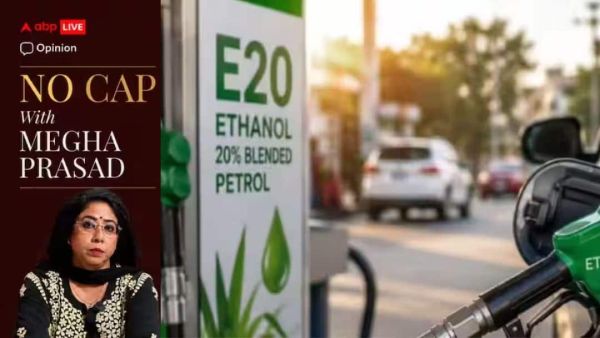
India's transition to E20 fuel has come under renewed scrutiny after a report citing an unpublished study by the Automotive Research Association of India (ARAI) raised concerns about the impact of the higher ethanol blend on vehicles designed for E10 fuel.
E20 is petrol blended with 20 per cent ethanol. The government has maintained that the programme will reduce crude oil imports, lower emissions, improve energy security and increase farmers' incomes through higher ethanol demand.
However, the reported findings have fuelled a wider debate over consumer awareness, vehicle compatibility and whether motorists should have the option of purchasing ethanol-free petrol.
Report Flags Rubber Component Deterioration
According to the report, the unpublished ARAI study found that using E20 in E10-compliant vehicles may lead to deterioration of rubber components in the fuel system, including hoses, gaskets, seals and O-rings.
The study reportedly found no adverse impact on metallic components and said emissions remained within prescribed legal limits.
The report also stated that fuel consumption with E20 increased by 2 to 6 per cent compared with E10.
Durability Tests Show Mixed Findings
The report cited multiple durability tests carried out on different engines.
According to the reported findings, one BS-IV engine performed acceptably with E20. However, a BS-VI turbocharged engine reportedly developed an issue after 265 hours of durability testing.
The report further stated that testing involving two car manufacturers found no issue for one vehicle after 400 hours, while another recorded a thermomechanical failure of an exhaust valve after cumulative testing of 809 hours.
Government Defends Ethanol-Blending Programme
Petroleum Minister Hardeep Singh Puri has rejected concerns surrounding E20 fuel, saying there is no evidence of damage in E20-compatible vehicles.
He has also said that automakers and service providers have not reported any difficulty linked to the fuel.
Road Transport Minister Nitin Gadkari has challenged critics to identify a vehicle that has faced problems because of ethanol-blended petrol.
The government has consistently maintained that ethanol blending has helped reduce crude oil imports, cut emissions and support farmers.
Government Reportedly Exploring Pure Petrol Option
Amid the debate, reports suggest the government is examining whether ethanol-free petrol, or pure petrol, could be offered alongside blended fuel.
According to the reports, oil marketing companies have been asked to provide suggestions on the proposal.
The move comes as India's vehicle fleet comprises both newer E20-compatible models and older vehicles originally designed for E10 fuel.
Lessons From E100 Rollout
The report also highlighted the experience of E100, or pure ethanol fuel.
According to the report, nearly 400 pilot outlets offering E100 recorded limited consumer demand, leading to a significant scaling back of the rollout.
The report attributed the weak response to limited vehicle readiness, consumer adoption and supporting infrastructure.
Consumer Transparency At Centre Of Debate
The debate has also focused on consumer information and disclosure.
Among the issues being raised are the publication of the complete ARAI study, model-wise compatibility lists from vehicle manufacturers, warranty clarification for E20 use, clear fuel-blend labelling at petrol pumps and the availability of lower-ethanol or ethanol-free fuel options for vehicles that are not E20-compatible.
-
Headache Relief: Work Stress Splitting Your Head? Ditch Chai-Coffee for These 3 Drinks
-
Karan Johar elated as PM Modi mentions ‘Kuch Kuch Hota Hai’ in Indonesia
-
Trump says US paying ‘billions too much’ for Europe’s security

-
Auto bearings sector to see strong growth despite near-term risks
-
Unnao rape case: HC to consider medical report for victim’s age