The schools Silicon Valley parents are choosing for their children have less to do with technology: Experts explain why it matters for the future
ETimes | July 9, 2026 4:39 PM CST
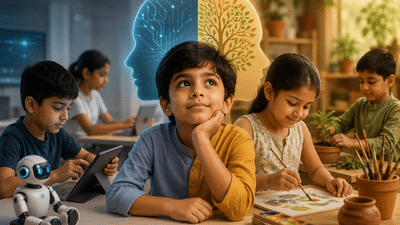
School admissions today are being sold with the promise of AI-powered classrooms and coding lessons. For many parents, the more advanced the technology, the better the school seems. But what if the people shaping the future of technology are making very different choices for their own children?
According to parenting and career consultants Dr. Rouble Tuli and Shikha Dutt Tuli, a growing number of technology leaders in Silicon Valley are opting for schools that intentionally delay the use of screens and digital devices in the early years. “Many of the people building tomorrow’s technology are choosing schools that delay technology for their own children,” the experts note. Their message is simple yet powerful: “Technology is becoming cheaper. Human skills are becoming priceless.”
What schools are tech leaders choosing for their kids?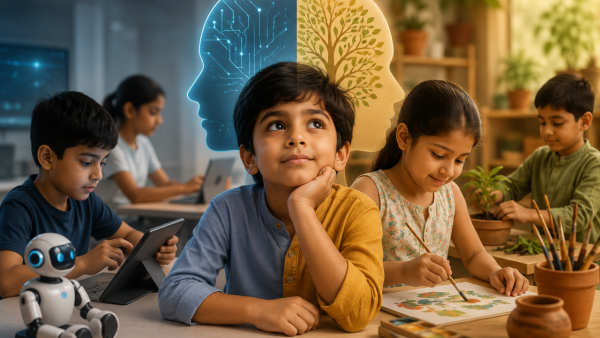
Parents often assume that preparing children for the future means exposing them to technology as early as possible. Schools have responded by introducing coding, AI and tablets into classrooms from the primary grades. However, the parenting consultants believe this race towards technology may be missing a much bigger picture. They point out that many professionals working in the technology industry are choosing schools that focus first on childhood itself rather than digital skills. These schools are known as Analog schools. “More and more tech giants, the people who invent all these tech tools, they're sending their children not to digital schools, but to analog schools. And these parents from the tech industry, those working in Silicon Valleys, they're going for more hands-on skills, schools like Waldorf,” the experts explain.
What is analog education ?Despite the name, analog education is not about keeping children away from technology forever. Instead, it is based on delaying screens until children develop the skills that technology cannot replace. According to Dr. Tuli and Shikha Dutt Tuli, the philosophy is straightforward: “Build the child first, build his imagination first, build his communication skills first, build his natural attention span first, make sure he knows how to think as a problem solver, and then introduce the technology. Do not put him on shortcuts too soon because these people have realized that the real future, future-ready skill, the real differentiator for their child, will not be technology, but his human skill,” the experts note, explaining that technology should become a tool in a child's hands, not a substitute for thinking.
Why human skills may become the biggest advantage in the AI eraArtificial intelligence has become incredibly capable. Today, it can write essays, create presentations, generate artwork, solve mathematical problems and even write computer code in seconds. As AI takes over more technical and repetitive tasks, experts believe the real differentiator will no longer be what technology can do, but what humans can do with it.
According to parenting and career consultants Dr. Rouble Tuli and Shikha Dutt Tuli, the value of originality is already becoming evident. “AI can write an essay, but it cannot replace a child's original thinking. The real difference that remains is the human using the technology,” they explain.
The experts note that some essay-writing competitions and educational assessments are beginning to shift their focus away from polished language alone, recognising that AI can generate grammatically perfect content. Instead, they increasingly value the originality of ideas, the quality of questions being explored, critical thinking, meaningful inferences and thoughtful conclusions.
The future belongs to children with "human" skillsAs technology becomes more accessible, experts believe that the most sought-after skills will be deeply human ones. “The future isn't just about knowing how to use AI. It's about whether a child can think independently, work in a team, lead people, persuade others, stay focused and remain emotionally resilient,” say Dr. Tuli and Shikha Dutt Tuli.
These qualities- creativity, empathy, curiosity, attention span, perseverance and emotional intelligence- are what the experts describe as the premium skills of the digital age.
Why art, music and gardening may matter more than ever
Interestingly, the renewed interest in poetry circles, pottery workshops, painting classes, music lessons, gardening, book clubs and even adult colouring books reflects a larger societal shift. “The more digital life becomes, the stronger our desire becomes to reconnect with real, human experiences,” the experts say. Many of these creative activities are now viewed as therapeutic because they help people slow down, focus, create and connect- qualities that constant digital engagement often diminishes.
For children, these experiences do much more than fill free time. Theatre builds confidence and communication. Art encourages imagination. Gardening teaches patience and responsibility. Debates develop reasoning and public speaking. Together, they nurture the very abilities that AI cannot replicate.
What parents should ask before choosing a schoolInstead of asking only about robotics labs, coding classes or AI-powered learning, Dr. Rouble Tuli and Shikha Dutt Tuli encourage parents to ask different questions. “Does the school encourage theatre, art, music, gardening, debates and meaningful collaboration? These experiences will become a child's greatest competitive advantage in the future,” they say.
Their concluding message is simple yet powerful: “The real AI skill isn't Artificial Intelligence. It's Authentic Analog Intelligence- the human ability to think deeply, create originally, connect meaningfully and use technology without losing what makes us human.”
According to parenting and career consultants Dr. Rouble Tuli and Shikha Dutt Tuli, a growing number of technology leaders in Silicon Valley are opting for schools that intentionally delay the use of screens and digital devices in the early years. “Many of the people building tomorrow’s technology are choosing schools that delay technology for their own children,” the experts note. Their message is simple yet powerful: “Technology is becoming cheaper. Human skills are becoming priceless.”
What schools are tech leaders choosing for their kids?
Parents often assume that preparing children for the future means exposing them to technology as early as possible. Schools have responded by introducing coding, AI and tablets into classrooms from the primary grades. However, the parenting consultants believe this race towards technology may be missing a much bigger picture. They point out that many professionals working in the technology industry are choosing schools that focus first on childhood itself rather than digital skills. These schools are known as Analog schools. “More and more tech giants, the people who invent all these tech tools, they're sending their children not to digital schools, but to analog schools. And these parents from the tech industry, those working in Silicon Valleys, they're going for more hands-on skills, schools like Waldorf,” the experts explain.
What is analog education ?Despite the name, analog education is not about keeping children away from technology forever. Instead, it is based on delaying screens until children develop the skills that technology cannot replace. According to Dr. Tuli and Shikha Dutt Tuli, the philosophy is straightforward: “Build the child first, build his imagination first, build his communication skills first, build his natural attention span first, make sure he knows how to think as a problem solver, and then introduce the technology. Do not put him on shortcuts too soon because these people have realized that the real future, future-ready skill, the real differentiator for their child, will not be technology, but his human skill,” the experts note, explaining that technology should become a tool in a child's hands, not a substitute for thinking.
Why human skills may become the biggest advantage in the AI eraArtificial intelligence has become incredibly capable. Today, it can write essays, create presentations, generate artwork, solve mathematical problems and even write computer code in seconds. As AI takes over more technical and repetitive tasks, experts believe the real differentiator will no longer be what technology can do, but what humans can do with it.
According to parenting and career consultants Dr. Rouble Tuli and Shikha Dutt Tuli, the value of originality is already becoming evident. “AI can write an essay, but it cannot replace a child's original thinking. The real difference that remains is the human using the technology,” they explain.
The experts note that some essay-writing competitions and educational assessments are beginning to shift their focus away from polished language alone, recognising that AI can generate grammatically perfect content. Instead, they increasingly value the originality of ideas, the quality of questions being explored, critical thinking, meaningful inferences and thoughtful conclusions.
The future belongs to children with "human" skillsAs technology becomes more accessible, experts believe that the most sought-after skills will be deeply human ones. “The future isn't just about knowing how to use AI. It's about whether a child can think independently, work in a team, lead people, persuade others, stay focused and remain emotionally resilient,” say Dr. Tuli and Shikha Dutt Tuli.
These qualities- creativity, empathy, curiosity, attention span, perseverance and emotional intelligence- are what the experts describe as the premium skills of the digital age.
Why art, music and gardening may matter more than ever
Interestingly, the renewed interest in poetry circles, pottery workshops, painting classes, music lessons, gardening, book clubs and even adult colouring books reflects a larger societal shift. “The more digital life becomes, the stronger our desire becomes to reconnect with real, human experiences,” the experts say. Many of these creative activities are now viewed as therapeutic because they help people slow down, focus, create and connect- qualities that constant digital engagement often diminishes.
For children, these experiences do much more than fill free time. Theatre builds confidence and communication. Art encourages imagination. Gardening teaches patience and responsibility. Debates develop reasoning and public speaking. Together, they nurture the very abilities that AI cannot replicate.
What parents should ask before choosing a schoolInstead of asking only about robotics labs, coding classes or AI-powered learning, Dr. Rouble Tuli and Shikha Dutt Tuli encourage parents to ask different questions. “Does the school encourage theatre, art, music, gardening, debates and meaningful collaboration? These experiences will become a child's greatest competitive advantage in the future,” they say.
Their concluding message is simple yet powerful: “The real AI skill isn't Artificial Intelligence. It's Authentic Analog Intelligence- the human ability to think deeply, create originally, connect meaningfully and use technology without losing what makes us human.”
READ NEXT
-
Ferran Torres Agrees Terms with PSG as Barcelona Forward Nears Exit

-
South African Footballer Jayden Adams Passes Away at 25 Shortly After World Cup 2026 Campaign

-
Booking A Cab In UP? New Policy Brings Big Relief For Users With Fare Cap, Fines & Insurance Cover

-
Interview: Young, educated and in search of work – migrants are rebalancing India's demography

-
Zetwerk Cofounder Rahul Sharma Steps Back From Executive Role To Launch AI Venture