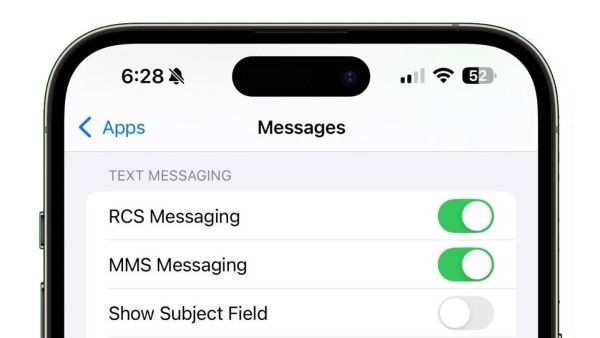
Hyderabad: Bharti Airtel’s partnership with Google finally brought Rich Communication Services (RCS) to its network on March 1, ending years of resistance over spam and fraud concerns. But three months on, one group of Airtel customers remains left out: iPhone users.
While Airtel subscribers on Android can use RCS through Google Messages, there is no confirmed RCS support for iPhone customers. Reliance Jio, by contrast, was reported to have reached an RCS deal with Apple as early as August 2025. The gap raises a straightforward question: why is Airtel’s RCS rollout Android-only?
What RCS is, and is not
RCS is a GSMA-backed messaging standard. It upgrades the legacy SMS experience with read receipts, typing indicators, high-resolution media sharing and group chat. Since iOS 26.5, released in May this year, RCS also supports end-to-end encryption between iPhone and Android. The feature is still in beta and only activates when both users and carriers support it.
That makes the technical case for iPhone RCS simple: if the network supports the standard, and Apple supports the same standard, the feature should work. Yet, on Airtel, it does not.
Airtel’s stated reason: Spam control
Airtel has been public about its condition for adopting RCS. The company wanted all RCS traffic to pass through its own AI-based spam filters before reaching subscribers. Google agreed and the March 2026 deal was announced as a “carrier-backed” RCS deployment with built-in spam protection.
“We had not onboarded Google because we first wanted RCS messages to be routed through the Airtel spam filter,” an Airtel spokesperson told TechCrunch at the time.
Apple’s role: The certification gate
Apple added RCS support in iOS 18 and expanded it with end-to-end encryption in iOS 26.5. But the company does not switch RCS on for every carrier automatically. Operators typically need to be tested and activated in Apple’s carrier profiles. Jio was reported to have reached an agreement with Apple in 2025.
Industry observers say Apple has little commercial incentive to rush. iMessage remains a powerful lock-in feature, especially in markets with high iPhone penetration. Where Apple does enable RCS, it blurs the blue-bubble/green-bubble divide that helps keep users inside its ecosystem.
What happens next
Airtel and Apple need to agree on carrier activation and testing for iPhone RCS. The longer the two companies wait, the more messaging stays trapped inside closed apps rather than the open standard both claim to support.
Until then, Airtel iPhone users are left with a choice: keep using ordinary SMS, switch to an Android device, change to Jio or, most likely, keep using WhatsApp.
-
Manchester United eye Joao Gomes after pulling out of Ederson deal amid medical concerns

-
Explained: Norway’s Viral ‘Viking Row’ Celebration Ahead of England Clash

-
Joe Cole Reflects on England’s 2010 World Cup Failure and Why Fate Must Favour the Three Lions to End Six Decades of Pain

-
'Fieldwork as a Sex Object': Meena Kandasamy's angry new novel is ever so slightly overcooked

-
AI won't be able to steal your face anymore: Cate Blanchett launches a safety tool—find out why it is essential in the age of deepfakes..