Rangkat saris: A rare Banarasi weave of colour and precision
ETimes | July 12, 2026 6:39 PM CST
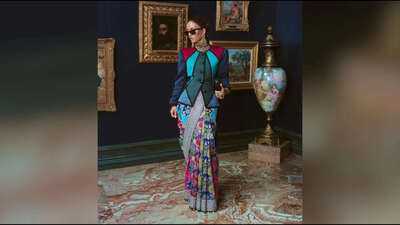
Banarasi saris are among India’s most celebrated weaves, with their rich silks and intricate brocades captivating wearers for centuries. Crafted in styles such as katan (pure silk), organza, georgette and the intricate kadhua technique, the tradition is vast. Yet within it lies lesser-known marvel: the rangkat sari , considered one of the most tech nically complex creations in the Banarasi weaving tradition .
What is a rangkat sari
In a rangkat sari, the design emerges directly from the weave rather than being added later. Darshan Dudhoria, CEO, Indian Silk House Agencies, explains, “Unlike most saris, whose identity comes from surface elements such as motifs, zari or embellishments, a rangkat derives its identity from the fabric itself. The word ‘ rangkat ’ comes from ‘ rang ’, meaning colour, and ‘ kat ’, meaning cut or gradation.” The threads are dyed in multiple colours before weaving begins, allowing hues to blend seamlessly across the fabric. The effect often appears as stripes, colour blocks or geometric segments, giving the sari a striking, almost painterly look.
‘It is a highly technical process’
It’s the technique that makes weaving a rangkat sari both demanding and collaborative. Like most Banarasi textiles, the process involves multiple artisans – from yarn prep and dyeing to the master weaver, who ultimately brings the sari to life.
Khushi Shah, creative director at Shanti Banaras, explains that the process begins long before the loom is set. “Warp threads are dyed in different colours according to the design plan and then arranged on the loom so the colours fall exactly where the pattern requires them. Once prepared, the weaver begins weaving with silk and often zari threads.” Precision is critical. Viren Lathiya, co-founder of Sudathi, notes, “There is little room for error, as even a slight misalignment can disrupt the entire design. Once weaving begins, correcting mistakes becomes nearly impossible.” Depending on the complexity, a rangkat sari can take two to four weeks to complete, sometimes longer.
A rare Banarasi tradition
The rangkat weaving technique is believed to have originated in Varanasi during the Mughal period, when Persian and Central Asian influences blended with local weaving traditions. Over time, certain weaving families in the city mastered the craft and passed it down through generations. Yet rangkat has always been rare – and today even more so. Dudhoria says, “The lineage has thinned over time. The weavers who carry rangkat knowledge are older, fewer, and not being replaced at a sufficient rate. In Varanasi, those who have mastered rangkat number only in the dozens.”
The knowledge for rangkat is largely hereditary and takes years to develop. Subtle variations in thread tension and weaving rhythm ensure every rangkat sari is unique. With faster weaves offering similar wages, younger artisans often have little incentive to learn the demanding technique.
Why rangkat stands apart
- Colour from the weave itself: The shimmering colour effect comes from the interplay of contrasting warp and weft threads rather than dyeing or printing.
- Weaver’s instinct: Colour combos rely on the experience of weavers who understand how threads interact to create luminous effects.
“Today’s buyers want to know the origin of a weave. That curiosity is where rangkat finds its appeal. Once people understand the craftsmanship behind it, the appreciation is immediate,” says Darshan Dudhoria, CEO, Indian Silk House Agencies.
Value of a rare weave
Depending on craftsmanship, a rangkat sari can range from ₹8,000 to ₹1.5 lakh
READ NEXT
-
Telangana govt clarifies on Revanth’s duplicate voter list entry

-
Hyderabad: Nizamia Unani students protest after only 5 pass exam
-
Only 38% Of Consumers Trust The Purity Of Ghee They Buy, Survey Finds

-
Singapore HC Rejects Byju Raveendran's Plea To Halt Six-Month Jail Sentence

-
Now painting your house will also be expensive. Asian Paints has increased the price of paint by 12%. What is the reason behind this?