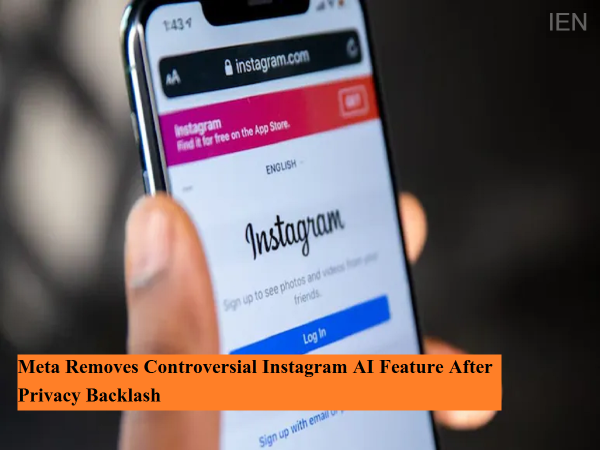
Meta has withdrawn a controversial Instagram AI feature that allowed users to generate AI-created images using content from public Instagram profiles. The decision comes after widespread criticism from users, privacy advocates, and entertainment industry representatives, who argued that the feature raised serious concerns about consent and misuse of personal images.
Although the controversial capability has been removed, Meta has confirmed that the core Muse Image AI image-generation tool will continue to operate with revised functionality.
Why Was the Feature Controversial?
Meta recently introduced Muse Image, an AI-powered image generation tool designed to create images from text prompts. One of its experimental capabilities allowed users to reference public Instagram accounts while generating AI images.
Soon after its launch, the feature faced intense criticism because it enabled AI-generated images based on public profile content without requiring explicit permission from the account owner. Many users expressed concerns that the feature could be exploited to create misleading or manipulated images.
Privacy experts also questioned the default settings, arguing that users should have been given a clear choice before their public content became available for AI-powered reuse.
Meta Acknowledges User Feedback
In a recent statement, Meta admitted that the feature did not meet user expectations.
The company said it had carefully reviewed public feedback and decided to discontinue the controversial functionality. While the account-tagging capability has been removed, Muse Image will continue offering standard AI image-generation features that do not rely on the withdrawn system.
The move reflects Meta's efforts to address growing concerns surrounding user privacy and responsible AI development.
Celebrities and Industry Groups Also Raised Objections
The feature attracted criticism beyond everyday Instagram users.
Several representatives from the entertainment industry, including major talent agencies representing well-known Hollywood actors, publicly urged Meta to reconsider the rollout. Industry groups argued that AI tools should only use an individual's likeness after obtaining clear consent rather than enabling the feature by default for public profiles.
They emphasized that users should have complete control over whether their images can be referenced by AI systems.
Why Did Users Object?
One of the biggest concerns was the feature's default configuration.
Reports indicated that the option allowing AI reuse of public Instagram content was enabled automatically for eligible public accounts. Users who wanted to restrict the feature had to manually change their settings.
Another issue raised by critics was the lack of notifications. If someone generated AI content referencing a public profile, the account owner would reportedly not receive any alert, leaving many users unaware that their publicly shared content had been referenced.
These concerns contributed to widespread criticism on social media and prompted calls for stronger privacy protections.
What Has Changed Now?
Following the backlash, Meta has made several changes.
Users attempting to generate AI images by tagging another person's Instagram account will now find that the AI system no longer supports that functionality. The company has also removed the related content reuse setting that previously appeared in Instagram's privacy options for public accounts.
These changes are intended to provide greater clarity and reduce the possibility of unwanted AI-generated content involving public Instagram profiles.
What This Means for Instagram Users
The removal of the feature is expected to reassure many users who were concerned about how their public content could be used by AI systems.
However, privacy experts continue to recommend that users periodically review their Instagram privacy settings, understand how AI-related features work, and switch to a private account if they prefer greater control over who can access their content.
Final Take
Meta's decision to remove the controversial Instagram AI feature highlights the growing importance of privacy, transparency, and user consent in artificial intelligence. As AI-powered tools become more advanced, technology companies are facing increasing pressure to ensure that new features respect user preferences and provide clear controls over how personal content is used. The rollback demonstrates how public feedback can influence the development of AI products and encourage stronger privacy safeguards.
-
Airport security first, says Suvendu on Kolkata mosque access
-
England Test: Yastika Bhatia first woman to hit Test ton at Lord's

-
Middle East firms shift focus from AI adoption to AI ownership

-
Indian Railways Clarifies Ticket Rules: WhatsApp Copies and Screenshots Not Accepted for Unreserved Travel

-
Tunnel company directed to compensate Wayanad landslide victims' families: Minister Siddique