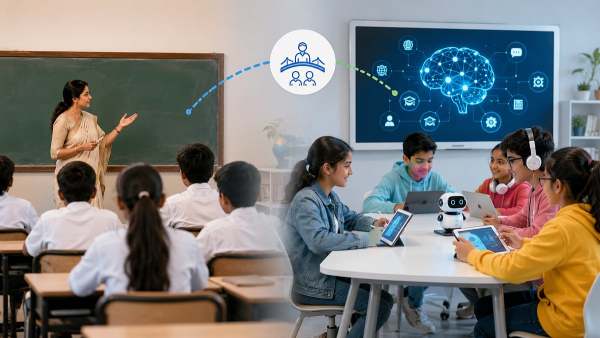
As Gen Z and Gen Alpha reshape classrooms, educators must embrace learner-centred teaching, AI, technology and life skills while prioritising mental well-being, critical thinking and stronger teacher-student relationships.
In educational parlance, we often come across two terms:Gen Z and Gen Alpha. They denote two distinct age groups of learners: those born between 1997 and 2012 (Gen Z) and those born from 2013onwards (Gen Alpha). Both are products of the digital revolution, with Gen Alpha being the first generation to be born into an AI-driven world. While Gen Z currently dominates higher education, the younger school-going children belong to Gen Alpha.
Many educators today are in their thirties, forties or older and belong to earlier generations. Consequently, there exists a significant cultural and technological gap between teachers and learners. Managing the emotions, aspirations and expectations of these digitally empowered students has become one of the greatest challenges confronting educators today.
Unlike previous generations, today's learners have grown up with smartphones, social media, instant messaging, online gaming, and artificial intelligence. Information is available at their fingertips. They are highly connected, visually oriented and accustomed to receiving immediate responses. This has transformed not only the way they learn but also the way they think, communicate, and interact with authority.
Challenges being Faced:
-
Reliance Retail's EBITDA Erodes In Q1 Amid Q-Comm Expansion

-
Recent Strikes Near Iran's Nuclear Facility Raise Concerns

-
6 Kitchen essentials that can naturally fix your dirty, greasy kitchen

-
Thomas Tuchel issues emotional speech ahead of England's France clash

-
No sugar, no jaggery! Still wonderful to taste; Make healthy sugar-free laddoos at home