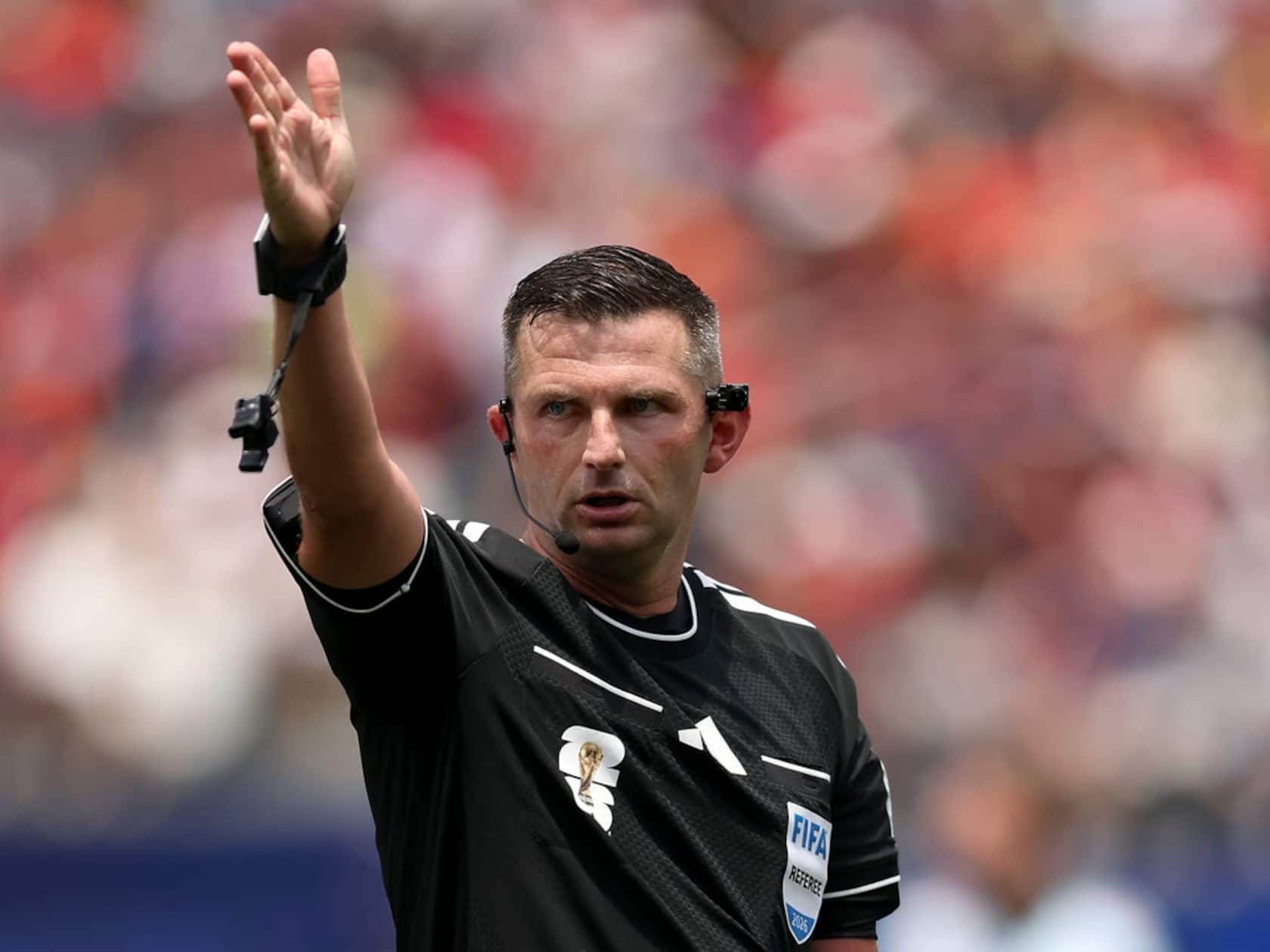
As the 2026 World Cup moves into its decisive stages, the focus has expanded beyond the performances of the players to include the officials overseeing the matches.
The selection of referees has become a major talking point, particularly after an all-Argentine officiating team was assigned to France’s 2-0 victory over Morocco on Thursday evening.
This decision raised eyebrows among many fans online, especially since France are considered favourites to meet defending champions Argentina in the final — a potential repeat of the 2022 showdown.
FIFA also confirmed that English referees Anthony Taylor and Michael Oliver are ineligible to officiate Argentina’s matches because of sensitivities linked to the Falklands War, which took place 44 years ago.
Here’s a detailed Q&A on how FIFA selects its referees for the World Cup.
The key factor guiding referee appointments at the World Cup is performance. Referees are evaluated as a unit, typically working alongside their two assistant referees throughout the tournament.
This evaluation is the result of a long-term assessment process conducted by the FIFA Referees Committee, chaired by former World Cup final referee Pierluigi Collina, widely regarded as one of the greatest officials in football history.
While consistent form and accurate decision-making are central to these selections, other geopolitical considerations also influence the process.
It is standard practice that referees cannot officiate matches involving their own national teams. Furthermore, FIFA confirmed to The Independent that referees are not appointed to matches where the result could have a direct impact on their home nation’s progress in the tournament.
For instance, an English referee would not be assigned to a group-stage game such as Panama vs Croatia, nor to a knockout match like Argentina vs Switzerland if the winner might face England in the semi-finals.
This policy, however, does not extend beyond the immediate “next-match” implication. That is why an all-Argentine officiating team oversaw France’s 2-0 quarter-final win over Morocco, even though Argentina could potentially meet France in the final.
Ideally, FIFA tries to assign referees from neutral confederations. When an African side faces a South American team, a European referee could be appointed to ensure neutrality. Conversely, in an all-European clash such as Spain’s quarter-final win over Belgium, a European referee like England’s Michael Oliver is entirely acceptable.
Nonetheless, geopolitical issues remain important. For example, an American referee would not have been appointed to officiate a match involving Iran at this World Cup, given the strained relations between the two nations.
Although there is no rigid rulebook, FIFA aims to apply common sense and remains conscious of politically sensitive contexts. One insider described the system as “quite fluid”.
A FIFA spokesperson confirmed that the 1982 Falklands War remains a consideration in referee assignments. Consequently, English referees are not appointed to Argentina’s matches or to any fixtures that could directly affect Argentina’s path in the tournament — and the same applies in reverse.
Therefore, neither Michael Oliver nor Anthony Taylor will officiate the World Cup final, as England and Argentina are set to face each other in the semi-final stage.
The Falklands issue continues to be politically delicate, particularly after Argentina’s players were heard singing “Muchachos”, a song referencing the “Malvinas” — Argentina’s term for the South Atlantic islands — following their win over Egypt.
By contrast, conflicts from longer ago, such as the Second World War, no longer influence referee appointments. A German referee, for example, could still be assigned to an England match.
There have been notable past examples. Argentine referee Horacio Elizondo famously officiated England’s quarter-final defeat to Portugal at the 2006 World Cup, remembered for Wayne Rooney’s controversial red card after a clash with Ricardo Carvalho.
FIFA has not clarified why the current stance regarding the Falklands War was not applied during that tournament two decades ago.
-
Major setback for Barcelona as Frenkie de Jong faces months out with knee injury after World Cup return
-
Will players be banned from the World Cup final if they receive a yellow card in the semi-final?
-
Cyberabad Police arrest 13 in cybercrime cases, Rs 76L refunded

-
Wangchuk refuses to end fast despite appeals, in ‘immense pain’

-
Shubman Gill Injury Scare! India Captain Retires Hurt On 80 Off 75 Against England