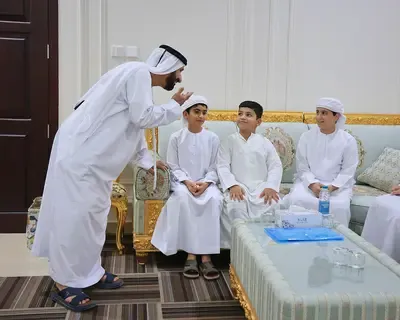
Over 1,050 children signed up for Ras Al Khaimah's first-ever Al Sanaa Al Saifi (which translates to Summer Etiquette) programme, surpassing its initial target by more than 250 participants as families show growing interest in preserving Emirati traditions and values among the younger generation.
Launched this summer across 13 centers in the emirate, the initiative aims to strengthen national identity by introducing children aged 7 to 12 to authentic Emirati customs, social etiquette, and values passed down through generations.
"The main goal of this programme is to ensure the sustainability of our national identity, strengthen humanitarian and community values, and reinforce the authentic customs, traditions and behaviours that distinguish Emirati society," Ahmed Mohammed Hasel Alharthi, Programme Coordinator of the Al Sanaa Al Saifi summer camp, told Khaleej Times.
Stay up to date with the latest news. Follow KT on WhatsApp Channels.
He said the programme was created to help preserve these traditions by passing them on to children, who will carry them forward to future generations.
Rather than relying solely on classroom instruction, organisers have built the programme around hands-on activities that allow children to practice traditional etiquette in realistic settings.
"We don't just teach them the theory," Alharthi said. "We give them empty coffee pots and let them practice on themselves. They learn how to welcome guests, ask about their well-being, serve Arabic coffee correctly, and interact respectfully with visitors. Making the lessons practical helps the children understand and remember them."
Children are divided into teams named after core Emirati values, including generosity, community solidarity, and helping others, and earn points throughout the programme by demonstrating the etiquette they have learned. The friendly competition is designed to keep participants engaged while reinforcing positive behavior.
Each lesson begins with theoretical concepts, which children immediately put into practice. The following day starts with a review of the previous lesson to reinforce what they have learned and ensure the skills are retained.
The educational content was developed by certified trainers in collaboration with senior Emiratis known for their knowledge of the country's heritage and traditional etiquette, helping ensure the curriculum reflects authentic Emirati customs.
To further enrich the experience, the programme has partnered with local heritage organizations and community elders who share first-hand accounts of traditional Emirati life.
Two of the 13 centers are hosted by community associations representing the Al Shehhi and Al Haboos tribes, where elders explain how Emiratis traditionally supported one another during weddings, funerals and other community occasions.
"We wanted the first edition to focus on building a strong educational foundation within the centers," Alharthi said. "As we evaluate feedback from parents and participants, we will consider expanding future editions to include visits to heritage sites, traditional gathering places and other cultural locations where children can experience these values firsthand."
To make participation easier for families, each center serves children from its surrounding area, allowing parents to register their children at the nearest location.
Organizers are monitoring the programme's impact through weekly assessments as well as surveys that will be conducted with both children and parents after the month-long camp concludes. The evaluations will measure how well participants understood and applied the values taught during the programme, while parents will be asked whether they noticed behavioral changes at home.
According to Alharthi, one of the earliest improvements has been a noticeable increase in children's confidence.
"At the beginning, around 80 per cent of the children were too shy to stand in front of their classmates and introduce themselves," he said. "By the end of the first week, we could already see a significant difference. They became much more confident speaking in front of others, which is one of the early indicators that the programme is having a positive impact."
The inaugural edition is currently open only to boys, although organizers said they will review parents' feedback before deciding whether future editions should be expanded to include girls.
Looking ahead, organisers are also considering extending the programme to teenagers aged 13 to 17, describing adolescence as a critical stage for reinforcing Emirati identity and values while helping young people navigate outside influences.
Among the values taught throughout the camp are tolerance, equality, justice, respect for elders and younger members of society, generosity, teamwork and the spirit of fazaa, the Emirati tradition of coming to the aid of those in need.
"We also teach them how to work together during community occasions, whether celebrations or times of hardship," Alharthi said. "These values are part of our identity, and we want the next generation to practise them naturally in their daily lives."
Dubai Police to teach kids diving, first-aid and online gaming safety this summer UAE kids as young as 14 skip summer camps to learn swimming coaching skills UAE initiative brings the elderly back into classrooms to bridge generational gap-
Manchester United announce Karl Darlow’s new squad number

-
‘A dream chance!’ - Nico O'Reilly eager for Lionel Messi showdown as England get ready to battle Argentina legend in World Cup semi-final

-
Major setback for Barcelona as Frenkie de Jong faces months out with knee injury after World Cup return

-
Will players be banned from the World Cup final if they receive a yellow card in the semi-final?

-
Cyberabad Police arrest 13 in cybercrime cases, Rs 76L refunded