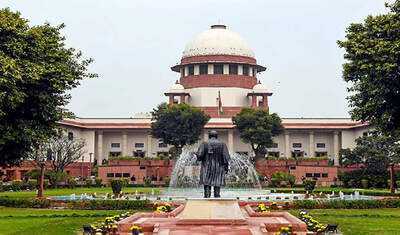
The Supreme Court has raised questions regarding the implementation of the three-language framework of the National Education Policy (NEP) 2020 by the CBSE. The Chief Justice remarked on whether English can be classified as an indigenous Indian language. Despite recent clarifications issued by the board, issues within the policy persist. During the hearing, Justice J. Joymalya Bagchi questioned the terminology used in the policy, suggesting that there may be a need to reconsider what constitutes an indigenous language. The intent of the authorities is clear: it is a constitutional goal to promote Indian languages.
Concerns Raised by Legal Representatives
Senior lawyer Gopal Shankaranarayanan, representing the petitioners, argued that while the policy leaves the choice of languages to the states, there are concerns regarding its implementation. He emphasized that the right to choose languages has been delegated to the states.
Language Learning and Its Importance Language Learning is Never Wasted
Shankaranarayanan informed the court that the NCERT has not yet made the promised learning materials widely available. He noted that only three books were found on the NCERT website instead of the expected twenty-two. Students are being encouraged to abandon English and other foreign languages in favor of their local languages. Chief Justice (CJI) D.Y. Chandrachud responded by stating, "Language learning is never wasted," as the Supreme Court declined to impose a stay on the CBSE's three-language policy for the academic year 2026-27. However, he acknowledged that the concerns raised by the petitioners have not been fully addressed, despite the circular issued by CBSE on June 29, 2026.
Ongoing Issues with the Policy
Shankaranarayanan further argued that schools were informed that textbooks would be ready by July 1, and teachers must be prepared to teach in all 22 scheduled languages. This situation is adversely affecting the current state of education. Senior lawyer Shyam Diwan also pointed out that despite changes in the policy, concerns remain. Requesting time to respond, Additional Solicitor General Aishwarya Bhati, representing the government, stated that they would file a response within two weeks. However, the CJI instructed the center to submit a response sooner, stating, "File within 10 days." The lawyer representing petitioner Fauzia Khan also informed the bench that this policy negatively impacts students, particularly those from marginalized communities, affecting their mental health.
-
The Black Box Era Of Enterprise AI Is Ending, As Customer-Controlled AI Takes Spotlight

-
Delhi High Court to hear plea over Sonam Wangchuk's health tomorrow

-
BigBasket To Slash Geographical Presence By Half To 40 Cities: Report

-
Keep electricity bills in check and reduce humidity—use your AC in these 5 ways during the rainy season..

-
AI Update: AI tools and apps are excellent for boosting productivity—which one would be the best for you?