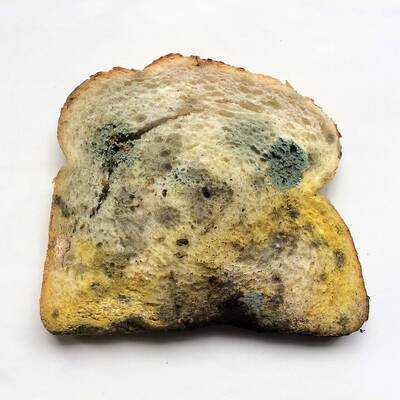
On a Sunday morning, you might want the perfect slice of warm toast with butter. You take the bread off the kitchen counter. What you see is green mould sitting on the top layer of the bread near one end. The first thought that comes to your mind is to take out a knife and cut the piece of bread, leaving out the mouldy part. Why waste the whole loaf of bread for a tiny spot?
However, health experts urge us to think twice before attempting this quick fix. According to the United States Department of Agriculture's Food Safety and Inspection Service page , the green fuzz is merely the tip of a much larger iceberg. The public health agency explicitly warns that when a soft item like bread shows visible signs of fuzzy growth, root threads have already invaded the item deeply. This means that trimming the surface may not remove the mould that has spread inside.
The key is in figuring out how mould grows. Everything that appears on the crust is nothing more than the reproductive system of the fungus that produces spores, which make the patch so colored. Below the surface, the organism spreads its invisible microscopic threads – hyphae – throughout the interior of the loaf. Due to the nature of bread being very soft and filled with numerous air gaps, mould can spread through it easily.
Hidden dangers waiting to strike
The main problem with mouldy food in your pantry is not just the appearance or smell. The most important reason why these living things should be kept away from your food is connected with the invisible toxic chemical products they produce – mycotoxins. According to the USDA Food Safety and Inspection Service, these toxins can often be found within and around the mould; therefore, they cannot be washed or cooked away.
Consuming these invisible toxins can trigger a range of unpleasant reactions, from sudden respiratory distress to severe allergic flare-ups. Certain types of crops and nuts can even harbour highly dangerous, cancer-causing variations like aflatoxins, which are strictly monitored by global food authorities to protect public health. To make matters worse, soft foods that hold a high amount of moisture create the perfect breeding ground for invisible bacteria to grow right alongside the fungal threads, doubling the risk of an upset stomach.
It is equally important to approach such cases delicately in the kitchen. Once you find out about the compromised food, one of the best pieces of advice would be to resist the temptation to bend down and take a sniff, as you might end up taking in some of those microscopic spores that will cause respiratory problems or allergies straight away.
How to manage your kitchen safely
Does it mean that all food in your pantry must be disposed of as soon as you find something wrong with it? Luckily for you, the answer is not a definitive yes. The rules differentiate two types of food based on their density and moisture content.
According to the USDA Food Safety and Inspection Service guidelines, the dense structure of firm items like hard cheeses or solid vegetables (such as carrots and bell peppers) effectively prevents mold roots from penetrating deeply into the food. The USDA explicitly states that you can safely salvage these specific dense foods by cutting away at least one inch around and below the affected spot. When executing this salvage technique, it is crucial to keep your knife completely clear of the fuzzy patch itself to avoid cross-contaminating the fresh, clean sections. The federal safety guidelines also confirm that certain traditional speciality foods, such as hard salami and dry-cured country hams, naturally feature a safe surface coating. For these stable, low-moisture meat products, the USDA notes it is completely normal to simply scrub the surface growth away before consuming them safely.
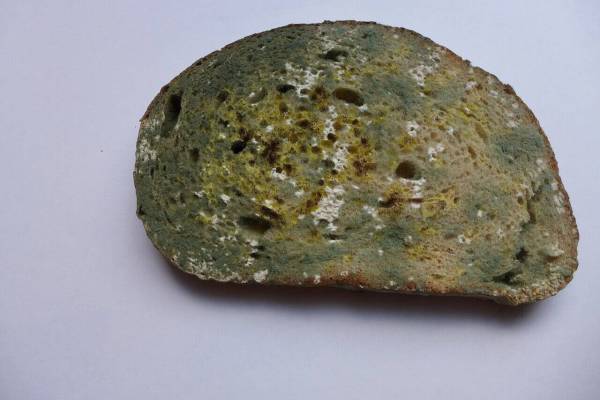
Nonetheless, for food items such as sandwich loaves, pre-sliced packs, leftover meats, cooked grains, and soft cheeses, everything changes. The United States Department of Agriculture explicitly classifies these as high-moisture, porous, or sliced foods that must be discarded immediately because the threadlike roots can effortlessly penetrate deep below the surface. The best course of action is to throw them out, seal the waste bag, and clean the area where they were stored to prevent spores from spreading to other food.
-
Why Does the World Cup Have a Third-Place Match? England to Face France in the 'Bronze Final'

-
US introduces fixed-term for student, exchange visas

-
UP: APTC commandant's follower dies by suicide, family claims torture; 3 cops booked

-
Ex-bureaucrat's son arrested for fraud worth lakhs by posing as govt official in Dehradun

-
Panel probing ‘theft’ of Badrinath offerings suggests dress code for counting, CCTV surveillance