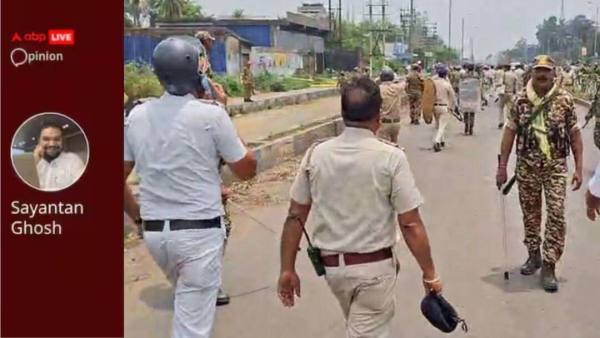
The gang rape and murder of an 11-year-old girl in Surjyapur village under Baruipur police station in South 24 Parganas district in early July 2026 has shaken West Bengal shortly after the Bharatiya Janata Party (BJP) assumed power under Chief Minister Suvendu Adhikari. The brutal crime, involving multiple accused, triggered public outrage, road blockades, and a mob lynching of an innocent man suspected of involvement.
One key accused, Prabhas Mondal, was killed in a police encounter during crime scene reconstruction when he allegedly tried to snatch a weapon and flee. Police described it as self-defence; critics see echoes of extrajudicial action.
This case marks one of the most high-profile tests for the new BJP government on women’s safety and law and order. A change in government does not automatically transform societal ills, but the handling of such crimes defines governance. The Trinamool Congress (TMC) lost significant credibility over repeated failures in cases like Park Street, Kamduni, and RG Kar, contributing to its electoral defeat.
Now, the BJP faces scrutiny: will it pursue swift justice through legal channels or risk normalizing encounters? West Bengal’s history of state violence from Naxalite-era killings in the 1970s to subtler custodial deaths under later regimes looms large. Public celebration of the encounter risks setting a dangerous precedent, while unchecked crime and mob violence undermine development goals. The BJP must balance public demand for retribution with institutional integrity.
OPINION | AAP Battles Anti-Incumbency In Punjab; Congress Undermines Itself Through Factionalism
The Encounter Days Of The 1970s And 1980s
West Bengal’s tryst with extrajudicial killings intensified during the Naxalite movement. In the late 1960s and early 1970s, urban and rural naxalite violence by students and activists prompted a fierce state response under Congress rule led by Siddhartha Shankar Ray. Police conducted widespread “encounters,” often alleged as fake, targeting suspected Naxalites, many of them young educated individuals.
The Barasat killings of November 1970 stand out: 11 young men, accused of Naxal links, were reportedly rounded up and executed in cold blood. Similar incidents occurred across Kolkata and suburbs, with bodies found on streets bearing signs of torture and bullet wounds.
In Baranagar, on August 12-13, 1971, approximately 100 people were killed in encounter in 30 hours due to their alleged affiliation with the Naxal movement. Bengal has witnessed a wide range of such encounters and killing throughout its history.
The government justified these as necessary to restore order against “anarchists” who attacked police, symbols of authority, and even educational institutions. Backlash was significant among intellectuals, students, and human rights groups, who documented patterns of arbitrary arrests, custodial torture, and staged encounters.
These operations decimated the Naxalite leadership and cadre but left a legacy of distrust in police and state machinery. By the mid-1970s, the movement was crushed, yet the scars fueled long-term radicalization and criticism of state impunity.
This period established encounters as a controversial tool in Bengal’s law enforcement lexicon, celebrated in some quarters for “toughness” but condemned for bypassing due process.
Left Regime And Changing Forms Of Extrajudicial Killings
The Left Front government, which came to power in 1977 promising reform after Congress excesses, largely abandoned overt encounter killings. Under Chief Ministers Jyoti Basu and later Buddhadeb Bhattacharjee, the strategy shifted to subtler repression. Direct police “encounters” became rare, replaced by custodial deaths, enforced disappearances, and lethal force during protests.
The Marichjhapi massacre of 1979 exemplified this: Dalit refugees from Bangladesh settled on the island in the Sundarbans faced a brutal eviction.
Police blockades led to starvation, disease, and firing, with estimates of hundreds to thousands dead. Nandigram (2007) saw police firing on protesters against land acquisition for a chemical hub, killing at least 14. Dinhata and other protest sites witnessed similar violence.
These incidents involved ruling party cadres alongside police, creating a pattern of political violence masked as law enforcement. The Left’s initial promise of people’s democracy gave way to institutional capture, where opposition was met with force rather than dialogue. While encounters declined, the overall culture of impunity persisted, eroding public faith.
OPINION | Why Mamata Banerjee Needs The INDIA Bloc More Than It Needs Her
TMC Rule And Custodial Deaths
The TMC came to power in 2011 promising a break from the excesses of the Left Front, particularly the years of violence that marked the Maoist insurgency. Yet, questions over state violence did not disappear. The encounter killing of Maoist leader Kishenji in November 2011 was immediately challenged by human rights groups, who alleged it was a staged encounter rather than a genuine exchange of fire.
Although the state rejected those allegations, the controversy cast an early shadow over the new government’s human rights record.
As the Maoist insurgency receded, another concern came to dominate public discourse-custodial deaths and the growing perception of political impunity. NHRC data repeatedly recorded custodial deaths in West Bengal, while several incidents in districts such as Howrah and Cooch Behar prompted allegations of torture and demands for independent investigations. The 2022 Bogtui massacre became a defining symbol of this breakdown.
Eight people, including women and children, were burnt alive following the murder of a local TMC leader, exposing the brutal cycle of political revenge. The subsequent death of the prime accused, Lalan Sheikh, in CBI custody added another layer of controversy.
Critics argued that a culture of weak accountability, combined with allegations of partisan policing and the rise of “party raj,” eroded public faith in governance and became one of the factors contributing to the TMC’s eventual electoral defeat in 2026.
The Challenge Before BJP
The BJP government inherits a deeply compromised police force politicized under TMC. Strengthening institutions through depoliticization, better training, forensics, and fast-track courts is essential for sustainable law and order. Stringent policing is needed against rising crime, but encounters cannot become the norm.
They bypass judicial oversight, invite misuse, and risk international scrutiny, deterring investment essential for tackling unemployment, infrastructure decay, and industrial revival.
Public euphoria over the Baruipur encounter and incidents like egg-pelting TMC leaders reflect frustration but normalize mob justice, as seen in the lynching of an innocent man.
BJP leaders, including Suvendu Adhikari, have vowed tough action and death penalties where due, yet must emphasize rule of law to differentiate from predecessors. Development priorities-business influx, education, health-require stable governance, not fear-based shortcuts reminiscent of the 1970s.
West Bengal does not want a return to bloody cycles. The real test lies in delivering swift convictions through transparent processes, reforming policing, and addressing root causes of violence against women.
Balancing public anger with constitutional principles will define whether BJP’s tenure marks genuine change or another chapter in Bengal’s troubled history.
-
Why Dan Burn Has Only Nine Fingers: The England and Newcastle Defender’s Childhood Accident Explained

-
How many times have England reached the World Cup semi-finals?

-
Global Events Executive Backs Fifa’s Decision to Extend World Cup Final Half-Time Show

-
UP Emerging As India's Textile Hub, Says Minister Rakesh Sachan At Bharat Tex-2026
-
Files Related To India's Largest Nuclear Plant Surface On Dark Web