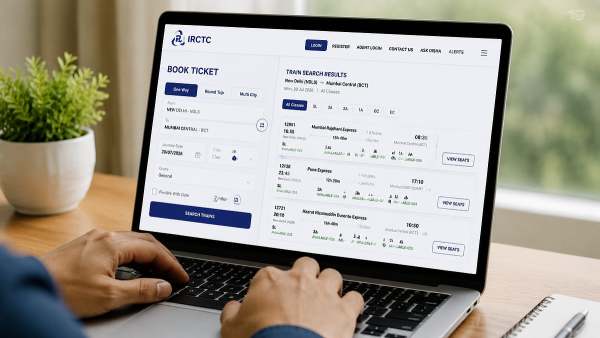
IRCTC launched the beta version of its redesigned ticket booking website on Wednesday, offering a faster and simpler booking experience. The portal reduces captchas, displays seat availability across classes and allows saved passenger details. The Railway Ministry said user feedback during the trial phase will help improve the platform before the final version rollout.
Mumbai: The Indian Railway Catering and Tourism Corporation (IRCTC) on Wednesday launched the beta version of its redesigned ticket booking website, offering passengers a faster, cleaner and more user-friendly experience. The new portal went live at 9 pm, introducing simplified booking, reduced captchas, visible seat availability across all classes and saved passenger details for quicker repeat bookings. Users can access it through the existing IRCTC website and share feedback before the final version is rolled out.
Modernisation drive underway
The redesigned website is part of a broader effort to modernise India's online railway ticketing system. According to the Ministry of Railways, several improvements were suggested by students of Malaviya National Institute of Technology (MNIT) during an interaction with Railway Minister Ashwini Vaishnaw. The existing IRCTC website, launched in 2002, currently handles an average of around 14.5 lakh ticket bookings every day.
The beta version removes unnecessary pop-ups, flashing graphics and repeated captchas to make the booking process smoother. It also displays seat availability across all travel classes on a single screen, reduces the number of booking steps and allows users to save passenger details for faster future bookings.
-
Hong Kong Police Raid Two Bookstores, Arrest Five Over Alleged Seditious Books

-
France Moves Closer To Assisted Dying For Terminally Ill After 14 Years Of Debate

-
Over 500 Rohingya Refugees Feared Dead After Two Boats Capsize Off Myanmar Coast

-
Nagercoil Custodial Death: Family Demands Second Autopsy, Prison Staff Arrested

-
Supreme Court Orders States To Create Early Release Policy for Elderly, Terminally Ill Inmates