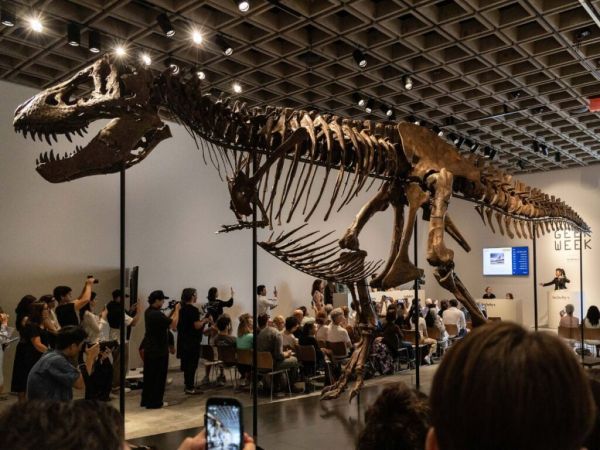
A Tyrannosaurus rex skeleton which is nicknamed as “Gus” has cracked all the previous fossil auction record as it got sold for $50.1 million at Sotheby’s in New York on 14 July, 2026. The shocking part is that there were seven interested parties who got involved in to a tense ten-minute bidding war.
The sale, which blew far past its presale estimate of $20 to $30 million, has reignited a heated debate that has simmered for years in the paleontology world: who should truly own the planet’s most significant prehistoric remains — museums built to preserve and study them, or private collectors with the deep pockets to outbid institutions entirely?
Who Is “Gus” That Made The Headlines?
Gus is not just a ordinary specimen. It is 12.5 feet tall and 38 feet long and also have a 54-inch skull that makes it one of the largest T. rex skeletons that was ever unearthed. With 183 fossilized bone components, the skeleton is around 61% complete by bone count and 75% to 80% complete by mass. The first T. rex fossils were found in 1902 in the Hell Creek Formation, a legendary boneyard that spans Montana, Wyoming, and the Dakotas.
Who Bought The Giant Gus And Why That Matters?
Seven interested parties engaged in a frantic ten-minute bidding battle until the winning bid was put anonymously over the phone. After adding buyer’s fees, the ultimate hammer price of over $43 million increased to slightly over $50 million. The $44.6 million millionaire Ken Griffin spent in 2024 for “Apex” the Stegosaurus, which is presently on a four-year loan to New York’s Museum of Natural History, was destroyed by that amount.
The buyer’s identity is still unknown, so it’s unclear if Gus will be displayed in public or kept in private hands. According to paleontologists, this distinction is crucial.
Why Are The Scientists So Worried?
Since prominent journals will only publish studies on specimens kept in publicly accessible collections, paleontologists generally believe that once a fossil enters private possession, it is virtually lost to science. The incoming president of the Society of Vertebrate Paleontology expressed optimism that Gus will be donated to an accredited institution in a statement suggesting that scientifically significant fossils like Gus should be kept in museums where they may be accessed for future research and education.
A Market On Fire
Only two other T. rex specimens are now more famous than Gus: “Stan,” which sold for around $32 million in 2020 and is currently housed at the Natural History Museum Abu Dhabi, and “Sue,” the first dinosaur to be auctioned off in 1997 and is the focal point of Chicago’s Field Museum. Many believe that Gus’s sale will accelerate a market in which museums are less important than affluent private buyers.
What It Means For Fossil Research?
The record-breaking sale highlights the growing divide between scientific access and commercial fossil hunting. Researchers worry that some of the planet’s most scientifically valuable specimens may disappear into private vaults, out of reach of peer review, museum display, or public awe, as landowners and excavation teams pursue ever-higher paydays.
The post What $50 Million Sale of ‘Gus’ T. Rex Means For Dinosaur Fossil Research And Why Scientists Are Concerned? appeared first on NewsX.
-
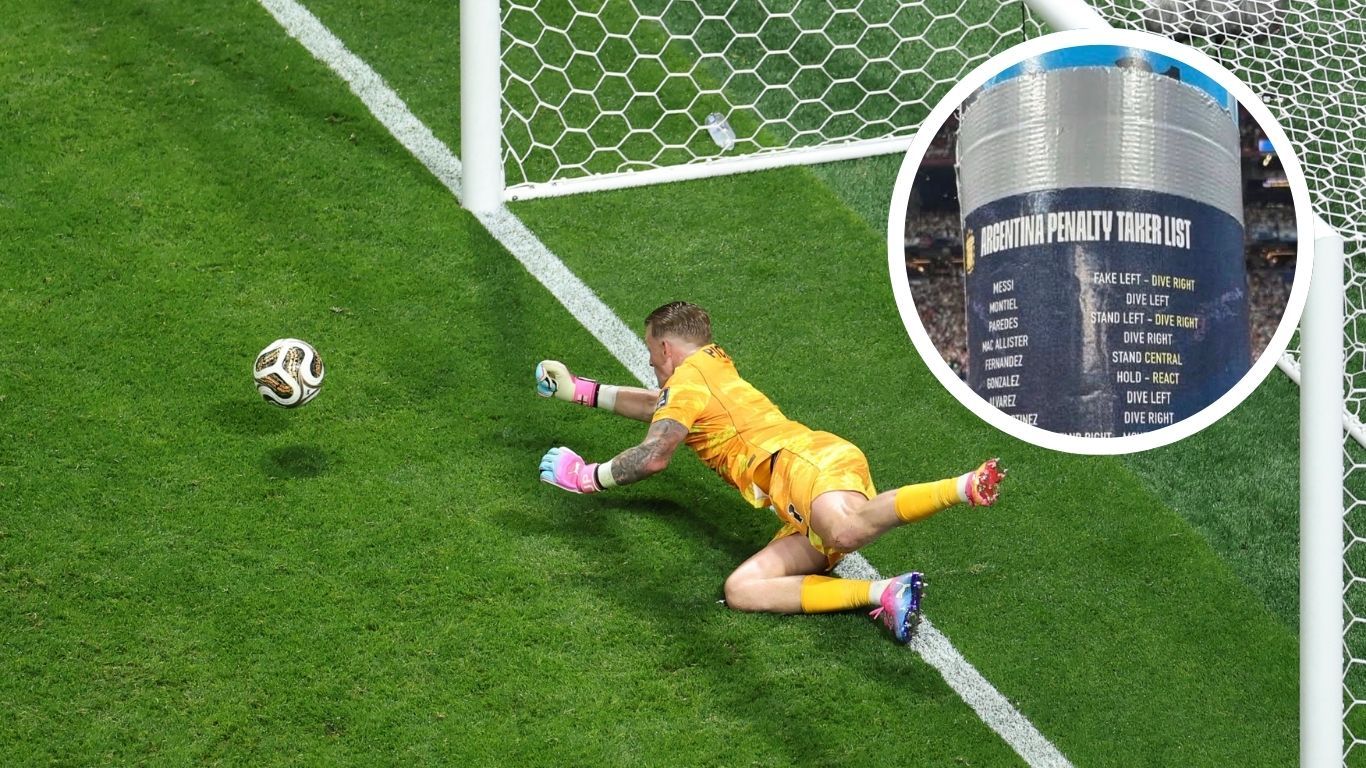
‘Lionel Messi, fake LEFT, dive RIGHT’: How Jordan Pickford Planned His Moves if England Faced Argentina in a Penalty Shootout
-
Thomas Tuchel Vindicated: Former England Star Andros Townsend Defends Coach After Argentina Defeat, Calls Tactical Substitutions 'Smart' Despite World Cup Exit

-
Why Does the World Cup Have a Third-Place Match? England to Face France in the 'Bronze Final'

-
US introduces fixed-term for student, exchange visas

-
UP: APTC commandant's follower dies by suicide, family claims torture; 3 cops booked