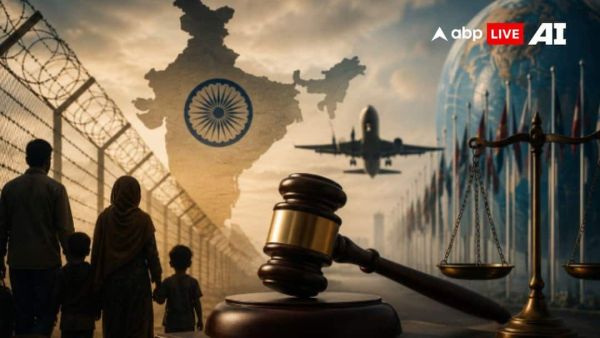
The recent judicial intervention in the case of Union of India v. Bhodu Sekh & Ors., (Special Leave Petition (Criminal) No. 18658 of 2025), in which the Supreme Court of India directed the return of Indian nationals who had allegedly been wrongfully deported to Bangladesh, manifests a defining moment for Indian constitutionalism and the rule of law.
While concerns regarding illegal migration and border management are legitimate sovereign concerns, the wrongful deportation of Indian citizens raises fundamental constitutional and international legal issues that affect the most basic human rights, including citizenship, identity, liberty, dignity, and access to legal protection.
The Deportations That Sparked The Legal Battle
Between May and June 2025, in the aftermath of the terror attack in Pahalgam, several states carried out large-scale detentions of Bengali-speaking residents suspected of being undocumented migrants. Among those caught in this exercise were Sunali Khatun, then eight months pregnant, her husband, Danish Sheikh, their young son, and the family of Sweety Bibi. They were deported to Bangladesh within forty-eight hours of detention, without the thirty-day home-state verification mandated by the Ministry of Home Affairs.
High Courts In India And Bangladesh Reach The Same Conclusion
The Calcutta High Court, in its judgment in Bhodu Sheikh v. Union of India (WPA(H) No. 50 of 2025), found this haste constitutionally indefensible. The Bench held that statements extracted from detainees during police interrogation, without procedural safeguards, could not lawfully found a deportation order, and that the exercise violated Articles 14, 20(3) and 21 of the Constitution.
In a parallel development, a Senior Judicial Magistrate's court in Chapainawabganj, Bangladesh, reportedly found that the six deported individuals, including Sunali Khatun, Danish Sheikh and members of Sweety Bibi's family, were Indian nationals and directed that steps be taken to repatriate them.
The court relied upon documentary materials placed before it, including Aadhaar records and residential addresses linking them to Birbhum district in West Bengal. Despite two courts in two countries reaching the same conclusion, the Union government initially resisted repatriation and challenged the High Court's order before the Supreme Court. It was only in subsequent hearings, including one in which Solicitor General Tushar Mehta informed the Bench that the government would bring the individuals back and verify their citizenship status, that a partial resolution emerged, with the Court expressly noting that this course was not to be treated as a precedent for future cases.
Citizenship Cannot Be Determined By Administrative Suspicion
This sequence of events exposes the fragile legal foundation on which citizenship determinations are currently made. Citizenship is the legal bond between an individual and the state, carrying both rights and obligations, and while international law sometimes distinguishes nationality from citizenship, the two converge in protecting a person's legal identity and political membership.
In India, citizenship is governed by Articles 5 to 11 of the Constitution and the Citizenship Act, 1955. Parliament has wide power to legislate on citizenship, but that power does not extend to stripping a person of citizenship on the basis of executive suspicion or administrative convenience. A person who is, in law, an Indian citizen cannot be converted into a foreign national by an interrogation memo.
What The Supreme Court's Jurisprudence Says
The Supreme Court's jurisprudence on this question is more layered than a simple invocation suggests. In Sarbananda Sonowal v. Union of India (2005) 5 SCC 665, the Court struck down the Illegal Migrants (Determination by Tribunals) Act, 1983 as unconstitutional precisely because it made detection and deportation of illegal migrants in Assam more difficult than elsewhere in the country, and directed that the Foreigners Act, 1946, under which the burden of proving citizenship rests on the individual, apply uniformly.
However, unlike Sonowal, which concerned the validity of the legal regime governing the identification of illegal migrants, the subsequent litigation before the Calcutta High Court raised a distinct question as to whether the executive had exercised its statutory powers consistently with constitutional guarantees of due process, equality and personal liberty while determining the citizenship status of those detained and deported.
The controversy in Bhodu Sheikh v. Union of India, however, did not question the State's authority to identify and deport foreign nationals. Rather, it raised the constitutionally distinct issue of whether that authority had been exercised in accordance with the procedural safeguards mandated by the Constitution, the Foreigners Act, and the Union government's own Standard Operating Procedure. The Calcutta High Court held that the deportation of the petitioners, subsequently found to be Indian citizens, had been carried out in undue haste, without completion of the prescribed verification process.
Articles 14 And 21: The Constitutional Safeguards
The more directly protective thread of authority runs through Articles 14 and 21.
In E.P. Royappa v. State of Tamil Nadu, AIR 1974 SC 555, the Court held that arbitrariness is antithetical to the constitutional guarantee of equality. This principle was substantially developed in Maneka Gandhi v. Union of India, AIR 1978 SC 597, where the Court read into Article 21 a requirement that any procedure depriving a person of life or personal liberty be fair, just and reasonable, not fanciful or oppressive, fundamentally altering the relationship between executive power and personal liberty in Indian law.
Justice K.S. Puttaswamy v. Union of India, (2017) 10 SCC 1, later affirmed that dignity is intrinsic to Article 21, a proposition with obvious relevance when wrongful deportation strips a citizen of legal identity, family ties and social standing in a single administrative stroke.
International Law And The Principle Of Non-Refoulement
Indian courts have also shown a willingness, though not an unlimited one, to read constitutional guarantees consistently with international human rights standards.
In National Human Rights Commission v. State of Arunachal Pradesh, (1996) 1 SCC 742, the Supreme Court held that the state is bound to protect the life and liberty of every human being within its territory, citizen or not, and directed the protection of Chakma refugees against threatened expulsion.
In Vishaka v. State of Rajasthan, (1997) 6 SCC 241, the Court held that international conventions not inconsistent with domestic law may inform constitutional interpretation.
These cases matter for the principle of non-refoulement, the customary international law norm against returning a person to a territory where they face persecution or serious harm, codified in Article 33 of the 1951 Refugee Convention. India is not a party to that Convention, and it would overstate the law to claim non-refoulement binds India as a treaty obligation.
What can be said with more confidence is that Indian courts have on occasion read elements of that principle into Article 21, and India's binding obligations under the International Covenant on Civil and Political Rights, to which it is a party, independently guarantee liberty, equality before the law, and protection against arbitrary detention.
Why The Bhodu Sheikh Case Matters
The Bhodu Sheikh episode illustrates why these doctrines cannot remain abstract. A citizen wrongly declared a foreigner and expelled across an international border suffers a constitutional injury that is difficult to reverse and impossible to fully compensate.
Judicial review functioned here as the last line of defence, but only after months of separation, and an unusual spectacle of a foreign court affirming what the petitioner's own government would not. That should trouble anyone committed to the proposition that administrative convenience must never substitute for legal certainty in matters of citizenship, liberty and belonging.
The Broader Constitutional And Diplomatic Implications
Wrongful deportation risks creating diplomatic friction by imposing administrative burdens on Bangladesh; thus, the reversal of such deportations serves not only constitutional values but also the long-term interests of bilateral cooperation and regional stability.
The restoration of wrongfully deported Indian citizens, therefore, represents more than individual justice. It reinforces the constitutional promise that executive authority shall always remain accountable to law, procedure established by law, and human dignity.
Abhinav Mehrotra is an Assistant Professor and Amit Upadhyay an Associate Professor at Jindal Global Law School.
-
‘We always knew we were stronger than England’ – Lionel Messi admits fearing ‘foolish’ backlash if Argentina had fallen short in World Cup semi-final

-
Why America's hospitals keep looking to India for nurses

-
SC refuses to hear contempt pleas alleging violation of 2024 'bulldozer' guidelines

-
Third language should be introduced in Class 6, not Class 9, says Supreme Court on CBSE policy

-
Why ISRO's reported scientist exodus is about more than just numbers