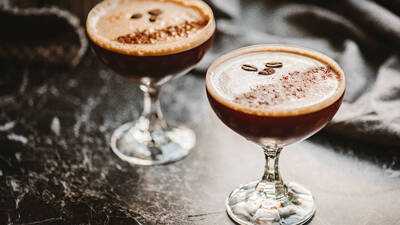
From pretty-looking edible flowers to charred oranges, today's cocktail garnish tells a new story with every new serving. While many of these garnishes are a poetic expression of the drink's creator, some garnishes go far deeper. For instance, the Espresso Martini. It is one of the world's most popular coffee cocktails, loved for its rich flavor, velvety foam, and perfect balance of caffeine and spirits. But, have you ever observed the standard garnishing of this cocktail-three coffee beans? Do you know what this means? Scroll down to find out.
What is Espresso Martini
It is a coffee-based alcoholic cocktail made with espresso, vodka, coffee liqueur, and simple syrup (sugar syrup). According to experts, it is not a true martini because it does not contain gin or vermouth. Interestingly, the word "martini" refers mainly to the cocktail being served in a martini glass.
Understanding the garnishing of Expresso Martini
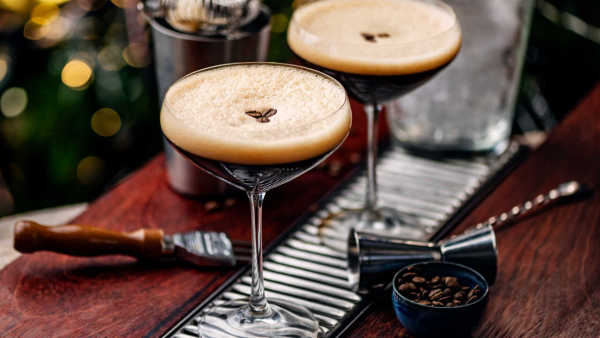
At first glance, the beans may seem like a simple decorative garnish. But bartenders and cocktail lovers say the three beans have a deeper meaning rooted in Italian tradition. Not randomly placed on the drink, they signify good luck and have become one of the most distinctive features of the espresso martini.
What is the Italian tradition behind the three coffee beans?
The espresso martini is not the first drink to have three coffee beans placed on top, legends say. But it actually came from Italy, where Sambuca is a sweet, anise-flavored liqueur served with three coffee beans floating on top. It is said that this classic presentation is known as "con la mosca," which translates to "with the fly." The coffee beans resemble tiny flies floating in the glass, giving the tradition its unusual name. If experts are to be believed, the beans represent three wishes for the person enjoying the drink: Health, Happiness, and Prosperity.
How the Espresso Martini adopted the tradition

According to a report by Reader's Digest, the drink was invented in London during the early 1980s by legendary British bartender Dick Bradsell at Soho Brasserie. It is believed that a customer requested a drink that would both energize and intoxicate her and that is when Bradsell combined freshly brewed espresso, vodka, coffee liqueur, and sugar syrup, creating what would become one of the world's most famous modern cocktails. The first iteration of the drink, which he called a “Vodka Espresso,” was served over ice in a rocks glass. But as the ’80s gave way to the ’90s and flavored martinis became all the rage, he made a few tweaks that elevated his signature recipe into the iconic espresso martini we know today. Over the years, the drink gained popularity, and bartenders adopted the Italian tradition of garnishing coffee cocktails with three beans. Today, those beans have become an essential finishing touch, connecting the modern cocktail with a much older European custom.
Why exactly three beans
While many of us might wonder why bartenders use three beans instead of one, two, or four, the tradition has its own logic. According to legends, three is considered a lucky number in many cultures. In Italian folklore, each bean carries one blessing—health, happiness, and prosperity. Using anything less than three beans would leave one of those wishes incomplete, while adding more would lose the symbolic meaning. Many bartenders feel that serving an espresso martini without the three-bean garnish makes it an incomplete drink.
Is it more than just a garnish?
Yes! Experts feel that apart from its symbolism, the garnish of roasted beans also enhances the drink's taste and presentation. Adding fresh beans releases subtle aromas, adding another sensory element before the first sip. Also, the beans remind you that espresso is the star ingredient.
Can you eat those coffee beans?
Absolutely yes! According to mixologists, those beans are completely edible, although eating them is optional. While some people love chewing the roasted beans after finishing the cocktail, as they offer a crunchy texture and an intense roasted coffee flavor, others prefer to leave them in the glass simply as a decorative garnish.
The legacy of garnish
What often appears to be a simple decoration is actually a symbol with centuries-old roots. Those three beans actually represent health, happiness, and prosperity, a tradition borrowed from Italian Sambuca service and embraced by bartenders around the world. So, next time you order an espresso martini, you will know that those beans on top are more than just a stylish finishing touch. Right?
Images Courtesy: istock and Google Gemini
-
Puri Rath Yatra: Crowd Surge Caught On Camera, Videos Show Injured On Stretchers

-
Top 10 | ABP LIVE Evening Bulletin: Top News Headlines from 16 July 2026 - Evening

-
Algeria: Fire at orphanage kills 11, including children

-
Jio Financial Services Q1: Profit Surges 2.6X YoY To ₹830 Cr

-
logcat.ai Bags $2.5 Mn To Build AI Platform For Android, Linux Engineering