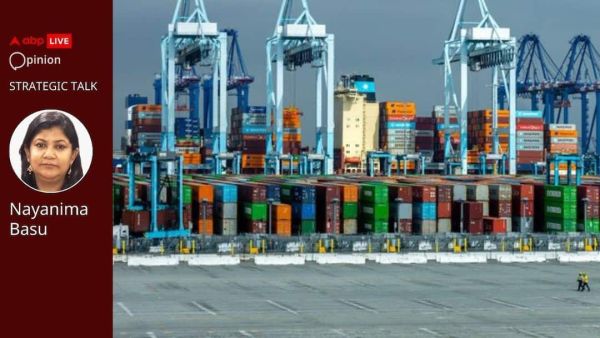
India has once again embarked on the path to securing trade deals, even as the Narendra Modi government aims to sign as many agreements as possible. This push comes at a time when global supply chains are under unprecedented strain due to the ongoing wars, geopolitical tensions, and the increasingly transactional nature of the United States. When Prime Minister Modi assumed office in 2014, the primary policy was to avoid negotiating trade agreements and instead focus on attracting investments while fostering strategic relationships with partner countries.
However, following the COVID-19 pandemic, which severely impacted lives and livelihoods, the government realized the necessity of establishing bilateral trading arrangements. It became evident that geostrategic gains cannot be fully achieved without corresponding geoeconomic benefits. One of the biggest achievements that has taken place in the past 12 years as far as trade is concerned is India signing free trade agreements with the European Union (EU) and United Kingdom (UK).
While the FTA with EU is currently undergoing legal vetting, the FTA with the UK, also known as the Comprehensive Economic and Trade Agreement (CETA), came into force on 15 July, 2026.
Even though the UK FTA will not bring much benefit to India in terms of market access for its merchandise exports, the alignment of regulatory procedures and acceptance of Indian standards and norms under its trading system is likely to open the doors to other bigger trade agreements that demand higher standards of regulatory procedures.
Besides, India also has an operational FTA with Japan, Korea, Malaysia and Singapore. India has also signed an FTA with New Zealand which is expected to come into effect later this year.
The interesting aspect here is that all these countries are members of the Comprehensive and Progressive Agreement for Trans-Pacific Partnership (CPTPP)-a major multilateral free trade agreement between 12 countries spanning the Indo-Pacific, Americas, and Europe. These are Australia, Brunei, Canada, Chile, Japan, Malaysia, Mexico, New Zealand, Peru, Singapore, Vietnam, and the United Kingdom.
Together, these member economies represent approximately 14% to 15.6% of the global GDP, accounting for a market of around 580 million consumers.
OPINION | India Looks For Indo-Pacific Partners Beyond U.S. As China Gets Aggressive
Under the CPTPP, which came into force on 30 December, 2018, tariffs on most of the goods that are being traded amongst the member countries have been brought down to zero. The bloc aims to eliminate or significantly reduce tariffs on 98% of goods, liberalize services, and set high-standard regulations for digital trade, intellectual property, and labour.
But the aspect that can be most attractive to India is the fact that CPTPP neither has the US nor China as its member, therefore, making its entry into the pact smoother. The CPTPP evolved out of the original Trans-Pacific Partnership (TPP). After the US withdrew from the TPP in 2017 under the first tenure of the Donald Trump administration, the remaining 11 nations renegotiated and restructured the deal, officially signing the updated CPTPP in 2018.
India is currently negotiating a bilateral trade deal with the US, which is facing substantial challenges. In 2019, New Delhi walked out of the Regional Comprehensive Economic Partnership due to the fear of Chinese goods flooding Indian markets and decimating the Indian manufacturing industry.
According to a report by NCAER, “India is right to pursue agreements with America and the European Union-and those talks will proceed at their own pace. The CPTPP is finished, road-tested and waiting, with many years of growth behind it and rules that India, for now, can stomach. In a world where the certainties of trade and geopolitics are dissolving, a ready-made bargain on tolerable terms is a rare prize. India should try and claim it before the moment passes entirely.”
Veteran diplomat Gurjit Singh, during a discussion held recently on India’s Act East policy at the Aspen Centre, said, like Indonesia, India should plan to join the CPTPP, in order to come into the trading ecosystem of the Pacific countries.
Earlier this month, Prime Minister Modi embarked on a significant diplomatic tour, visiting Indonesia, Australia, and New Zealand. Throughout these engagements, the primary emphasis was on fostering collaboration and strengthening ties among these nations as part of a broader strategy within the Indo-Pacific region.
This initiative aims to establish a cohesive grouping intended to enhance political, economic, and security cooperation in this vital area of the world. Therefore, joining the CPTPP, which requires unanimous consensus, would be a wise decision, especially since India is not currently part of any major trade pact.
Japan Plans 'Updated' Free And Open Indo-Pacific With India To Address China Concern
[Disclaimer: The opinions, beliefs, and views expressed by the various authors and forum participants on this website are personal and do not reflect the opinions, beliefs, and views of ABP News Network Pvt Ltd.]
-
‘Missing the final piece again’ – Harry Kane speaks of ‘empty feeling’ after England’s World Cup semi-final heartbreak against Argentina

-
'World-class ability and leadership' - USWNT skipper Lindsey Heaps cleared for much-awaited Denver Summit debut in NWSL clash with Portland Thorns on Saturday

-
Luis Suarez Praises Ronaldo as the Greatest Striker of All Time

-
Trump tightens US visa rules for students, journalists, exchange visitors
-
Rohit Sharma's Form Under Scrutiny as India Faces England in ODI Series