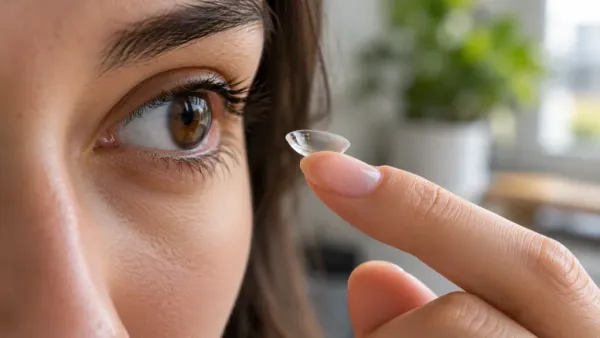
The smart contact lenses reality represents a major technological paradigm shift, transitioning advanced augmented reality (AR) portals from speculative science fiction directly into the consumer electronics pipeline. The foundational premise of this technology centers on seamless digital integration.
By mounting computing components directly over the human pupil, developers aim to render interactive data strings inside a user’s natural line of sight. For example, a user can review private messaging notifications or analyze map directions hands-free via an external display that automatically vanishes the moment environmental velocity or eye motion shifts past real-time reading thresholds.
However, this emerging ecosystem surfaces an immediate societal tension, forcing a structural choice between friction-free access to contextual data and unprecedented personal intrusion. Industry analysts are divided on whether these ultra-miniaturized display platforms represent the natural progression of personal consumer electronics or merely act as high-priced luxury novelties that carry significant hidden operational maintenance fees.
Navigating the Smart Contact Lenses Reality
Smart contact lenses, once confined to science fiction, are inching toward consumer reality. The technology works as an advanced AR portal because it enables users to see digital content that appears in their direct view.
The technology creates two distinct lines because people question whether the lenses represent the next step in personal electronics development or whether they function as an expensive modern product that hides actual expenses.
The lenses establish an uninterrupted digital experience, or they function as another fragile, expensive system that appears appealing on the surface but fails to deliver real-world results.
People are asking if it’s worth trading comfort and affordability for another layer of constant connectivity.
Supporters claim it’s the last interface, the point where technology disappears into daily life. Skeptics call it one more distraction in disguise.
Rewriting Vision Itself
The development of smart contact lenses started through the simultaneous development of microelectronics and biocompatible materials. Corporations like Mojo Vision in the U.S. and startups across South Korea, Japan, and Europe have been prototyping lenses no thicker than human hair, yet filled with sensors, display chips, and wireless data transmitters.
The lens contains micro LEDs, which project ultra-small images because their size permits human users to see the pixels only through an electronic display.
The system aims to project information directly onto the user’s retina while maintaining their original visual experience. The solution presents challenges because it requires knowledge from both biological science and computer engineering to be resolved. Everything must be light, breathable, and safe.
Who Benefits Most
- Students: Access to on-the-go translation, contextual research aid, and real-time collaboration. But the affordability gap remains: early prototypes estimate around $1,200–$1,800 per pair. Subscription-based models might reduce upfront cost, but maintenance will add up.
- Budget-focused individuals: Savings emerge only long-term; replacing multiple small devices may offset cost. Yet lens care, sterilization, and accessory replacements make yearly upkeep considerable, possibly $200–$400. Practical but not instantly affordable.
- Young creators: AR lenses could radically change content creation, imagine hands-free filming or editing overlays visible only to the creator. The creative freedom is real, but learning to “see” and edit in a world half physical, half digital, demands focus. Not everyone will adapt easily.
- Small business owners: A cafe owner could glance at customer flow metrics without lifting a phone. A delivery worker could follow directional trails without checking a map. Time saved, yes, but early adopters risk relying on unproven tech, prone to disconnection in low-signal zones.
- Families: Health monitoring holds genuine promise. Some lens designs contain sensors able to track intraocular pressure or glucose levels through tears, nearly frictionless for diabetic users. Yet consistent accuracy remains elusive; a tiny misreading here could mean serious consequences.
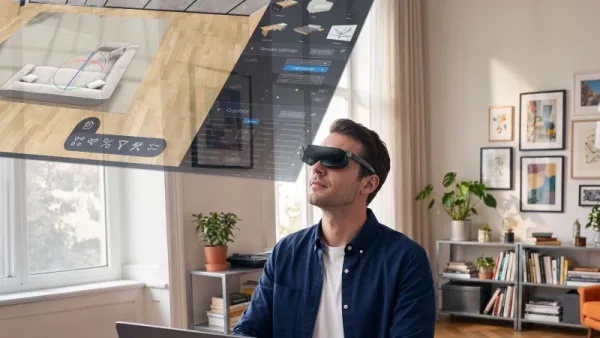
What Often Goes Unsaid
Beneath the elegance lies friction. Early testers report dryness, eye strain, and a subtle anxiety from “always seeing something.” Unlike glasses, removing lenses requires cleanliness and care rarely compatible with fast-paced life. Some users online mention headaches after hours of wear, likening the experience to “living in a digital fog.”
Privacy also echoes as unease lenses that record what is seen invite new ethical debates. Who owns that data? Can a blink become a surveillance tool?
Then there’s longevity. Battery miniaturization is improving, yet most lenses need wireless charging pods.
Each charge session may last only a few hours. Environmental impact creeps in when electronic lenses are discarded every few months, adding new categories of e-waste unless recyclable designs mature quickly.
Pricing and Accessibility
| Category | Estimated Cost (USD) | Key Barrier | Notes |
| Premium Consumers | $1,500–$2,000 per pair | Early tech pricing | Suited for tech adopters |
| Students | $900–$1,200 subscription or leasing | Maintenance cost | May vary by region |
| Medical Monitoring Users | $1,000–$1,600 | Sensor accuracy | Insurance coverage may help |
| Small Businesses | $1,200–$1,800 | Integration issues | Might reduce device dependency |
Sustainability and Environmental Impact
Proponents of AR contact lenses believe that this technology will decrease global screen usage, which will result in reduced energy consumption from smartphones, tablets, and monitors.
- The carbon offset from lens displays will reach substantial levels when they substitute multiple power-demanding devices.
- Microchips, rare elements, and polymer coatings have high ecological costs. The real sustainability question lies not in usage, but in disposal. A recyclable or biodegradable circuit will define whether smart lenses align with a sustainable ethic or become one more pollutant.
- Eco-conscious design teams are experimenting with water-soluble casings and low-energy nano-chip circuits.
- The materials can either dissolve safely or be composted which creates a more environmentally friendly solution than traditional landfill disposal. The company will continue to practice mass production until regulations require it to implement environmentally sustainable methods.
Final Thoughts
Smart contact lenses represent both progress and pause. They urge society to question what “looking” will mean in the next decade. Will the eye become the new interface?
Will the human gaze turn into a transactional mode that always interprets instead of simply seeing things? For some people, the lenses will increase their abilities and include more people because they will combine health information with visual perception. The experience will be different between users because some people will find it helpful, while others will see their regular vision transformed into a commercial display. ‘

The actual situation requires equilibrium because people will decide their level of adoption while determining which aspects to maintain as they are. The transition to augmented reality lenses will take time because they will not immediately substitute glasses.
When the shimmer of information finally settles across ordinary vision, one question will remain as sharp as ever: Is seeing everything the same as understanding it?
-
Manchester United vs Wrexham: Match Preview, Kick-off Time, Live Stream Details, Team Updates, Head-to-Head and Prediction

-
Honey And Warm Water For Weight Loss: Does The Popular Morning Ritual Actually Work?

-
Children used to eat chocolate every day? Parents beware! This affects health

-
Monsoon Bike Care : Planning a bike ride in monsoon? Know these 5 important things first

-
IND vs ENG: Rohit-Virat created history in the second ODI, became India’s third most successful pair, leaving behind Ganguly-Dravid