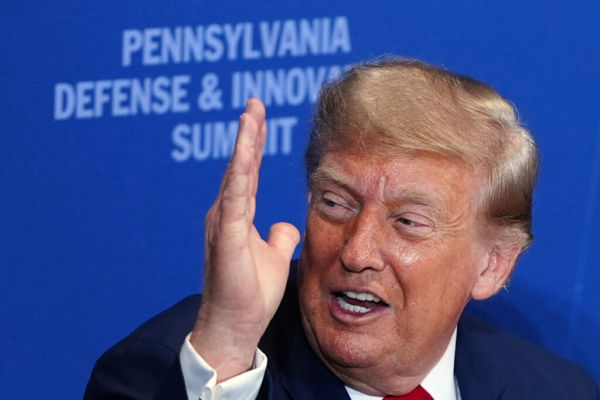
Trump Shifts to Campaign Themes at Defense Technology Summit/ TezzBuzz/ WASHINGTON/ J. Mansour/ Morning Edition/ President Donald Trump used a defense technology summit in Pennsylvania to promote billions in private investment while frequently veering into familiar campaign themes. His remarks touched briefly on Iran and defense readiness but focused heavily on affordability, wind energy, military catapults and past administration achievements. The event came as concerns grow over depleted U.S. missile and interceptor stockpiles.
Trump Defense Technology Summit Quick Looks
- Trump spoke at the U.S. Army War College in Carlisle, Pennsylvania.
- The summit focused on defense technology and industrial investment.
- Trump said companies would pledge about $10 billion.
- He offered few details about the promised investments.
- Defense Secretary Pete Hegseth attended the roundtable.
- Sen. David McCormick helped organize the gathering.
- Trump briefly discussed the continuing Iran war.
- Much of the speech shifted toward campaign-style subjects.
- Trump criticized windmills and electric ship catapults.
- Defense contractors face shortages of key missile systems.
- Tomahawk, Patriot and THAAD stocks may take years to rebuild.
- Trump is seeking a $1.5 trillion defense budget for 2027.
Defense Gathering Opens With Investment Pledge
President Donald Trump promoted American defense manufacturing and technology investment during a summit at the U.S. Army War College on Wednesday, though much of his address moved away from battlefield strategy and into subjects commonly featured at his political rallies.
Trump sat at a roundtable in Carlisle, Pennsylvania, alongside Defense Secretary Pete Hegseth and Republican Sen. David McCormick.
The president said the gathering would generate approximately $10 billion in investment commitments from U.S. defense and technology companies.
He did not provide a detailed breakdown of those commitments or explain when the investments would be completed.
The event brought together senior military officials, administration figures and executives from some of the country’s most influential defense, technology and financial companies.
Iran War Receives Limited Attention
Trump appeared shortly after the U.S. military conducted another series of missile strikes against Iran.
The latest attacks came as efforts to restore a ceasefire remained unsuccessful and the conflict continued to consume U.S. missiles and defensive interceptors.
Trump made only brief references to the military campaign.
The president also mentioned the January operation that removed Venezuelan President Nicolás Maduro from power.
Trump suggested Venezuela’s oil resources could eventually repay the United States many times over for the costs of the intervention, though he acknowledged that private oil companies would likely receive much of the financial benefit.
Speech Drifts Into Familiar Political Topics
Despite the defense focus of the summit, Trump spent significant portions of his speech discussing subjects largely un to the central themes of military technology, industrial capacity and national security.
He criticized wind power projects in Britainquestioned the effectiveness of electric catapults on U.S. Navy ships and reflected on the Civil War battle at Gettysburg.
Trump also highlighted what he described as the accomplishments of his administration, sometimes using the same arguments and anecdotes heard during campaign appearances.
At one stage, after a lengthy discussion about aircraft carrier catapult systems, Trump acknowledged the unusual direction of his remarks.
Trump Recommends Investing in Magnets
The president repeatedly returned to his concerns about the Navy’s use of electromagnetic aircraft launch systems.
Trump has long argued that steam-powered catapults are more dependable than electric systems used on newer aircraft carriers.
During the summit, he suggested that magnets could become a profitable area for investors.
The remarks underscored the freewheeling style of the address, which moved rapidly among defense policy, business investment, energy, history, farming and campaign politics.
Major Business and Military Leaders Attend
The Pennsylvania Defense and Innovation Summit was organized by McCormick and attracted leading officials from the military, intelligence agencies and private industry.
Attendees included Joint Chiefs of Staff Chairman Gen. Dan Caine, Army Secretary Dan Driscoll, CIA Director John Ratcliffe and U.S. Ambassador to the United Nations Mike Waltz.
Private-sector participants included JPMorgan CEO Jamie Dimon, Blackstone President Jon Gray, Lockheed Martin CEO Jim Taiclet, General Dynamics CEO Phebe Novakovic and Boeing CEO Kelly Ortberg.
SpaceX director Antonio Gracias and Palantir analytics chief technology officer Shyam Sankar also attended.
“I’m in a world where I’m shaking hands with celebrity business people, mostly,” Trump said.
Pennsylvania Remains Politically Important
The appearance marked Trump’s seventh visit to Pennsylvania during his second term.
The state remains central to national politics because of its large electoral vote total, competitive congressional races and strong manufacturing base.
Trump carried Pennsylvania in both 2016 and 2024.
Republicans are now working to retain control of Congress in the November midterm elections while facing concerns about the Iran war, household costs and the president’s approval ratings.
Trump used part of his speech to reject Democratic criticism over affordability.
He then referenced an unnamed friend who had purchased a private aircraft partly because of tax benefits.
Summit Highlights Pennsylvania Technology Investments
The Carlisle gathering followed a similar event organized by McCormick in Pittsburgh the previous year.
That summit focused on making Pennsylvania a center for energy technology, artificial intelligence and robotics.
McCormick announced approximately $90 billion in planned investments at that event.
Ahead of Trump’s latest appearance, ZeroEyes, a threat-detection technology company based near Philadelphia, announced a planned $10 million investment in artificial intelligence and machine-learning research.
Pittsburgh-based Gecko Robotics also said it would open a 10,000-square-foot manufacturing facility.
The company plans to use the facility to accelerate the integration of robotics into defense production and help expand the U.S. industrial base.
Missile Stockpiles Face Years-Long Recovery
One of the most urgent defense challenges received little attention during Trump’s remarks: the declining supply of critical U.S. missiles and interceptors.
A May analysis concluded that American defense contractors could need at least three years to replenish Tomahawk cruise missiles and Patriot and THAAD defensive interceptors.
Tomahawk missiles allow U.S. forces to strike targets deep inside hostile territory.
Patriot and THAAD systems are designed to intercept incoming missiles and drones.
The ongoing war with Iran has accelerated the use of those weapons, increasing concern that the United States could face limited stockpiles during another major conflict.
Military planners have expressed particular concern about maintaining sufficient weapons for a possible future confrontation involving China.
Ukraine Patriot Plan Could Add Pressure
Trump has also pledged to allow Ukraine to manufacture Patriot air-defense systems under license.
The proposal could eventually strengthen Ukraine’s defenses against Russian missiles and drones.
However, converting that promise into large-scale production would require substantial time, investment and technical support.
The plan could also place added pressure on a supply chain already struggling to meet U.S. military needs and commitments to allies.
Trump Seeks Historic Defense Budget
The president has proposed a $1.5 trillion national defense budget for the 2027 fiscal year.
The administration says the funding is needed to rebuild weapons inventories, expand manufacturing capacity and accelerate the development of advanced military technology.
However, legislation authorizing that level of spending remains stalled in Congress.
Even if lawmakers eventually approve the proposal, increasing production of complex missile systems would still take years.
Factories would need to expand, skilled workers would need to be trained and long-term supply contracts would have to be negotiated.
Defense Industry Calls for Faster Production
Defense executives attending the summit emphasized the need to shorten the time required to move military technology from development into mass production.
Jake Loosararian, co-founder and chief executive of Gecko Robotics, said companies must improve the speed and resilience of defense supply chains.
The challenge for the administration will be converting promised investments and ambitious spending goals into measurable improvements in weapons production and battlefield readiness.
More on US News
-
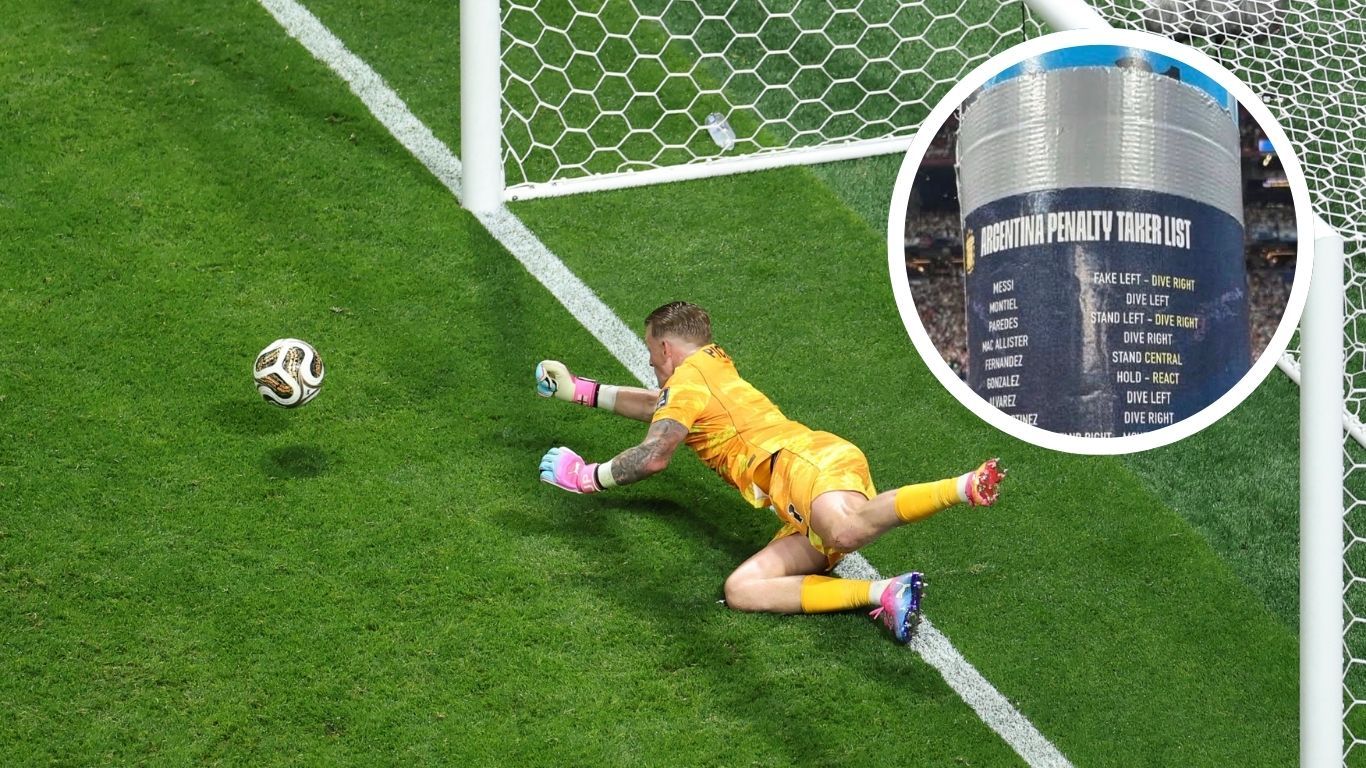
‘Lionel Messi, fake LEFT, dive RIGHT’: How Jordan Pickford Planned His Moves if England Faced Argentina in a Penalty Shootout
-
Thomas Tuchel Vindicated: Former England Star Andros Townsend Defends Coach After Argentina Defeat, Calls Tactical Substitutions 'Smart' Despite World Cup Exit

-
Why Does the World Cup Have a Third-Place Match? England to Face France in the 'Bronze Final'

-
US introduces fixed-term for student, exchange visas

-
UP: APTC commandant's follower dies by suicide, family claims torture; 3 cops booked