
By now, everyone is aware of the fact that there are a lot of people who have been complaining about their engine reliability and fuel efficiency drop due to the use of E20 petrol. It is being claimed that E20 causes engine damage, reduces mileage, and is not suitable for older vehicles. However, a new study from IIT Kanpur has now challenged these claims. The report from IIT Kanpur has stated that their extensive testing found no evidence that E20 petrol damages engines or causes corrosion.
According to researchers from IIT Kanpur’s Engine Research Laboratory under the Department of Mechanical Engineering, extensive testing performed by the department has shown that E20 petrol does not cause engine damage. It also does not cause corrosion or any other major technical issues in either new or older vehicles.
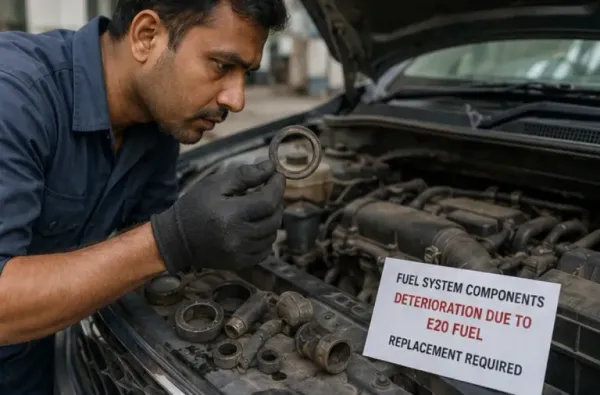
Dhruv Raj Karana, Project Scientist at the Engine Research Laboratory, said that claims circulating on social media about E20 damaging vehicles are scientifically unfounded. He has advised vehicle owners to rely on their manufacturer’s owner’s manual and the Ministry of Petroleum and Natural Gas’s official guidelines instead of unverified information shared online.
The institute also highlighted that it has been carrying out research on ethanol-blended fuels for a long time under the leadership of Professor Avinash Kumar Agarwal.
One of the biggest concerns among vehicle owners is that there has been a reduction in fuel efficiency after switching to E20 petrol. However, IIT Kanpur says the actual reduction in mileage is less than 5 percent. Karana has explained that even this small variation cannot always be attributed to the fuel itself.
According to him, similar fluctuations can be observed even when back-to-back tests are conducted using pure petrol. The study has also highlighted that driving style, traffic conditions, road quality, and vehicle maintenance have a much bigger impact on fuel efficiency than the type of petrol being used. Additionally, well-maintained vehicles are far less likely to experience noticeable differences in mileage.
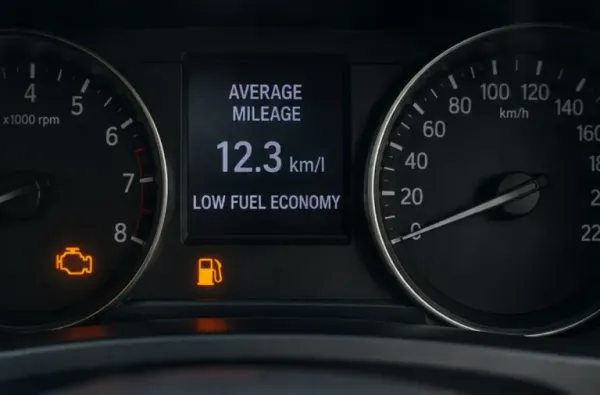
The findings from IIT Kanpur have supported the clarification recently issued by the Ministry of Petroleum and Natural Gas. For those who may not be aware, the ministry had earlier stated that E20 petrol can reduce mileage by up to 5 percent in certain vehicles because ethanol contains less energy than pure petrol.
However, it also said that the slight reduction is outweighed by benefits such as lower lifecycle carbon emissions, reduced crude oil imports, and cleaner emissions. The ministry also clarified that E20 was introduced only after scientific testing, which continued for years, and consultations with automobile manufacturers.
Apart from E20, IIT Kanpur has also successfully tested E85 fuel, which contains 85 percent ethanol. However, researchers have clarified that E85 cannot be used in regular petrol vehicles. It stated that such high ethanol blends require specially designed flex-fuel engines along with compatible fuel systems. This means that the current petrol-powered cars cannot switch to E85 immediately without the major engineering changes that are required.
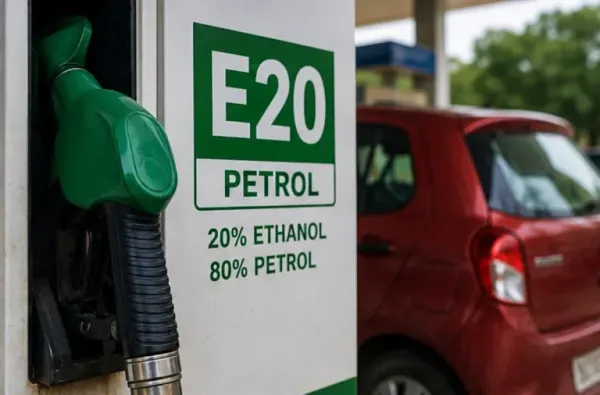
Apart from IIT Kanpur and the government, automobile manufacturers have also defended the use of E20 petrol. Maruti Suzuki previously stated that it inspected more than 15 million older vehicles that were not originally certified for E20. It added that it did not find any fuel- issues. Toyota and Hero MotoCorp have also said that their testing did not reveal any major metal or plastic corrosion caused by E20 fuel.
Automotive experts have also highlighted that many older owners’ manuals were written before E20 became mandatory. As a result, they only mention E10 compatibility even though many vehicles are capable of safely operating on E20.
In addition to these points, experts have also explained that poor vehicle maintenance can sometimes create problems that are incorrectly blamed on E20. It has been stated that since ethanol has detergent properties, it can clean deposits inside older fuel systems. In poorly maintained vehicles, these loosened deposits may clog fuel filters or injectors. This is generally a maintenance issue rather than damage caused by E20 itself.
Another concern which has recently been highlighted is ethanol’s ability to absorb moisture from the atmosphere. However, experts have said that it becomes a problem mainly when vehicles remain unused for long periods, which is typically over a month. Under normal daily usage, most modern fuel systems are designed to handle E20 without any major issues.

Now, even though IIT Kanpur’s findings support the government’s position that E20 does not damage engines, the debate around ethanol-blended petrol is likely to continue. Many vehicle owners continue to report lower mileage after switching to E20, while researchers maintain that any reduction is relatively small and influenced by several other factors. As a result, the institute has urged motorists to rely on scientific research, official government guidelines, and vehicle manufacturers instead of misinformation circulating on social media.
-
Arsenal may launch Vinicius Junior bid as Real Madrid forward's contract saga continues

-
I don''t give much focus on what''s happening outside: Ishan Kishan

-
Drone capabilities display, Shaurya Sandhya: Army hosts anniversary events to honour Kargil heroes

-
5-year-old tigress found with infested injuries in Pilibhit Tiger Reserve, being treated

-
How to stop spam messages from strangers on Instagram? Learn the easy steps