New Delhi. There is a need to understand India from its own perspective. Unless we are completely free from the colonial mentality, we will neither be able to understand our tradition properly nor will we be able to recognize the real nature of our folk and scriptures. Padma Shri award winner and Indian social worker Dr. Kapil Tiwari said this in a lecture.
Dr. Tiwari said that India’s knowledge tradition is not limited to the scriptures only. Folk life, folk arts, folk theater and ethos are also part of an equally rich tradition of Indian knowledge. He said that both scriptures and folk together constitute the soul of Indian civilization.
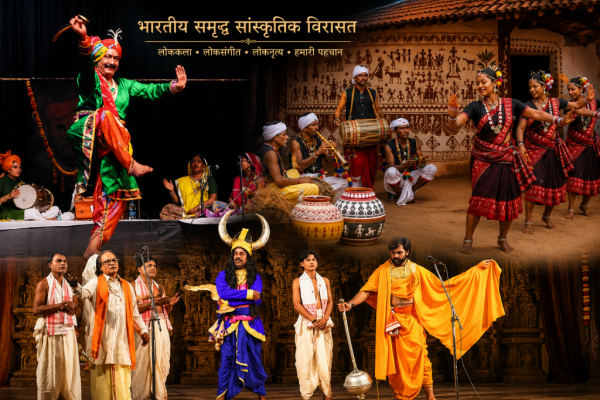
He said that Indian folk theater traditions are not just a medium of entertainment, but are carriers of the cultural memory and vision of life of the society. Traditions like Nautanki, Maach, Swang, Gammat, Nacha, Khayal, Raslila and Ramlila have kept the society connected for centuries. Their oral tradition is in danger today due to neglect and there is a need to preserve it.
Dr. Tiwari, while comparing the Indian and Western viewpoint, said that in the Western tradition, life was seen as associated with tragedy, struggle and guilt, whereas Indian thinking accepts life as celebration, joy and good fortune. This vision is also visible in Indian folk art, music, dance and theatre.
He said that a wonderful coordination of agriculture, seasons, food, festivals and social life is visible in the folk traditions of India. The folk festivals, folk songs and dances associated with the welcome of new food are symbols of the life-oriented consciousness of Indian culture.
Colonial mentality explained by giving the example of French Revolution
In conclusion of his lecture, Dr. Tiwari, while narrating the context of the French Revolution, said that many prisoners who were freed from jail returned after a few hours, because after years of imprisonment, the light of freedom seemed uncomfortable to them. He said that this is the situation of colonial mentality also. Despite getting political freedom, mental slavery still persists in a large section of the society. Unless we get rid of this mentality, India will not be able to see its traditions, scriptures and people in their true light.
key points
The need to understand India from its own cultural perspective.
Shastra and folk are two equally important bases of Indian knowledge tradition.
The oral tradition of folk theater and folk arts is demanding preservation.
Indian vision of life is based on celebration, joy and harmony.
Cultural self-realization is not possible without freedom from colonial mentality.
-
Enzo Fernandez mocks England with cheeky post after Argentina’s World Cup semi-final win

-
‘Rescue us, Cristiano Ronaldo fans!’ – IShowSpeed urges Lamine Yamal to lead Spain past Argentina and Lionel Messi in World Cup final

-
Rohit Sharma 'Unhappy' With Selection Choice After BCCI's 'Last ODI' Meeting

-
‘The Odyssey’ X Reviews: Christopher Nolan’s Epic Wins Praise But Faces ‘Woke Casting’ Backlash
-
Bhojshala Convener Welcomes SC Order, Urges Muslims To Accept Temple Status