Why independent vehicle inspections have become more important than ever
TOIauto | July 17, 2026 5:39 PM CST
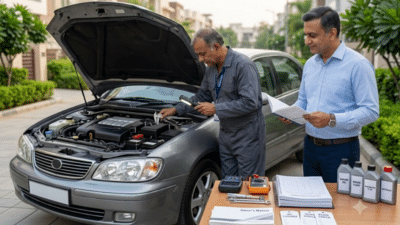
The used car market in India has changed fast. Buyers are choosing pre-owned vehicles over new ones at rates nobody predicted five years ago. And as transaction volumes climb, so does the risk of ending up with a car that has problems the seller never mentioned - or didn't even know about.
Many buyers still rely on a test drive and a handshake. That's not enough anymore.
Independent vehicle inspections have shifted from optional to essential. If you're serious about avoiding costly surprises, this is the step you can't afford to skip.
What actually happens during a professional inspection
Most buyers picture a mechanic glancing under the bonnet and squeezing the tyres. That's not what happens.
A trained technician works through a structured checklist covering dozens of checkpoints across mechanical, electrical, and cosmetic systems, taking in the engine bay, transmission behaviour, suspension components, brake system health, electrical diagnostics, interior wear, and exterior paint consistency. Every item on that list is there for a reason.
One element worth paying attention to is the OBD-II diagnostic scan. This pulls fault codes stored in the car's electronic control unit, surfacing issues the seller may not even be aware of: intermittent misfires, catalytic converter inefficiency, ABS module faults. Things that don't show up on a test drive. Things that absolutely show up in your repair bills six months later.
A proper also includes paint thickness gauge readings across every panel. A repainted panel reads thicker than factory spec, and that spike tells you the car took a hit somewhere, got patched up cosmetically, and the seller likely didn't volunteer any of that.
Key inspection areas include:
How inspection reports change negotiation dynamics
Here's what most people miss. An inspection report isn't a pass/fail document. It's a negotiation tool.
Walk into a deal with a detailed condition report and the entire conversation shifts. A documented list of worn brake pads, ageing tyres, or a leaking valve cover gasket gives you concrete grounds to push the price down. Not vague complaints, but documented evidence the seller has to reckon with.
Consider how it plays out in practice. A 2019 Hyundai Creta diesel listed at Rs 9.5 lakh might look reasonably priced on paper. Then the inspection flags a sluggish turbo actuator and rear suspension bushings that need replacement, leaving you facing a non-trivial repair bill depending on the city and workshop. Most sellers will negotiate when you put the report in front of them rather than just arguing the price without it.
The common advice is to research market prices before you negotiate. That's only half the story. Condition data is what actually moves the number, and you don't get condition data without an inspection.
One more thing worth noting: sellers who refuse to allow an independent inspection are telling you something. Genuine sellers welcome it. Reluctance is a red flag.
City-level differences that affect vehicle condition
Geography matters more than most buyers realise. It's not just about kilometres driven.
Cars from coastal cities like Mumbai or Chennai show accelerated underbody corrosion. Salt-laden air and monsoon flooding do real structural damage over time. Delhi-NCR vehicles often carry higher engine wear from prolonged idling in heavy traffic. Hillier regions like Pune or Dehradun produce premature clutch and brake wear from constant gradient driving. Same car, same mileage, very different condition depending on where it spent its life.
A buyer searching for a should choose a service that understands these regional patterns. An inspector in Chennai knows to check for moisture ingress in door sills and boot wells. One in Jaipur will focus on dust contamination in air filters and AC evaporators. That localised knowledge separates a useful inspection from a checklist exercise.
What buyers often overlook
Tyre manufacturing dates are stamped on every sidewall as a four-digit DOT code. Tyres older than five years lose grip performance regardless of how much tread remains, and most buyers never check this even though it takes thirty seconds.
Service history gaps are another tell. Regular stamps up to 40,000 km and then nothing?
That pattern often signals deferred maintenance, and deferred maintenance has a way of compounding quietly until something expensive breaks.
Many buyers still rely on a test drive and a handshake. That's not enough anymore.
Independent vehicle inspections have shifted from optional to essential. If you're serious about avoiding costly surprises, this is the step you can't afford to skip.
What actually happens during a professional inspection
Most buyers picture a mechanic glancing under the bonnet and squeezing the tyres. That's not what happens.
A trained technician works through a structured checklist covering dozens of checkpoints across mechanical, electrical, and cosmetic systems, taking in the engine bay, transmission behaviour, suspension components, brake system health, electrical diagnostics, interior wear, and exterior paint consistency. Every item on that list is there for a reason.
One element worth paying attention to is the OBD-II diagnostic scan. This pulls fault codes stored in the car's electronic control unit, surfacing issues the seller may not even be aware of: intermittent misfires, catalytic converter inefficiency, ABS module faults. Things that don't show up on a test drive. Things that absolutely show up in your repair bills six months later.
A proper also includes paint thickness gauge readings across every panel. A repainted panel reads thicker than factory spec, and that spike tells you the car took a hit somewhere, got patched up cosmetically, and the seller likely didn't volunteer any of that.
Key inspection areas include:
- The OBD-II scan for stored fault codes and emissions data
- Paint thickness readings to flag undisclosed accident repairs
- Suspension testing for worn bushings and damaged struts
- Brake assessment covering pad wear and disc condition
- An underbody checkfor rust, structural damage, and fluid leaks
How inspection reports change negotiation dynamics
Here's what most people miss. An inspection report isn't a pass/fail document. It's a negotiation tool.
Walk into a deal with a detailed condition report and the entire conversation shifts. A documented list of worn brake pads, ageing tyres, or a leaking valve cover gasket gives you concrete grounds to push the price down. Not vague complaints, but documented evidence the seller has to reckon with.
Consider how it plays out in practice. A 2019 Hyundai Creta diesel listed at Rs 9.5 lakh might look reasonably priced on paper. Then the inspection flags a sluggish turbo actuator and rear suspension bushings that need replacement, leaving you facing a non-trivial repair bill depending on the city and workshop. Most sellers will negotiate when you put the report in front of them rather than just arguing the price without it.
The common advice is to research market prices before you negotiate. That's only half the story. Condition data is what actually moves the number, and you don't get condition data without an inspection.
One more thing worth noting: sellers who refuse to allow an independent inspection are telling you something. Genuine sellers welcome it. Reluctance is a red flag.
City-level differences that affect vehicle condition
Geography matters more than most buyers realise. It's not just about kilometres driven.
Cars from coastal cities like Mumbai or Chennai show accelerated underbody corrosion. Salt-laden air and monsoon flooding do real structural damage over time. Delhi-NCR vehicles often carry higher engine wear from prolonged idling in heavy traffic. Hillier regions like Pune or Dehradun produce premature clutch and brake wear from constant gradient driving. Same car, same mileage, very different condition depending on where it spent its life.
A buyer searching for a should choose a service that understands these regional patterns. An inspector in Chennai knows to check for moisture ingress in door sills and boot wells. One in Jaipur will focus on dust contamination in air filters and AC evaporators. That localised knowledge separates a useful inspection from a checklist exercise.
What buyers often overlook
Tyre manufacturing dates are stamped on every sidewall as a four-digit DOT code. Tyres older than five years lose grip performance regardless of how much tread remains, and most buyers never check this even though it takes thirty seconds.
Service history gaps are another tell. Regular stamps up to 40,000 km and then nothing?
That pattern often signals deferred maintenance, and deferred maintenance has a way of compounding quietly until something expensive breaks.
READ NEXT
-
Hey Mullah: CJP protester gets Blinkit pork bacon COD order

-
Taxi assns to march to Parliament against E20 fuel on Aug 4
-
Ram Temple Trust to train priests for India and overseas demand

-
Tej Pratap arrested for protesting over NEET paper leak: Lawyer

-
Kolkata man held for burning Modi’s photo during NEET protest