Argentina’s dramatic comeback against England was a testament to the enduring belief surrounding Lionel Messi and his team. Now, only Spain stands between the defending champions and a historic second consecutive World Cup title.
ATLANTA — Many in the stadium missed the precise moment that became the defining image of Argentina’s victory over England.
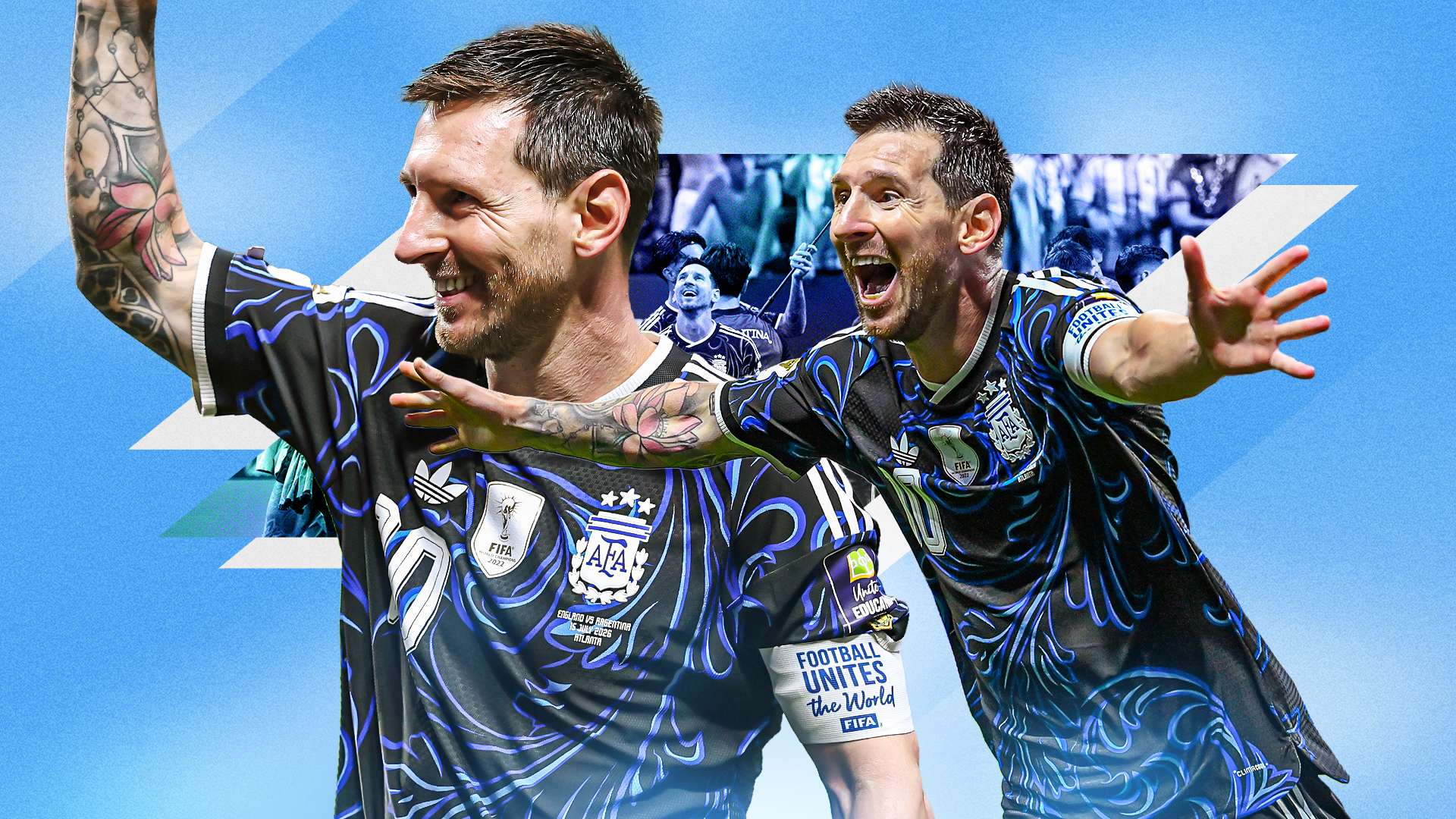
Trailing by a goal and caught in a heated exchange with Jude Bellingham, Lionel Messi made a playful yet defiant expression — a moment that quickly transformed into a viral symbol of the World Cup. The message was unmistakable: “Game on.” From that instant, Argentina found another gear.
Some have labelled that instant the turning point, but in truth, Argentina didn’t need extra motivation. This team has carried belief from the very start of the tournament, displaying it in every match along the way.
That confidence was evident in downtown Atlanta, where blue and white dominated the streets. Argentina’s supporters outnumbered England’s by nearly two to one. Their chants drowned out “God Save the King,” their songs less like dreams and more like prophecies.
It’s that same faith that has carried Argentina through the obstacles of this World Cup. When faced with adversity, Messi responded in the only way he knows – by changing the game.
Now, that conviction travels into Sunday’s final. Spain will offer a different challenge altogether, but Argentina will walk onto the pitch believing that with Messi and his surrounding army, no match is beyond reach.
‘A Special Joy’
Having a player of Messi’s calibre always brings magic, but as Argentina have learned through past heartbreaks, Messi alone cannot win it all.
Wednesday’s showdown with England showed that he is no longer alone. Behind him stands a united squad and a passionate nation. Argentina’s success is not just about talent — it’s about a collective belief that feels tangible.
Before kick-off, the Argentinian presence in Atlanta was impossible to miss. They were loud, proud, and everywhere. Groups of fans, many shirtless or wearing Messi jerseys, sang boisterously about defeating “Inglaterra.” During the national anthems, Argentina’s was sung with fierce emotion, while England’s was nearly drowned out by Argentinian chants.
“We felt something truly special — it started right from the anthem,” Messi said. “The supporters wanted this victory more than any other because of what it meant to face England in a semifinal and reach another World Cup final.
“I know how happy everyone back home is. My mother and family sent me pictures of people celebrating in the streets. I’m proud and happy to give them this special joy.”
Spain may not carry England’s historical baggage, but Sunday’s final will be an even tougher footballing test. The fans will bring the emotion; the players must transform it into focus and precision against a Spanish side built to dominate possession.
‘Nobody Wanted to Lose’
This semifinal carried deep personal meaning. References to “Falklands” and “Malvinas” surfaced in the lead-up, adding another layer to an already charged encounter.
“No Argentine wanted to lose this match,” Messi said. “This whole World Cup has been incredible, but given what this semifinal against England represented, losing was never an option.”
After the final whistle, the Argentina players posed with a banner reading “Las Malvinas son Argentinas.”
For context, “Las Malvinas” refers to the Falkland Islands, a British overseas territory claimed by Argentina. The two nations fought a 74-day war over the islands in 1982, and the issue remains sensitive. The banner sparked criticism from the British government and calls for FIFA to intervene, potentially leaving Argentina facing disciplinary action before Sunday’s final. Yet, it was just one of many symbols of national pride on display.
Images of Diego Maradona hung prominently in the stands, alongside those of Messi — both icons of Argentina’s footballing soul. And once again, Messi embodied the spirit of the team, turning belief into action.
The final, however, will demand something different. Spain won’t carry England’s emotional weight, and they are unlikely to sit back with a lead. If the semifinal was fuelled by passion, the final may hinge on control.
The opening phase will be crucial. Argentina managed to recover after conceding first to England, but allowing an early goal against a Spain team adept at dictating tempo could prove far more dangerous.
All About La Albiceleste
When Argentina’s players say they fight for Messi, it isn’t mere sentiment. To them, he is more than a captain — he is a symbol. The same goes for their supporters.
Even when trailing, Argentina’s fans never wavered. There was no sense of panic, just as there hadn’t been against Cape Verde, Egypt, or Switzerland. Why panic when you have Messi?
England, on the other hand, collapsed under pressure. They sat back, trying to protect their lead, and invited danger. It was no surprise when they eventually broke.
Enzo Fernández scored the equaliser, but it was Messi who set the tone — driving forward, creating chances, and then crossing for Lautaro Martínez to head in the winner.
More than anything, Argentina’s belief in their captain powered their comeback. When Messi is on the pitch, anything seems possible. That feeling was palpable on Wednesday night.
“I’ve been preparing and training for a year to be at my best,” Messi said. “Right now, I just want to enjoy it. I’m not thinking about whether this is my last World Cup. This team always gives everything and owes nothing to anyone.
“We never stop fighting. We play our football with heart and determination — and that’s why we’re in another World Cup final.”
For Spain, the objective is clear but far from simple: deny Messi the space that England eventually allowed him. For Argentina, Sunday cannot be about waiting for their captain to produce miracles. The rest of the team must pose enough threats to prevent Spain from focusing solely on him.
One More Step
Sunday’s final carries immense weight. For Argentina, it’s a chance to become the first team since Brazil in 1962 to retain the World Cup. For Spain, it’s an opportunity to establish a new era built on their distinct style of football.
For Messi, it’s another shot at history — a chance to add another layer to his already immortal legacy. After leading Argentina to glory in 2022, he now stands on the verge of something even Maradona never achieved: lifting the World Cup trophy twice.
“Diego was a legend,” Messi said. “I never wanted to compare myself to him. To me, he’s the greatest of all time.
“We shared beautiful moments. At the 2010 World Cup, he was amazing — we discussed opponents and matches together.
“Wherever he is now, I know he’s watching proudly. This is for him — a gift to honour what he meant to our national team.”
Messi has given Argentina countless reasons to celebrate, and the fans return that devotion wholeheartedly. Their song for him echoed through Atlanta deep into the night:
“For Malvinas, for Diego, for Leo’s last, Argentina, I want to see you become back-to-back champions.”
Fans might call this Messi’s final World Cup, even if he hasn’t said so himself. That only heightens the sense of urgency surrounding Sunday’s clash.
Against Spain, there will be moments of struggle. Argentina’s faith will be tested. But if Wednesday proved anything, it’s that belief can change games. Sunday will reveal if it can make history.
-
What Manchester United Think of Roma Midfielder Manu Kone’s Stunning Rise

-
Pep Guardiola seeks 'a new life' after leaving Manchester City, says he currently feels no urge to return to football
-
Lamine Yamal vs Lionel Messi: World Cup and Ballon d’Or Showdown Looms as Former Spain Star Explains Why Barcelona Prodigy Could Outshine the Argentine Legend
-
Spain Rediscover Their Footballing Soul at the World Cup – But Is Their Style Too Predictable?

-
Argentina's President to Skip World Cup Final for Superstitious Reasons