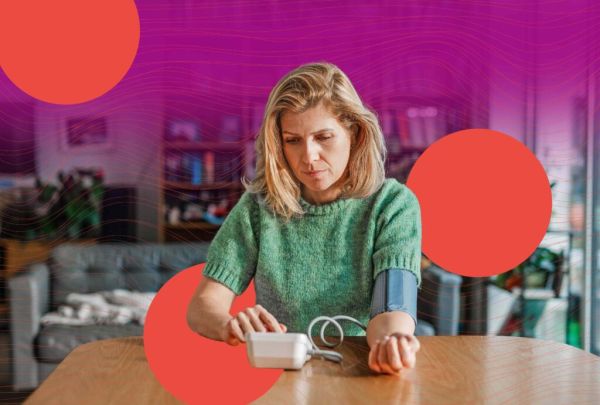
Stop these habits and watch your readings drop.
Reviewed by Dietitian Madeline Peck, RDN, CDN
Key Points
- Regularly check your blood pressure—don’t wait for symptoms to appear.
- Eat more potassium-rich foods like potatoes and lentils to balance sodium intake.
- Limiting alcohol, following the DASH diet and exercising all support healthy blood pressure.
Nearly half of American adults live with high blood pressure, yet many have no idea their numbers are creeping up. That’s part of what makes hypertension so tricky. It rarely announces itself, but over time it quietly strains your heart, arteries and kidneys. The good news is that your daily habits carry real weight here, and small shifts in how you eat, drink and move can meaningfully support healthier readings.
Cardiologists see the same patterns again and again in their practices. Certain everyday behaviors work against your blood pressure, often without you realizing it. Here are the three habits cardiologists want you to quit and what to do instead.
Ignoring Your Blood Pressure Until Symptoms Show Up
Because elevated blood pressure typically causes no noticeable discomfort, it’s easy to assume everything is fine when you feel fine. But that assumption can be costly. “Blood pressure is one of the most underestimated risk factors in cardiovascular disease because it has no symptoms until something goes wrong,” shares Arash Bereliani, MD.
“Hypertension is often called the ‘silent killer’ because many people may not exhibit symptoms until complications like heart attack, stroke, heart failure or kidney disease arise. I’ve seen many patients who were surprised to learn they had significantly elevated blood pressure simply because they felt completely normal,” says Sirisha Vadali, MD.
Instead of waiting for symptoms to manifest, Vadali always encourages people to know their numbers. “Regular blood pressure checks, whether at home or during routine health care visits, allow doctors and patients to identify elevated blood pressure earlier when lifestyle changes and treatment can have the greatest impact,” Vadali advises.
A validated home monitor gives you a running snapshot between checkups, and bringing those readings to your health care provider helps catch upward trends early. In general, a normal blood pressure reading is below 120/80 mm Hg, while consistent blood pressure readings at or above 130/80 are considered elevated.
Fixating on Sodium and Forgetting About Potassium
You’ve probably heard that cutting salt is the answer to high blood pressure. It’s helpful advice, but it’s only half the story. Focusing on sodium alone can leave a major piece of the puzzle out of the picture. “Excess sodium raises [blood pressure]but that fixation causes people to completely overlook potassium, which matters just as much,” Bereliani says.
Potassium is a nutrient found in foods such as potatoes, lentils and apricots. Bereliani explains that potassium helps the kidneys clear sodium and relax the blood vessel walls. “You can be eating a low-sodium diet and still have elevated blood pressure simply because you’re not getting enough potassium. The conversation has to include both,” Bereliani says.
Building meals around these whole foods naturally shifts the sodium-to-potassium balance in your favor. To lower high blood pressure, the American Heart Association recommends consuming 3,500 mg to 5,000 mg of potassium daily.
Drinking Too Much Alcohol
A drink here and there may feel harmless, but the amount adds up, and over time it can push your numbers in the wrong direction.“Chronic alcohol use is tied to hypertension. I recommend no alcohol or as little alcohol as possible, no more than 3 to 4 drinks per week. For women, they should likely drink even less,” shares Kathleen Stergiopoulos, MD.
The Centers for Disease Control and Prevention defines moderate drinking as no more than one drink per day for women and 2 for men, but the less alcohol you consume, the better it is for your health.
If cutting back feels daunting, start by tracking how much you actually drink over a typical week. Many people underestimate their intake because they don’t count generous pours or back-to-back weekend outings. Swapping a few drinks for sparkling water, herbal tea or a nonalcoholic option can lighten the load on your cardiovascular system while still giving you something to sip on.
Habits to Adopt for Better Blood Pressure
- Move your body regularly. Adults should get at least 2 hours and 30 minutes of moderate-intensity activity each week, which breaks down to roughly 30 minutes a day, 5 days a week.
- Adopt a heart-healthy eating pattern. The DASH (Dietary Approaches to Stop Hypertension) plan emphasizes foods rich in potassium, fiber and protein while keeping sodium and saturated fat lower. This approach has been proven effective in lowering blood pressure.
- Stop smoking. Smoking raises blood pressure while increasing your risk for heart attack and stroke. If you don’t smoke, don’t start, and if you do, quitting lowers your risk.
Our Expert Take
The three habits worth rethinking come down to a few clear ideas: don’t wait for symptoms to check your numbers, eat more potassium-rich foods and reduce alcohol consumption. Paired with the proactive steps the Centers for Disease Control and Prevention recommends, like getting regular physical activity, following an eating pattern such as the DASH plan and steering clear of smoking, these changes can work together to support healthier blood pressure readings over time.
-
Spain’s Yamal Misses Training in New Jersey as World Cup 2026 Final Nears

-
'True Giant Of The Game': Cricket Fraternity Pays Tribute To Garry Sobers After WI Legend's Death
-
ICC's New ODI World Cup Format Sparks Global Cricket Debate

-
The Odyssey Box Office Collection Day 1: Christopher Nolan's Film Collects ₹20.76 Crore In India, Registers Bigger Start Than Oppenheimer

-
Are Hollywood Horror Films Like Evil Dead Franchise & Others Going Overboard With Gore? Filmmaker Vishal Furia & Actor Mimoh Chakraborty Discuss