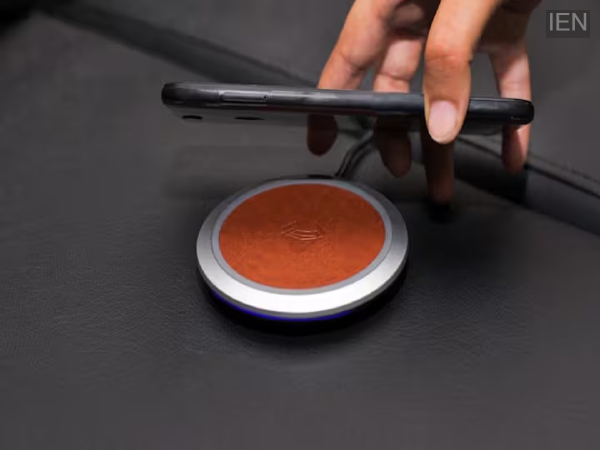
Wireless Charger: Wireless charging operates on inductive technology. Power is transferred via a magnetic field between coils located inside the charger and the phone.
With technological advancements, wireless charging is now available for smartphones. Many premium smartphones offer this feature to users. Wireless charging has significantly simplified the way smartphones are charged; users no longer need to constantly search for a charger. However, this convenience comes at a cost. Wireless charging consumes more electricity and takes longer to charge the device. Consequently, in many situations, traditional wired charging proves to be the more sensible option.
To elaborate, wireless charging works on inductive technology. Power is transferred through a magnetic field between the coils inside the charger and the phone. During this process, electricity undergoes various conversions, causing a portion of the energy to be lost as heat.
This is why phones often heat up during wireless charging. If the phone is not positioned correctly on the charging pad, or if it has a thick case, charging efficiency can drop further.
A wireless charger remains ready for use at all times. Therefore, even when no device is placed on it, it continues to consume a small amount of electricity. In contrast, most wired chargers stop drawing power almost entirely when not in use.
Additionally, a portion of the electricity is wasted during wireless charging. Even with advanced technologies like Qi2 or MagSafe, energy loss can range from 12% to 20%. With standard Qi wireless charging, this loss can reach 25% to 40%.
In comparison, wired charging methods like USB-C typically waste only 5% to 10% of the electricity. In such a scenario, if multiple smartphones, earbuds, or smartwatches in the house are charged using wireless charging, both electricity consumption and your utility bill could increase over time.
It is worth noting that the biggest drawback of wireless charging is its slower speed. Most wireless chargers are slower than wired chargers. Today, many smartphones support fast wired charging—ranging from 30W and 60W to 80W or even 100W—allowing a significant portion of the battery to charge in just a few minutes.
If you are in a rush to get to the office or your phone's battery has suddenly run out, wired charging proves to be far faster and more convenient. However, wireless charging is not without its merits; it is highly convenient for use while driving, at your office desk, or on a bedside table. Multi-device wireless chargers also allow you to charge several gadgets simultaneously, eliminating the hassle of dealing with multiple cables.
-
West Indies Cricket Legend Sir Garry Sobers Passes Away 10 Days Before 90th Birthday

-
HRAWI Urges Maharashtra Govt To Extend Bar Operating Hours For FIFA World Cup Final Viewing

-
The Odyssey Box Office Collection Day 1 Prediction: Christopher Nolan's Directorial Is Heading For A Good Start In India

-
Gemini Tarot Horoscope Today, July 18, 2026: Stay enthusiastic and balanced in dealings

-
Cancer Tarot Horoscope Today, July 18, 2026: Stay calm and trust your instincts for success