Indonesia, Southeast Asia’s largest economy, has attracted around IDR105 trillion (around $5.8 billion) in foreign capital into its financial markets following two benchmark interest rate hikes in May and June.
Bank Indonesia’s Senior Deputy Governor Destry Damayanti has said that the central bank’s cumulative 100-basis-point increase in its policy rate was introduced in response to heightened global financial market uncertainty and mounting capital outflow pressures facing emerging economies, China’s Xinhua News Agency reported.
She said the measure was designed as a temporary but appropriate response to curb capital outflows and restore investor confidence.
|
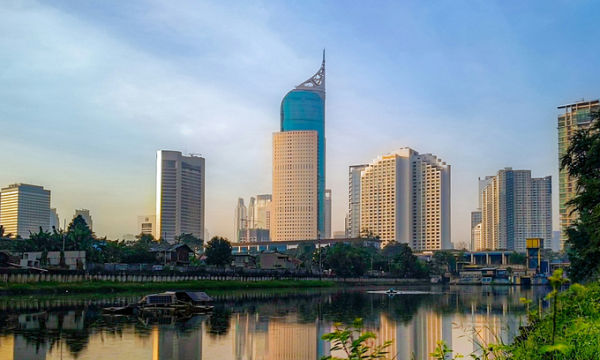
Buildings in Jakarta, Indonesia. Photo by Unsplash/Ache Dipro |
According to Damayanti, Bank Indonesia Rupiah Securities have become the fastest instrument for attracting foreign investors back to the domestic financial market.
Data from the central bank showed that after recording net foreign outflows in the first quarter of 2026, Indonesia’s government bond market rebounded with net inflows of IDR17.7 trillion. Meanwhile, cumulative foreign investment in Bank Indonesia Rupiah Securities reached IDR174 trillion.
Besides stabilizing the exchange rate, Bank Indonesia has continued to support economic growth through its macroprudential liquidity policy. As of the end of June, its liquidity incentive programme had provided about IDR479 trillion to commercial banks to support lending and stimulate economic activity.
Analysts said the return of foreign capital indicates that the central bank’s policy measures have helped restore confidence in Indonesia’s financial markets while strengthening the country’s resilience against external economic shocks and continued global market volatility.