Main Vaapas Aaunga writer Nayanika Mahtani reveals Imtiaz Ali met a 90-year-old who said ‘Take me back to Pakistan’
Sanjeev Kumar | July 18, 2026 9:22 PM CST
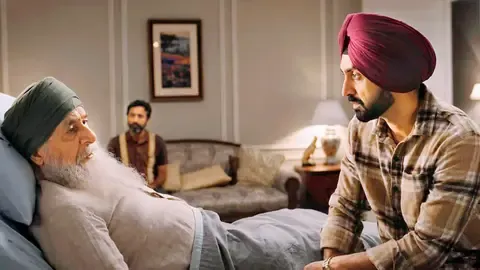
"Aaj bhi, jaise Gaza mei, Iran mei strife aur conflict hai, but there are people falling in love, getting married and harbouring dreams. Life doesn't stop. History is always seen from the perspectives of oppressors and victims. But what about the ordinary person? There's so much richness even in that ordinariness," is how author-screenwriter Nayanika Mahtani's views history. Naturally, this extended to her approach towards , which she wrote with director Imtiaz Ali.
Over a 90-minute call from her home in London, Mahtani speaks to mid-day about weaving the timelessness of a love story with the lasting after-effects of the Partition, paying a tribute to the generation of quiet heroes, the alternate ending, and how through the film, Imtiaz walked her back home.
Q How have these weeks been for you?
For me, this has been such a deeply personal journey because all four of my grandparents were refugees in the Partition. And this was my way of finishing the conversation that I never had the chance to finish with them. So, my last novel, Across the Line, is also rooted in the Partition. I was supposed to write a different story, but that was the story that kept coming to me. I think stories choose us. It was just a chance meeting with Imtiaz in Dehradun, actually, and then in Mussoorie, and I gave him a copy of my book.
And it just so happened that he also had a partition story in mind, and he asked me to write 20-30 pages on his idea. That became Main Vaapas Aaunga. Stories choose the people who are going to tell them. And I feel very fortunate that I was chosen to tell the story because it's so deeply personal.
Q What was the idea that Imtiaz had in mind?
That there was an old man who wanted to go back to Pakistan to his ancestral village to complete something that was unfinished for him. But he is not able to, and he is in his 90s and sick. Imtiaz told me this idea when I made a trip to Mumbai (from London). By then, he had read my book. He told me, "Your Partition story is really nice, but it's not got everything that I want to tell in the story I'm thinking about." That's when he narrated to me this idea, and we started working on it. I sent him the 20-30 pages on it, and he wrote back, saying, "We are on."
I was, of course, thrilled to be telling a Partition story and that too with the sensibility that Imtiaz brings to it, because I was very clear that I didn't want to tell a story where there would be the âother' or the âotherness'. I would rather not tell a story than tell that kind of a story. So I was just fortunate that this opportunity came my way.
With Main Vaapas Aaunga, my question about "what my purpose is" has been answered. I have finished this conversation with my grandparents. And I feel not only for them, but also for the millions of others like them, who never got a chance to tell their story. It was a generation of quiet heroes. They just wordlessly erased their past to build our future. And for them, grief was like a luxury. They were refugees. They had to just look for the next day.
Q Among the several moments that stand out in the film is the argument between Nirvair (Diljit Dosanjh) and Pali Dadaji, when he inquires about the last time the latter and Keenu aka Ishar Grewal (Vedang Raina, later Naseeruddin Shah) went to Pakistan. Pali shoots back, asking, âTumhe kyun janna hai?' And says on the lines, âAgar tumhe aaj yeh waqt ke baare mei batayenge toh tum nafrat samjhoge ek kaum ki doosri kaum se. Par woh kuch our tha.' That speaks for the times that we live in, in the country and globally. He wants that poison to pass away with them.
Then Nirvair asks him, âAapko lagta hai woh zeher aapke saath chala jayega ya humare andar rahe jayega?' Both sides are right in their own way. Whenever we look at past conflicts, we are always choosing sides. It's always about who started it. Pali's fear is valid. But so is Nirvair's because he is talking about the perils of intergenerational trauma.
How did you arrive at this scene?
So, my nani comes from Sargodha (in Pakistan). She grew up there. At the age of 17 or so, she was married off to my nanaji, who had a government job in Delhi.
When 1947 happened, my nani's family, her parents, her brothers, they refused to leave Sargodha. Their lives were saved by their Muslim neighbours. And their whole life, they lived in Sargodha till they died, while my nani stayed in India, this side of the border, separated from her family for the rest of her life. My nani's brothers were called Jiya and Pali. So, Pali Dadaji, whom we are talking about, came from there. And her other brother was Jiya, who was actually Indrajeet, but they used to call him Jiya. But Imtiaz said, let's make the girl's name Jiya
Whenever my nani spoke about Sargodha, she talked about only happy memories. There was never bitterness. There was never rancour. And imagine how many reasons she had to be bitter.
My dadi came from Lahore, my dada came from Rawalpindi. So they all came from different parts. And they left behind such rich lives and rebuilt from scratch after living in refugee camps. Their best friends remained Muslims. I have never seen in that generation an ounce of rancour. So, when we were telling this story, even Imtiaz had the same sensibility, that there was no otherness.
There was that âMartian'. The best of humanity and the worst of humanity came forward. And this is what we wanted to show. That it was not anything else. It was not about religion. It was just about that moment, and what a human is capable of doing. The best and the worst.
And this intergenerational trauma, I can't tell you! You said it, and people have said it in so many different ways. Earlier, I used to think I was losing my mind, because the first scene I got before I wrote Across the Line was of a young boy playing pitthu in a gully that I had never seen. I had never been to this gully. And that boy became the story that was Across the Line. And I know that boy was my grandfather, because that boy had a tattoo on his forearm. My grandfather had a tattoo on his forearm. And his tattoo said Tarlok, who was his best friend in school.
He used to tell us, "One day, Tarlok and I ran away from school. He wrote my name, I wrote his name." Then all of us cousins used to ask him, "Papaji, where did Tarlok go?" He used to say, "He is a scoundrel, I don't know where he is."
Many years later, when I was doing the research for my novel, my aunt, who is now in her late 80s, told me that Tarlok died in the riots and Papaji had made up the story that he didn't know where he was. Maybe that story was just for us, or maybe his own survival mechanism. It was such a vital memory of all our growing up, that Tarlok was on his forearm, written in Urdu because he only read Urdu, as he had grown up in Rawalpindi.
In our film, Ishar Grewal is not a nice man. He's a bitter man. But look at what he went through. And this is where closure comes, because we just judged them on what we saw, but there was something they didn't talk about.
There was something that never got mentioned. So many of them dealt with . But nobody was going to talk about it, because independence coincided with partition, and that took centre stage. So, you were not allowed to be unhappy. But imagine on that independence eve, every year, what they would have thought.
Q The generation that went through Partition is perhaps in its last leg. We don't know if we'll actually get to hear stories from them five years or ten years from now. In that context, Main Vaapas Aunga becomes vital, as there's some documentation.
Exactly. I keep telling people I know that if they still have the chance to take their parents and grandparents to the film because this would be the biggest gift, to have the opportunity to have them see the tribute to them. In fact, Imtiaz knew this old gentleman who is still alive, I think he's in his mid-90s, and he is the one who one day sat in the car and said, "Mujhe le chalo Pakistan." So, we are happy that we could make this film while he is alive. Unfortunately, now this whole generation, some have dementia, we don't know how much we are even able to get across, but we wanted to attempt this tribute.
On this note, dementia was such a fitting lens to tell the story of Partition because it doesn't make sense. It's senseless. What we remember is also sort of fractured. You don't know whether it happened, or it's your memory, if it's reconstructed, if you have made this up to survive. There are so many aspects to it, which gave dementia that perfect lens, almost like a tragicomic lens to tell the story.
I'll tell you a little anecdote. So, this was the unfinished conversation with my dadaji. I grew up in Kolkata, but my dadaji and family, when they came to this side, lived in a little farm in North India, where they rebuilt their lives. So, every summer vacation, we used to go to the farm. I would sit with him in his study, and he would read a book to me. He had many books in Urdu. He was one of those freedom fighters. He had gone to jail with Nehru and Gandhi. He was into street theater. So, he was also a very good storyteller.
I must have been 10 or 11. This one afternoon, he started telling me the story of Toba Tek Singh. I remember thinking at that time that it was such a silly story. Half-way through, he stopped reading and just broke down. I didn't know what to do. So, I went to call my dadi. My dadi came into the room, and I remember watching from the door. She was comforting him like he was a little boy. He had his head in her lap. And, she was just saying, âLet it go. Bury it.' That evening, I hid that book. I didn't ask why he cried. I just hid that book, because I didn't want him to cry again. But, I still regret that why I didn't ask him about it. Then, I grew up and got consumed with my own life, in that selfish way that we all do. And now that has come back, that unprocessed thing⦠I don't know where it's come from. But it obviously has been there inside me, waiting to come out.
When I saw the rough cut of the film, I was alone. This was Imtiaz's office. But when I watched it, I felt the presence of my grandparents. And it happened not only with me. So many people have shared that.
Q Did, at any stage, you and Imtiaz think that dementia could be a risky route to take, considering much of what he is saying is gibberish, and the film shows us what he means only through flashbacks?
It is a risk, but sometimes you just have to trust that its emotional impact would come through. And it wasn't an intellectual thing for us. We knew emotionally it would connect. Partition itself is such a heavy topic, and Imtiaz was very clear that the Partition was not the protagonist. It was Ishar Grewal. It's going to be his story, and Partition is a backdrop. At the same time, we wanted to convey what that generation had gone through. We thought that we could do it through Ishar's tragicomic recounting. After that really heavy scene about the women, when asks him, "Kahan gayi wo aurtein?" He says, "Mexico."
It's not totally unrelated, because there were carriages and horses in the flashback scene. But you feel a sigh of relief, because the earlier scene was so heavy. We wanted to give gravitas to everything he was saying, but at the same time, a certain lightness. Otherwise, this can become a very heavy watch. And Imtiaz was clear from the beginning that this is not going to be a docu on the partition.
Q Where did the thought of the 'Martian' come from?
The old man that Imtiaz had spoken to, he had mentioned Martians. Martians took away the otherness. It was not a Hindu or a Muslim. It was a Martian. It was what somebody became, and they weren't human.
Q What's the story behind the 'Chaand Baali'?
So, I have a very good friend in Pakistan. She is an actor. Her name is Nadia Jamil. She once brought me this beautiful pair of Chaand Baalis. I had gone to drop my daughter to her university and ek meri baali wahan gir gayi. I spent about two hours looking for it. I loved it so much.
This was so much on my mind that when I gave the first draft to Imtiaz, I had mentioned in it Jiya ki chaand baali gir gayi. He loved the chaand baali aspect of it. He said, "Isko rakhenge, but we will make it fall in kachhi dalan."
Q What was the idea behind introducing Nirvair to the story and drawing parallels between his and Keenu's journeys?
We knew we had to find a way to make it relevant to the younger generation, and also to say that this is not a story that has a clean ending. This is a wound that's still festering. The feeling of leaving something behind is universal, whether it's your house or identity.
Q If there's one recurring criticism about Imtiaz's films, it's the way he writes his women. Many complain that the women in his films, however empowered, exist to further the arc of the male protagonists. Some have also felt the need for a female gaze in his films. Main Vaapas Aaunga is the first film Imtiaz has collaborated with a female screenwriter on. What has your experience been as his collaborator? And what do you make of this criticism?
Having two daughters, I was very keen to tell the story that also gives the female gaze enough weightage. We would have these conversations, and if you have noticed, Jiya is actually the protector. Even when she sees the mob coming, she pushes Keenu down and says, "Koi aapko haath lagake toh dikhade." It's so different from that typical toxic male Punjabi man, who will always be in command, and that's the kind of man that we are seeing around.
I feel Imtiaz is very respectful of the women in his life and movies. He gives them a very respectful and empowered gaze, especially in this movie. It's Jiya, who calls the shots. She is Keenu's protector, not just in that scene, but also when they come out to the family. It's a lot about consent. Even in the scene, when he is feeling bad about what he has done, and he is all awkward, she says, "What if we get married?" It's such a healthy message about consent and respect for women.
Even with Meher ( Sukhani), I requested Imtiaz, saying, "Let's not make her out to be a grabby daughter-in-law." And he told me, "Don't worry. She is going to be the darling of the show. She will be the care-giver. She will be a moophat but with the best heart." And that's how she came across. She is the one who is in the hospital. She is saying things that the men of the family have said to her behind closed doors, like the thing about will, etc. So, she is outing her husband by talking about it in front of his brother. She is the heart of the film, and she lends that lightness to the film.
And then, the whole curse of the women angle. There was another conversation we had that let this not be only about the survivor's guilt because the first people, who bore the brunt of the Partition, were women. Imtiaz is such an amazing listener and has such deep empathy that he takes on board every aspect and gives it the due weightage.
Q This aspect of the curse of the women, was this your idea?
No, it was already there with Imtiaz. We had to flesh it out in a way that becomes an interesting part of the story and create a world around it.
The scene that we had in the film about what happened with those women, we didn't show even a per cent of what really happened in real life. We went through many interviews of the Partition survivors. We didn't want to make it too gore but I can tell you that this was not even the worst of what actually happened. This was a watered-down version of many instances of what actually happened. It was just terrible what those people went through and saw.
Q Yet, they didn't carry hate in their hearts.
Can you imagine that? I think they saw that in-turn the victims were the aggressors. It wasn't one-sided. They saw that. I remember I was speaking to some people at one of the screenings, and they said, "Why would we want to go back to something that we took a lifetime to forget?" It's so hard for them to watch it. So, you have to be careful while making something like this.
But I feel, overwhelmingly, the film has been something that has brought closure and a tribute to those lives.
Q Such a scene in the wrong hands can lead the audience to rage and hate.
Absolutely. In this scene itself, we also see Aftab (Keenu's friend) dying. We also see Muzaffar (Manish Chaudhari) kill Afzal (Danish Pandor). One thing both and I were very (certain about). I told him, "We have to have a scene where we see Muslims being killed." So, that scene in the train where Keenu's hat falls off, and the one when the train arrives at the Lahore station, and Afzal finds his whole family dead. So, we see both sides, and there's a balanced view. Otherwise, it can be rage-bait.
This is the view that we saw with our grandparents, and that's what we wanted to honour.
Q Though it's not in the film, did you imagine what Jiya's life would have been post-Partition?
We have seen Jiya only through the eyes of Keenu. We never saw her grow up because he didn't see her grow up. She is a figment of his imagination. So, we don't go older with her because he doesn't want to go older with her. We had actually thought about him finding Jiya. But then we decided against it because she is as unattainable as Sargodha is.
READ NEXT
-
Chennamma, wife of former Prime Minister HD Deve Gowda, dies at 85
-
All-party meet ahead of session, Wangchuk set to dominate agenda
-
Blast at illegal firecracker unit in Ahmedabad, nine dead
-
Female influencer claims DU student repeatedly harassed her online
-
Tarun Tejpal sexual assault: Defence seeks upholding of acquittal