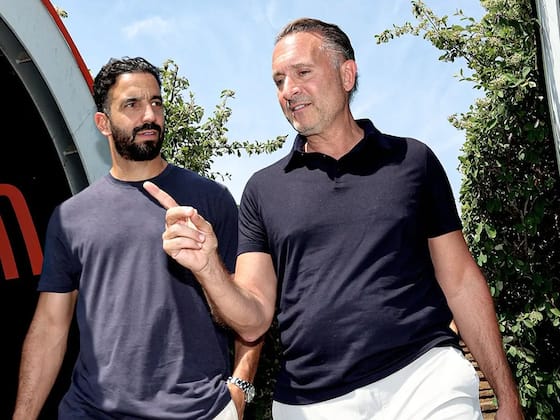
A year ago, both AC Milan and Ruben Amorim seemed to be heading toward brighter futures. Milan had entered a new era under Massimiliano Allegri, while Amorim was steering Manchester United through an ambitious rebuilding phase. Unfortunately, both ventures fell apart as time went on.
AC Milan dismissed Allegri after failing to secure Champions League qualification and missing out on domestic silverware, while Amorim was let go following disappointing results, criticism over his tactical stubbornness, and deteriorating relations with United’s hierarchy concerning recruitment and authority.
As a result, Milan began the summer seeking a manager who could bring a clear identity back to the club. Amorim, meanwhile, had to choose his next role wisely. After being dismissed in early January, he expressed openness to returning to club management to restore his reputation tarnished by his tenure at Manchester United.
Milan soon approached Amorim for the vacant managerial position, and he accepted a two-year deal to help the Rossoneri rediscover their best form and compete strongly in both Italy and Europe. But understanding why both sides need each other offers deeper insight into this union.
“I feel a great sense of pleasure and responsibility being here. I was looking for a challenge like this. I’ve always admired the teams of Sacchi, Capello and Ancelotti and have many memories of great AC Milan sides. The club’s history is incredible. It already feels like home. From our first conversation, I knew this was the right place for me in terms of values. I believe in this project,” said Amorim upon his appointment, acknowledging both the privilege and pressure of leading one of Europe’s most storied clubs.
Under Allegri, Milan’s recruitment last summer aligned with his preference for a disciplined defensive structure and patient attacking play. Adrien Rabiot, Luka Modric, Ardon Jashari, Koni De Winter, Pervis Estupinan, and Christopher Nkunku were brought in during the 2025 summer window. Meanwhile, Tijjani Reijnders, Malick Thiaw, Theo Hernandez, Noah Okafor, and Pierre Kalulu departed after Milan’s failure to qualify for Europe in the 2024/25 season.
Despite sitting third after 20 Serie A games and signing Niklas Füllkrug on loan to boost their attack, Allegri’s pragmatic approach failed to inspire belief that Milan could challenge for the top two. His 3-5-2 setup often saw mismatched attacking duos, with Nkunku, Santiago Gimenez, Rafael Leao, Christian Pulisic, and Füllkrug rotating up front without finding rhythm.
Milan’s form declined sharply toward the season’s end, culminating in a decisive final-day defeat to Cagliari that cost them Champions League qualification. The setback prompted the club to part ways with Allegri and begin searching for a new voice to revive the San Siro.
Amorim had taken charge of Manchester United in November 2024, aiming to implement a new footballing identity across all levels of the club. United were captivated by the dynamic, structured football he showcased at Sporting Lisbon and tasked him with replicating it through his favourite 3-4-2-1 formation, promising the right players for his system.
However, United endured a disappointing 2024/25 campaign, finishing 15th in the Premier League and missing out on the Champions League after losing the Europa League final to Tottenham Hotspur. The season involved a major squad overhaul, with key exits like Marcus Rashford, Alejandro Garnacho, Andre Onana, Jadon Sancho, Antony, Rasmus Hojlund, Victor Lindelof, and Christian Eriksen. In their place arrived Bryan Mbeumo, Matheus Cunha, Benjamin Sesko, Patrick Dorgu, and Senne Lammens.
Amorim also made positional changes: Luke Shaw was moved to left centre-back due to injuries, giving Patrick Dorgu the left wingback role; Amad Diallo was repurposed as a right wingback, echoing Amorim’s use of Geovany Quenda at Sporting; and Bruno Fernandes was deployed deeper alongside Casemiro in midfield.
In the 2025/26 season, United scored 34 goals in 20 Premier League matches, showing attacking potential, but Amorim’s unwavering tactics drew criticism for lacking flexibility in crucial games.
Reports suggested internal pressure from United’s leadership to abandon his 3-4-2-1 system for a traditional back four, leading to tension between the board and the manager. His decision to exclude academy talent Kobbie Mainoo from the starting XI, preferring Casemiro and Fernandes in the double pivot, added to the friction. A draw at Leeds United’s Elland Road proved the final straw, and Amorim departed in early January 2026.
Now at Milan, Amorim faces a manageable but important to-do list. In goal, he prefers a commanding, vocal organiser – and Mike Maignan fits that profile perfectly. The 31-year-old will remain Milan’s undisputed number one, expected to build play from the back and deliver long passes to exploit space. Veterans Pietro Terracciano and youngster Lorenzo Torriani will back him up, with Torriani seen as a long-term successor.
Having played a back three under Allegri, Milan’s transition under Amorim should be relatively smooth, though his approach is more progressive. He encourages wide centre-backs to advance on the ball while the central defender ensures stability and distribution. His teams play with a high line, using defenders comfortable carrying the ball into space or delivering precise long passes against high presses.
Fikayo Tomori will likely anchor the right centre-back role due to his composure in possession, while Mario Gila Fuentes and Strahinja Pavlovic are expected to occupy the central and left positions respectively. Koni De Winter, Matteo Gabbia, and young prospect Davide Bartesaghi will provide rotation options, particularly during Europa League and Coppa Italia fixtures.
The wingbacks are crucial in Amorim’s system, tasked with providing width and initiating pressing. At his previous clubs, he used Quenda and Diallo as attacking outlets, and Milan could mirror that structure. On the right, Alexis Saelemaekers is the natural choice, having experience in the position, though he prefers a more advanced role. Swiss defender Zachary Athekame provides a solid, defensive alternative in tougher matches.
On the left, Pervis Estupinan is first choice, though transfer rumours could see him depart, opening the door for 20-year-old Bartesaghi to step up. While talented, he remains inexperienced at the top level.
The midfield pivot offers several options – a luxury Amorim lacked at United. Luka Modric’s future remains uncertain, but reports suggest he will extend his stay by another season. Amorim emphasised Modric’s importance, saying, “We want Modric to stay. I’ve already spoken to him and, for me, he remains a key reference point. I expect him to be back with us after his post-World Cup break.”
Alongside Modric, Rabiot, Jashari, and Ruben Loftus-Cheek provide central depth, while Yunus Musah and Youssouf Fofana bring athleticism and off-the-ball energy. Musah, who spent last season on loan at Atalanta, will hope for a fresh start. Loftus-Cheek and Rabiot lean more attack-minded, while Jashari could emerge as Modric’s long-term successor. Samuele Ricci will likely serve as a squad player.
In attack, Milan boast variety. Christian Pulisic, typically a winger, excelled in a central role last season, contributing both goals and assists. Nkunku will support him, offering a strong penalty-box presence reminiscent of his RB Leipzig days.
New signing Goncalo Ramos will lead the line after scoring 27 goals in 81 Ligue 1 outings for Paris Saint-Germain, often as a substitute. Santiago Gimenez will deputise, though his confidence remains low after netting just once last season. On the flanks, Samuel Chukwueze and Rafael Leao provide width, though Leao’s possible exit could weaken Milan’s attacking bite.
Despite the optimism, Milan’s squad remains unbalanced in areas. Maignan’s injury history is a concern; a setback would force the club to rely on Terracciano’s experience or Torriani’s inexperience. Defensive depth, particularly behind Tomori, may prove thin during a congested Europa League schedule if Amorim sticks with a back three.
Wingback options could also become a problem if Estupinan departs, leaving Bartesaghi as the only left-sided option. Should Saelemaekers shift inside, the right flank would also require reinforcement.
Attacking efficiency will be another key test. Milan scored only 53 goals in Serie A last season, with Leao their top scorer on nine. Ramos might need time to adapt, while Leao and Chukwueze’s fit in Amorim’s narrow system remains uncertain. If he chooses to use wingers, squad depth will need urgent attention.
Both Milan and Amorim enter this new chapter seeking redemption. Milan need a visionary who can convert a pragmatic lineup into a dynamic, ambitious unit, while Amorim needs a club that gives him freedom to implement his philosophy without interference.
Most of the foundation is already there – a back three, energetic wingbacks, and a squad better suited to Amorim’s methods than his Manchester United side. Yet, gaps remain: depth at wingback, cover for Maignan, and clarity in attack will determine whether this partnership leads to genuine renewal or another false dawn. What’s certain is that Milan finally have a manager whose footballing ideals reflect their identity – and for a club that spent last season searching for itself, that’s already progress.
-
Bukayo Saka expresses frustration over limited World Cup role as Arsenal winger confirms full fitness
-
‘Next Steps’ – Determined Thomas Tuchel Hints at His England Future After Facing Criticism for World Cup Tactics and Crowd Boos During Third-Place Win Over France
-
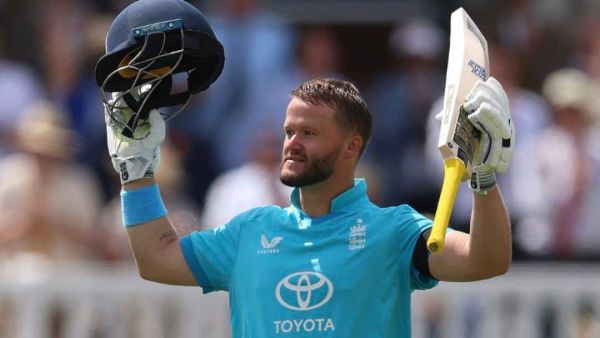
England Post 387/3 After Ben Duckett's Record 141 Leaves India With Huge Chase At Lord's
-
OPINION | India-UK CETA: Why Winning Market Matters More Than Signing The Deal

-
World Cup Finals Ranked: Messi’s Ultimate Triumph Tops France’s Thrilling Battles