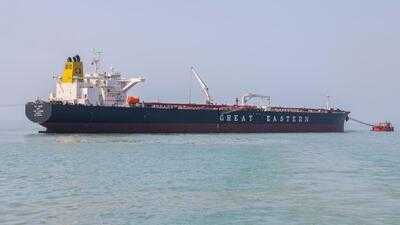
The Strait of Hormuz has become more than a shipping lane; it is a stress test for sovereignty, industrial resilience, and geopolitical judgment. A narrow maritime chokepoint in West Asia can now reshape trade, inflation, freight, and policy choices across Asia in a matter of days. China, Japan, Vietnam, and India are exposed in different ways, but the deeper divide is between countries that have built strategic buffers and those that still confuse efficiency with security.
For decades, policymakers spoke of energy security as if it were a technical line item. The Hormuz crisis has ended that illusion. Oil, LNG, petrochemicals, shipping insurance, and industrial feedstocks are now inseparable from national power. The countries that can absorb disruption, reroute supply, and preserve industrial continuity will not merely survive the shock; they will accumulate strategic advantage from it.
Fatih Birol captured the urgency plainly. "Oil security is still a critical issue," he warned, adding that the world should worry if the situation does not improve in the coming weeks. He has also stressed that the Strait must reopen without conditions, and that the world must prepare for the worst case, because the risk of closure is now embedded in every market calculation. That is not rhetoric. It is a concise summary of how quickly a regional shock can become a global economic problem.
China's Strategic Depth
China enters this crisis from the strongest position of the four economies. Its large oil reserves, pipeline access, and industrial scale give it room to absorb a sudden interruption in maritime flows better than its neighbors. It can also leverage the shock to reinforce its role as a supplier of solar panels, batteries, and electric vehicles to economies now looking for insulation from chokepoint politics.
But China's advantage should not be overstated. Its petrochemical and industrial sectors still depend on imported inputs, and its clean-energy leadership remains tied to global mineral and extractive supply chains. The deeper point is that China has treated energy security as statecraft, while many others have treated it as procurement. That difference matters most when the sea turns hostile.
Japan's Structural Fragility
Japan's problem is different, and in some ways more severe. It is a technologically advanced economy, but it is still a maritime economy with limited domestic energy resources and high dependence on imported crude, LNG, coal, and industrial inputs. Even when alternative supply is secured, pressure shifts elsewhere: plastics, aluminum, jet fuel, air freight, and precision-manufacturing logistics.
Recent reporting suggests that Japan-linked vessels have been moving through or away from the Strait under tight conditions, as Tokyo seeks to stabilize supply and preserve industrial continuity. That may ease immediate shortages, but it does not solve the underlying vulnerability. Japan's response, more stockpiling, nuclear restarts, coal generation, and supplier diversification, is sensible. Yet it also reflects a harder truth: a sophisticated economy can still be strategically brittle if its industrial base depends on thin external supply lines.
Vietnam's Connector Risk
Vietnam's exposure is more precarious because its economy is built on connectivity. It is not as large as China, nor as wealthy as Japan, but it is deeply embedded in regional manufacturing networks. That means any disruption in crude, naphtha, plastics, or logistics quickly becomes a disruption in export performance, food costs, and industrial inputs.
The Hormuz shock hits Vietnam especially hard because it depends heavily on Gulf-linked energy and petrochemical flows. Yet Vietnam also has an opportunity. The same crisis that exposes its fragility may push it faster toward cleaner and more diversified energy sourcing, including stronger engagement with renewable and EV supply chains. For a connector economy, resilience is not just about stockpiles. It is about ensuring that connectivity remains an asset rather than a liability.
India's Strategic Middle Ground
India is the most consequential addition to this analysis because it sits between exposure and adaptation. It is not as cushioned as China, but it is also not as structurally dependent as Japan or as fragile as Vietnam. Recent reporting shows that a Hormuz closure could affect more than a third of India's crude imports and more than 40 percent of its LNG imports, while LPG remains highly exposed. That makes the Gulf not merely a distant theater for India, but a direct source of vulnerability in transport, fertilizers, power, and household energy.
At the same time, India has been actively diversifying. In March, it secured crude supplies for 60 days despite Hormuz disruption, aided by wider sourcing from more than 41 suppliers and by additional Russian barrels. More recently, India's ONGC announced a new 1.75 million-ton strategic petroleum reserve in Mangalore, while the government also plans further reserve expansion. That is not a trivial development. It signals a state moving from reactive management toward strategic preparation.
Still, India's position should not be romanticized. Its current strategic stocks remain limited relative to demand, and reserve expansion is incomplete. The uncomfortable truth is that India has made meaningful progress in reducing crude vulnerability, but it has not yet built the level of redundancy that a major energy importer requires in a world where chokepoints are weaponized. The current crisis therefore functions as both warning and roadmap. It argues for more storage, broader supplier diversification, tougher LNG security planning, and faster clean-energy manufacturing, not as climate symbolism but as strategic insurance.
What This Crisis Exposes
The Hormuz crisis exposes a larger shift in global political economy. Trade is no longer just about price and efficiency. It is about coercion, continuity, and the ability to absorb shocks without surrendering policy autonomy. Countries with deep reserves, broad supplier networks, and strong domestic manufacturing can still function under stress. Countries without those assets are forced into improvisation, and improvisation is expensive.
This is why the comparison across China, Japan, Vietnam, and India matters. China shows the power of integration and reserves. Japan shows the limits of advanced industry without supply autonomy. Vietnam shows how a connector economy can be punished by disruption in upstream energy systems. India shows the challenge facing rising powers that must secure growth while building resilience in real time.
Sultan Al Jaber has argued that the Strait is not Iran's to control, and he has described restrictions on passage as economic terrorism. The language is blunt, but the point is broader than one official's remark. It reflects an emerging consensus that a chokepoint this central cannot be allowed to normalize coercion.
Policy Direction
The policy answer is not autarky. It is resilience. That means larger strategic reserves, more diversified supply routes, maritime and overland redundancy, and greater attention to petrochemicals and industrial feedstocks as strategic sectors rather than merely commercial ones. It also means treating clean energy not as a post-carbon luxury, but as a hedge against the geopolitical volatility of imported hydrocarbons.
For India, this should translate into faster reserve expansion, more deliberate LNG diversification, tighter stress-testing of refinery and fertilizer supply chains, and accelerated domestic manufacturing in solar, batteries, and EV ecosystems. For Japan, it means reducing dependence on imported industrial inputs that can be choked by freight disruption. For Vietnam, it means lowering exposure to a narrow set of energy routes while protecting the logistics advantages that make it globally relevant. For China, it means converting strategic depth into long-term technological leadership without overestimating the durability of its insulation.
Birol's warning remains the clearest summary of the moment: "We should be worried, and I am worried, if the situation does not improve in the next few weeks." The reason is simple. Once a major shipping artery is shown to be vulnerable, markets begin to price not just present disruption, but future coercion. That changes behavior long after the first tanker has moved.
The Strait of Hormuz is no longer just a map feature. It is a reminder that geopolitics now sits inside the balance sheet, the freight invoice, and the power plant. The next great divide in Asia will not be between countries that trade and countries that do not. It will be between countries that can keep trading when the sea becomes unsafe, and those that discover too late how fragile global interdependence really is.
[Major General Dr. Dilawar Singh, IAV, is a distinguished strategist having held senior positions in technology, defence, and corporate governance. He serves on global boards and advises on leadership, emerging technologies, and strategic affairs, with a focus on aligning India's interests in the evolving global technological order. Opinions expressed are personal.]
-
Zimbabwe vs India 1st T20I Match Prediction - Who will win today's match between ZIM vs IND T20I match?

-
"I always thought I was fragile": Shakira opens up about the emotional scars of Gerard Piqué's alleged betrayal as her 2026 World Cup halftime show breaks records

-
Erling Haaland wore frog brooch worth 1 lakh

-
Monsoon Special: Have you tried crab bhaji during monsoon or not? Note the recipe today

-
6500mAh battery and 50MP selfie camera… Tecno Camon 50 Ultra smartphone blew everyone’s sleep, this is the price