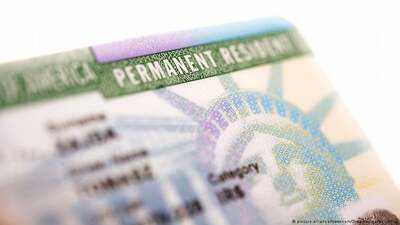
More than three lakh Indian students studying in the United States on F-1 visas could be affected by a new immigration rule that replaces the long-standing "duration of status" (D/S) system with a fixed period of authorised stay of up to four years.
The rule, announced by the US Department of Homeland Security (DHS), will take effect in mid-September. It requires foreign students, exchange visitors and certain media representatives to transition automatically to the new system, under which they must seek an extension of stay from the US Citizenship and Immigration Services (USCIS) if they need more time to complete their academic programmes.
Under the existing D/S framework, international students on F-1 visas could remain in the US for as long as they maintained their student status. Universities could extend a student's programme duration without requiring fresh immigration approval.
The new rule instead admits students for a fixed period matching the length of their academic programme, subject to a maximum initial stay of four years. Students enrolled in longer courses, such as doctoral, medical or research-intensive programmes, will have to apply to USCIS for an extension if they are unable to complete their studies within that period.
The DHS has also reduced the post-graduation grace period from 60 days to 30 days for students preparing to leave the US or change their immigration status.
Experts flag uncertaintyImmigration experts said the policy introduces additional administrative requirements and uncertainty for international students.
Sukanya Raman, US immigration adviser at Immigration Desk, said the change fundamentally alters how students maintain lawful status in the US.
"Instead of remaining in F-1 visa status for as long as they comply with their academic programme, students now face fixed admission deadlines and must file for an extension of stay to complete longer degrees," she said.
She added that students pursuing PhDs, medical degrees or research-intensive programmes would face additional planning requirements, filing costs and the risk of status disruptions if extension requests are delayed.
As of January 2025, around three lakh Indian students were studying in the US, the majority enrolled in postgraduate STEM (Science, Technology, Engineering and Mathematics) programmes. According to the US State Department, 90,129 Indian nationals received F-category student visas in 2024.
Trump tightens US visa rules for students, journalists, exchange visitors Impact on OPTExperts said the rule could also affect Optional Practical Training (OPT), which allows eligible international students to work in the US after completing their studies.
Mumbai-based immigration lawyer Surabhi Singh said students would now need to ensure that their underlying F-1 status remained valid throughout any period of OPT because admission would no longer continue automatically under the D/S framework.
However, she noted that the final rule does not abolish OPT. Eligible students can still apply for the existing 12-month post-completion OPT, while STEM graduates remain eligible for the 24-month STEM OPT extension.
She said uncertainty remains over situations where a student's fixed admission period expires during OPT or the STEM OPT extension, as the DHS has not yet clarified how those cases will be handled.
An immigration attorney based in New York said that, during the transition period, students with pending OPT or STEM OPT applications when the rule takes effect, or those applying within six months of its implementation, are not expected to require a separate extension of F-1 status.
DHS cites security concernsThe DHS said the new policy is intended to strengthen the integrity of the immigration system, curb visa abuse and improve national security through regular screening.
"For decades, foreign students have been admitted into the US indefinitely, allowing thousands to abuse our immigration system by perpetually enrolling in courses to avoid having to leave the US," DHS Secretary Markwayne Mullin said.
The department said existing visa holders covered by the D/S framework would automatically transition to the new system, with their authorised stay capped at a maximum of four years from the rule's effective date.
The policy also shifts greater oversight of international students from educational institutions to federal authorities and introduces additional biometric screening, background checks and fraud verification.
Immigration lawyers said the changes are unlikely to affect the current autumn admission cycle because most admissions and visa processing will have been completed before the rule comes into force on 15 September. However, they warned that the new framework could increase administrative burdens and reduce the United States' attractiveness as a destination for international students.
US visa approval delay puts 2,000 international students at risk-
2026 World Cup Winners and Losers: Messi and Mbappe Shine, Spain’s Rock-Solid Defence Triumphs, While Ronaldo, Neymar and Pulisic End in Heartbreak

-
4 Chinese zodiac signs poised for prosperity in the sixth lunar month

-
Trump refuses to leave stage during Spain’s trophy lift
-
Why does breathing become difficult as soon as the weather changes? Know the reason, which people should be more cautious

-
Luck Finally Arrives For 3 Zodiac Signs On Tuesday, July 21, 2026